Exploring Waldorf

Madrona School Alphabet (E)

As we continue to celebrate what makes a Madrona School education unique through the alphabet, we have reached the letter 'E' ... and Eurythmy!

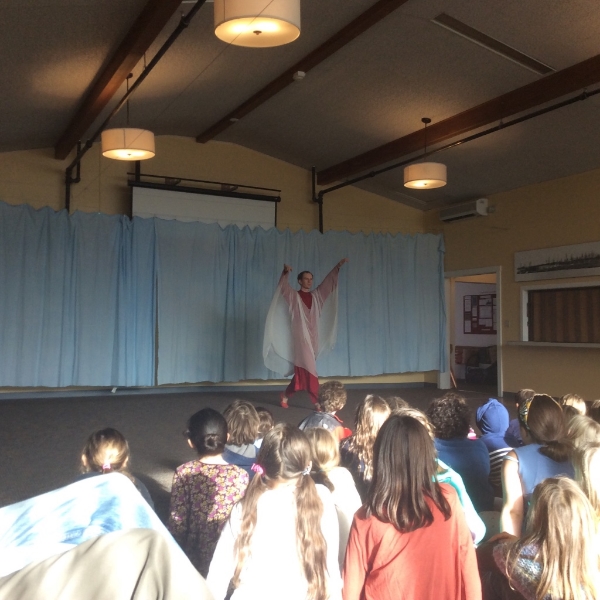
We just wrapped up a six-week block with visiting eurythmist, Audun Smit. Mr. Smit offered classes to our kindergartens and our grade school, as well as weekly opportunities for adults and at the opening of our faculty meetings. It was a true gift to our community!

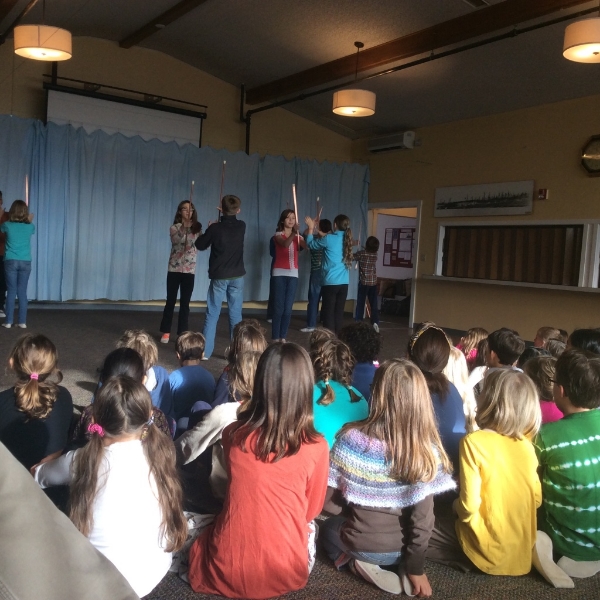
Eurthymy is an art form from Rudolf Steiner based on movement, and making music and tone visible through that movement. Beautiful to watch and to do, it has elements of dance, sculpture and creative expression. Here at Madrona School, we offer eurythmy in blocks as we are able, providing some exposure for our students to this essential aspect of the Waldorf curriculum.

Movement in all its forms is so essential to learning, and Waldorf education emphasizes it throughout the curriculum. When we move, we learn -- coordination, problem solving, working effectively with others, etc. In our early childhood programs, children practice integration of movement, both gross and fine motor, in order to prepare themselves for their academic journeys ahead. And in grade school, movement continues to be critical for a greater integration of academic material, as well as practice for those all important social skills.  

And eurythmy is movement like nothing else we offer, with live piano accompaniment and uplifting verse. Truly a gift for each child, even as they work on spatial awareness and social integration, expressing themselves from the inside out. 

-- edited in part from the school newsletter, November 19, 2013

Madrona School Alphabet (D)

What makes a Madrona School education unique and special?
During the 2013-2014 school year, we celebrated what a Waldorf education offers both our children and our community as we strive to graduate creative and eager lifelong learners. Using the alphabet gave us 26 aspects to celebrate! 

D is for Drama! We enjoy good drama (of a certain kind!) at Madrona School. In our early childhood programs, we nurture imaginative play acting each and every day. And, each grade school class puts on a play every year.  From the simplest beginnings in 1st grade, to full blown productions in 7th and 8th, our students learn to be comfortable performing on a stage. They memorize lines, work together on sets and staging, speak clearly and with passion, sing and make music. Drama enhances literacy, creativity, self-confidence, flexibility -- and it's fun!

-- edited from our school newsletter on October 1, 2013

Parent Enrichment with Susanna Reynolds

We are so pleased to welcome Susanna Reynolds back for her second of three workshops this school year. All interested adults are welcome to join us in the 3rd grade classroom on Thursday, November 5 at 6:30pm. Susanna's workshop, entitled, "Seeing our Children in the Dark and in the Light: Becoming More Comfortable With The Polarities of Growth With Your Unique Child(ren)."

Susanna will work with us in conversation and with art to explore the struggling steps and triumphs in grade school children's growing minds and bodies, even as we celebrate their colorful expression and feeling lifes. When we become more comfortable with the fluctuating steps that occur in growth, with can better weather constant change.

Susanna is the Director of Sound Circle Center’s Parenting Programs, and in private practice at Seattle Sensory and Structural Integration. We are always pleased to host her across the water!

Madrona School's Alphabet (B)

What makes a Madrona School education unique and special?
During the 2013-2014 school year, we celebrated what a Waldorf education offers both our children and our community as we strive to graduate creative and eager lifelong learners. Using the alphabet gave us 26 aspects to celebrate! 

B is for...Bread Day! Why do we bake bread in our early childhood classrooms? The obvious answer is because it tastes amazing and fills our hungry young students with a warm, nutritious snack. Yet, the process offers so many benefits, eliciting a robust sensory experience, even as it provides an anchoring weekly rhythm in the early childhood classroom. The activity of baking bread engages the sense of touch through kneading and shaping the silky dough, it engages the sense of smell as the bread bakes, it engages the ears though the songs sung throughout shaping ("Five hot buns in the bakery shop...."), and it enhances class community as the children come together to shape their buns and to eat them warm from the oven. Baking bread also provides an outlet for the purposeful work that young children crave, an activity that they can easily see and participate in from start to finish over the course of a morning. And of course, it is fun and imaginative; sometimes dough gets shaped into worms, bugs or as some grade school students fondly remember, bunnies, hearts or a plate (more room to spread on butter and jam!). 

We all look forward to 'Bread Day' at school. Some children routinely save a bit for a sibling or a parent, spreading the anticipation. And, ask any of our older students, and they will tell you their fond memories of  kindergarten bread. Each year, our older students (and frankly, many teachers) make it their business to know which days are bread days, and they might peek in at lunch, hoping for leftovers. It becomes very nostalgic, and offers a real reminder of the beginning of their respective school journeys. There is a lot baked into each week's bread!

Want to bake at home? Here is a copy of one of the recipes used in our preschool and kindergarten classrooms.

--reprinted from the weekly school newsletter, September 23, 2014.