Screen Time

Madrona School Alphabet (I)

In our alphabet-based exploration on what makes a Madrona School education unique, 'I' is for imagination -- Our students develop and nurture flourishing imaginations, making them wonderful readers, good problem solvers, flexible thinkers and in possession of a rich, creative inner life to take into adulthood. 

Preschool play

A Waldorf school curriculum highlights the importance of imagination with lots of time and room for play in early childhood, both indoors and out. Isn't it magical to see the development of a young child's play, and the richness that happens when the planning and storytelling almost become the play? A well-developed imagination lays the groundwork for academic work, as well as enhances self-discipline. 

Drawing of a fair from a 6th grade student's medieval history work.

Throughout grade school, the curriculum continues to value imagination as a part of a healthy childhood. In first grade, for example, letters and numbers are brought through story, further developing that full inner pictorial life for each student. And storytelling enhances main lessons in every grade, adding depth to the academic work. A well developed imagination blossoms again and again throughout our children's lives.

"Imagination is more important than knowledge. For knowledge is limited to all we now know and understand, while imagination embraces the entire world, and all there ever will be to know and understand." –Albert Einstein

Madrona School Alphabet (H)

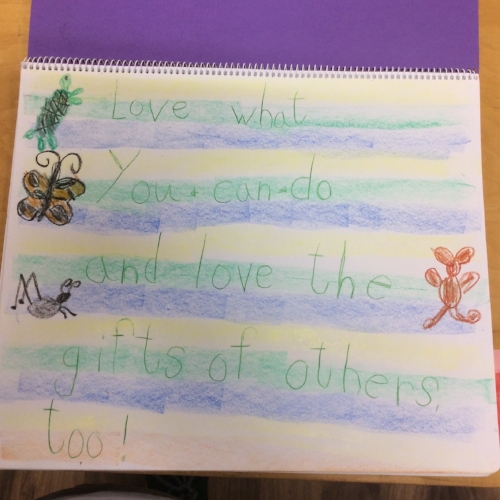
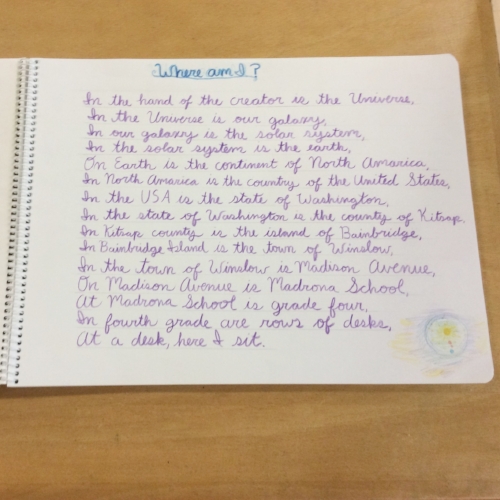
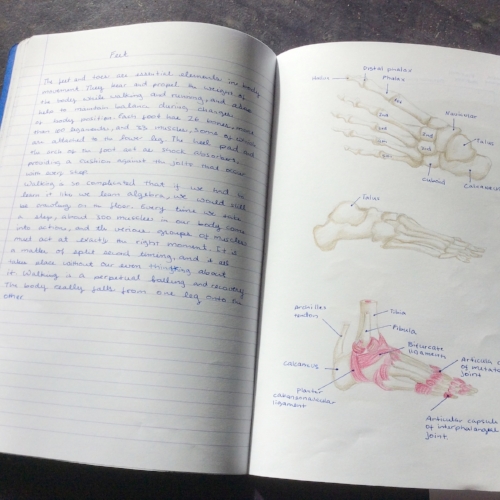
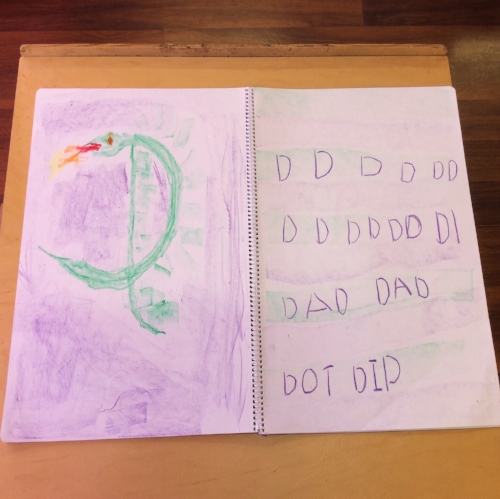
In our alphabet-based exploration on what makes a Madrona School education unique, 'H' is for handwriting -- and for the concrete beauty it adds to our work.  The Waldorf curriculum emphasizes handwriting as an integral part of the grade school curriculum. In the 1st grade, students practice writing letters as a precursor to reading. In the 3rd grade, form drawing exercises give way to formal cursive writing practice. In every year, each student collects their work into their unique and beautiful main lesson books, the previously blank pages filling with examples of their paragraphs, poetry, essays, observations and drawing. Recent research reveals how handwriting helps children learn, by improving cognitive development and hand-eye coordination, and strengthening reading through better letter recognition. It lays a foundation for effective note-taking and communication for life. At Madrona School, we write before we type.       


Teaching Reading at Madrona School

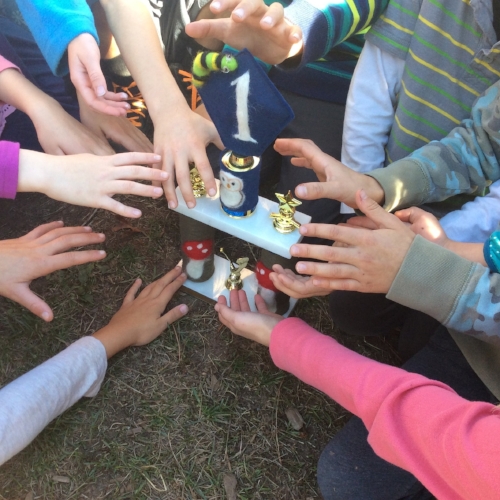
Excitement over winning the Reading Champions trophy through the public library this summer!

Excitement over winning the Reading Champions trophy through the public library this summer!

Learning to read can be a real joy and is an important academic milestone in a young student's life. In Waldorf education, we help a child's capacity for reading develop naturally, and offer lots of opportunity to fall in love with words and story.

In an ideal world, young children enjoy exposure to the world of language and literature through their parents. Hopefully, books represent beauty, humor and love to a small child -- they soak in illustrations, they giggle at funny words or at the voices an adult uses to read, they cuddle with a loved one to hear a story -- or five. Reading becomes aspirational, as they see a parent enjoy reading, or that stack of books by an older sibling's bedside. Further, in a Waldorf kindergarten classroom, a reverence for language and for story is reinforced through a daily story told by the teacher, by a ready basket of beautiful books for quiet times, and through ample opportunity for imaginative play, play that lays the groundwork for eventual understanding of abstract concepts.

In grade school, reading instruction is a part of language arts as a whole. In 1st grade, Waldorf education introduces reading through stories. Children discover letter forms out of a story their teacher tells, listening and then drawing, molding and moving through letters and their sounds. In other words, we take a multi-sensory approach, engaging a child auditorially, visually, kinetically, and at heartfelt level.They revel in the unique sounds of a letter as they practice writing simple sentences from the stories they are hearing and the pictures they are drawing. They write letters, then sentences and eventually, longer stories, until one day, it may dawn on them that they are reading what they are writing. Do you remember this eureka moment in your own life?

This unfolding and discovery allows for the love of language and of story to grow. The children work at decoding through phonics and sight word recognition too, but the emphasis remains on comprehension. Stories are told throughout a Waldorf education, and the overall literacy of a student grows with each passing year -- including vocabulary, grammar skills, and cultural and historical knowledge. With such a robust and supple beginning to language arts, Waldorf education actively cultivates space for developing capacity, both in interest and skill. Reading comes from the inside out, and while the time to master the mechanics varies, the intrinsic motivation and engagement with language is indicative of the lifelong joy of choosing to read!

For more, ask your child's teacher, or:
Read this blog post by the Waldorf School of Philadelphia, full of links to recent research in reading instruction, originally posted September 21, 2016: Reading in Waldorf Schools

For a parent's perspective, read Myth Busting: How Reading is Taught in a Waldorf School by Sarah Baldwin, Moon Child blog, originally posted June 6, 2011.

And an excellent article describing more of the art and mystery inherent in the act of learning to read: There's More to Reading Than Meets the Eye by Barbara Sokolov, Renewal, A Journal for Waldorf Education, Vol. 9#1, Spring 2000

Sometimes, reading comes along unusually slowly for children because there are underlying issues such as dyslexia.  When it becomes clear that extra help in mastering the fundamentals of reading are needed, we work with the parents to arrange for supplemental help.  Sometimes this means that a child works with a tutor at school once, twice or more times per week.  This extra help in 2nd, 3rd or 4th grade can make a big difference in a child's confidence and image of themselves as a successful reader.

Reading Champions!

We are proud of our enthusiastic readers! 

Madrona School won our local public library's 'Reading Champions' trophy for the highest percentage of students participating in the Kitsap Regional Library's summer reading program, compared to other independent schools on Bainbridge Island. We enjoyed a visit from our local children's librarian today, and she brought with her this lovely trophy -- so grateful for local treasures like our public library and their staff that spread the love of reading. We will take good care of this trophy all year, and are resolved to win it again next summer. Hurray for books -- and the adventures they inspire, the empathy they instill and the information they impart!


While we're on the topic of reading, you might be interested in this beautiful take on the power of reading in our lives: Neil Gaiman on Why We Read and What Books Do for the Human Experience, brainpickings.org, August 3, 2016.