Play + Development

Bread Day in our Early Childhood Classrooms

It’s baking day in the preschool. Arriving at school, the children spy the familiar cloth-covered bowl on the table. Silky, elastic dough fills the bowl and a sweet, yeasty scent hangs in the air. As each child settles in, they see their teacher reach in for pieces of dough from the bowl. They delight in taking a place at the table and receiving their piece of dough, the only invitation they need to begin kneading and shaping their bun. 

Meanwhile, the teacher sings:
Five hot buns in the bakery shop,
Big and round with honey on the top.
[Maggie] came along with a penny one day,
She bought a hot bun and she ate it right away!

The children love to hear their name in the song, and some sing out. They also join in enthusiastically when the teacher begins to chant “Pat a cake, pat a cake,...”, bringing a steady pounding rhythm to kneading dough.

When each child has kneaded and shaped their dough, and before they run off to play, they place the bun carefully on a baking sheet to finish rising. When all the children finish, the teacher slides the sheet into the warmed oven, and soon a delicious smell fills the room. Anticipation is a wonderful part of this bread day ritual, and the smell of baking bread signals the approach of the clean up song and snack time.

Finally, snack time arrives, the children waiting more patiently some days than others! On a chilly winter’s morning, the class gathers at their table indoors and lights a candle. On a a warm spring day they may walk to the park and sit together around a picnic table. In any case, the class gathers to eat their buns still warm from the oven -- made even sweeter with soft butter and jam or honey -- enjoying conversation and practicing table manners. As snack time ends, everyone washes dishes and play resumes. 

Some children routinely tuck a bit of their bun in a napkin to take home, knowing a brother or sister, or a parent, would love a little taste of bread day.
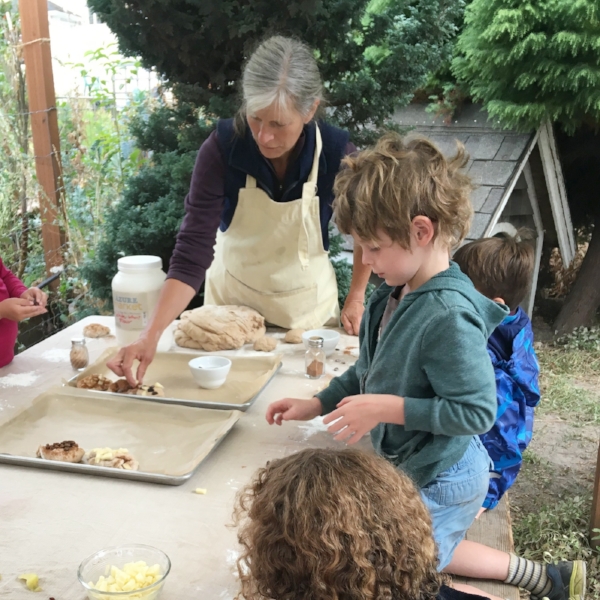
Our teachers and students engage in the preparation of a warm, organic snack each day in all of the Madrona School early childhood classrooms -- parent-child, preschool and the kindergartens. This snack fills a hungry tummy after a period of play and interaction, but it also engages many senses, such as touch, smell, sight and taste, and practice integrating multiple sensations within one experience.

Bread day illustrates our aim to engage each child's whole self at school. We surround our students with a calm, home-like environment, time outdoors rain or shine, security through daily, weekly and seasonal rhythms, opportunity for developmentally-appropriate exploration, suggestions for dress and nutrition to nourish both body and soul with warmth; opportunities for purposeful work; and an appreciation for the beauty in the every day.

bread buns.jpg


Want to add 'Bread Day' to your rhythms at home? Here is the recipe our classes begin with -- feel free to make it your own!

Unpacking the Stump Project

stump.jpg

Teacher Isaac recently wrote to his families:
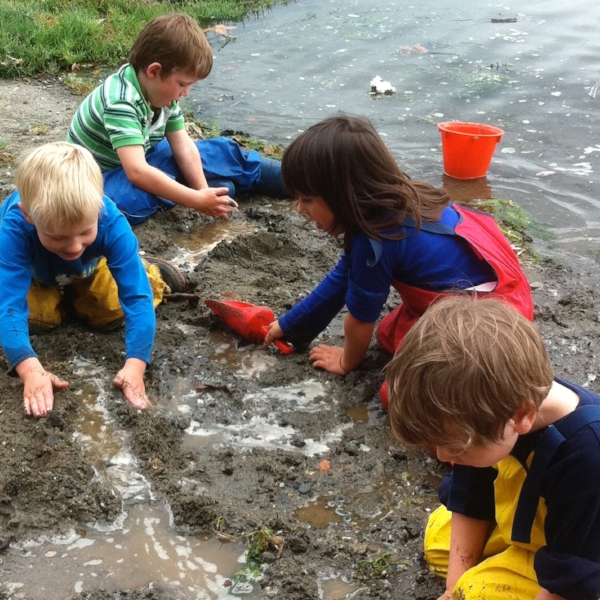
Some of you might have noticed the digging project that the kindergarteners began, several weeks ago, around the roots of the old Douglas Fir stump on the play yard. The project grew from a simple question, "I wonder if we could tunnel under that root?" "Hmm... I wonder..." was the reply. The curiosity was contagious and the picks and shovels have been busy ever since.

Now, I'll be the first to acknowledge my own enthusiasm for the project. I too wonder what might lie buried below. (In fact, I forget who posed the original question, and suspect that it could have come from me.) Fortunately for big projects such as this, enthusiasm is contagious and the children will come and go throughout the course of any morning. Some will jump into the holes and move the earth right alongside me. Others will help push and pull a wagonload of dirt from here to there. Still others come to step and leap from root to root, observing the progress and creating their own imaginations.

However, once the work is underway, I like to take a step back and spend a moment observing (with wonder) the many layers of work going on around me.

The children moving the earth with shovels and hands are meeting a variety of resistances as they tunnel through dirt, sand, rock and clay. Their developing proprioceptive system is being stimulated and strengthened with every scoop. Others crawl beneath roots and squeeze through narrow openings. The nerve endings concentrated in the joints receive input from these gross motor activities (like shoveling, pushing, pulling, carrying heavy objects, etc...) that gradually builds an internal map of one's body in space. They are discovering themselves by coming up against the earth.

I see that some of the children try to avoid touching the mud or dirt or sand with their bare hands. I make note that they may be more touch sensitive than their peers, and I try to find opportunities to introduce new sensory input to these children and encourage them to play in a way to help them integrate this developing sense.

The children who are balancing on the latticework of exposed roots are strengthening their core muscles as they work to stay upright, as well as working the vestibular system of the inner ear. Others are hanging upside down or reclining in a hollow. As the fluid of the inner ear sloshes back and forth with the movement of the head (especially upside down!), there is again the gradual inner mapping of the spatial planes and the body's relationship with them (front, back, side to side, up and down). Having these activities available for the young child is important for their developing sense of balance and sense of movement.

Of course, the children care nothing for such adult talk. They instead are pirates, ninjas, otters, cats, birds, princesses and knights. They are making homes and forming relationships and discovering more mystery in the ordinary than we could ever imagine.

Together, the children and I, vigilantly watch each shovelful of dirt and rock for unearthed treasure. We wonder how deep we can dig, how much earth we can move, and if anyone will fit between the roots we have exposed. The fun is in the wondering of the question and in the application of the will to try to answer that question.

With enthusiasm,
Isaac

What began as a Salmonberry kindergarten project, has captured the imaginations and will of children of all ages!

Teaching Science at Madrona School

We often talk about teaching academics as the "3Rs" -- reading, writing and arithmetic. But what about all of the other important academic subjects taught at Madrona School? The Waldorf methodology offers a classical education, a liberal arts approach that introduces students to a wide variety of subjects throughout their grade school years, in keeping with their developing capacities. How do we teach science, for example? 

atwater'sedge1.jpg
atwater'sedge2.jpg

We really begin in early childhood, laying a solid foundation for academic work. For scientific studies specifically, we simply provide opportunities for our young students to explore in the natural world, doing. They dig, they bake bread and make jam, they climb over logs, they collect pocketfuls of rocks, they soak up the sunshine etc., using all of their senses and fully living into the world. As anyone with a small child knows, they are natural scientists -- curious about their world and eager to explore.

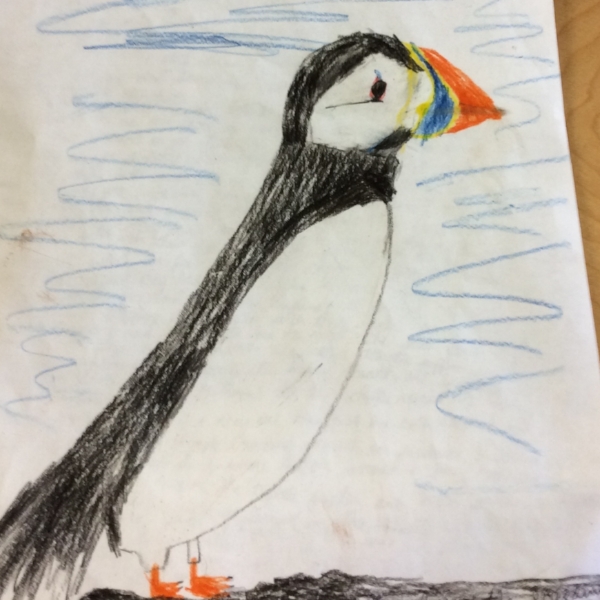
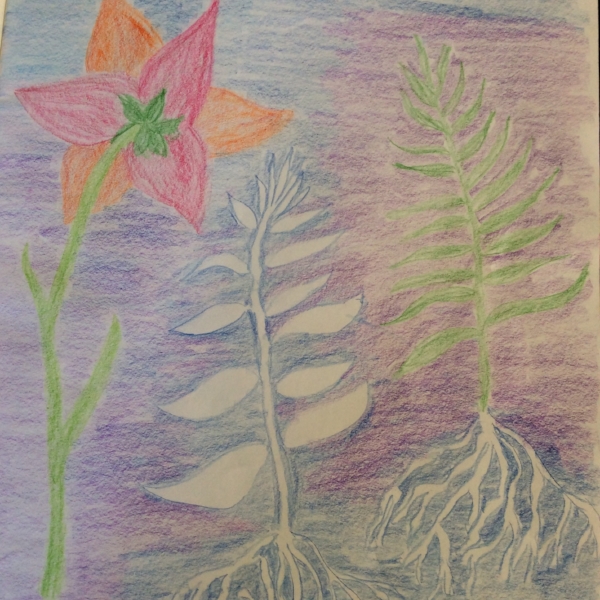
In the early grade school years, we work consciously to instill a sense of wonder in the natural world, nurturing ever increasing capacities for observation. 1st and 2nd graders go on walks, collecting horse chestnuts or pine cones or leaves, depending on the season, incorporating natural materials into classroom projects or math lessons. Or, they may do simple experiments, such as planting seeds and recording what happens. Beginning in 3rd grade, with its practical life curriculum, students have the opportunity for gardening. Our current 3rd and 4th graders are working with the garden at Lowery Farm, and they spend many hours there, tackling jobs, observing changes and recording it all in their gardening journals. In 4th grade, the students have their first specific science block, studying the animal kingdom, and writing an independent report. In 5th grade, a botany block allows for further careful observation and demonstration of the artistic techniques that have been practiced throughout grade school.

7thgrade.jpg

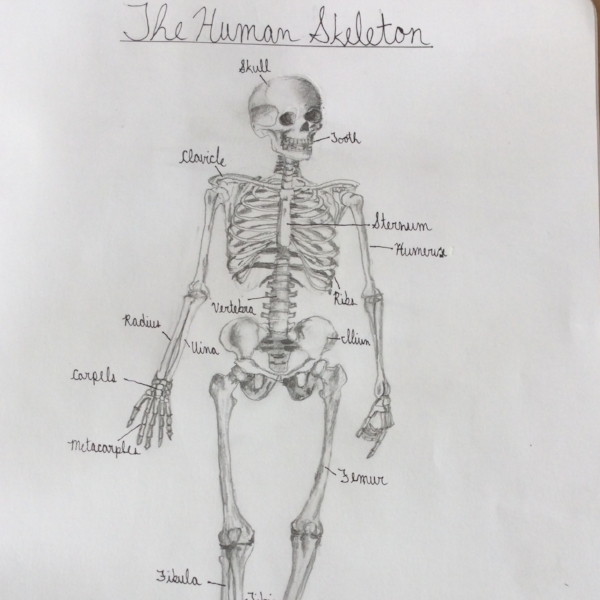
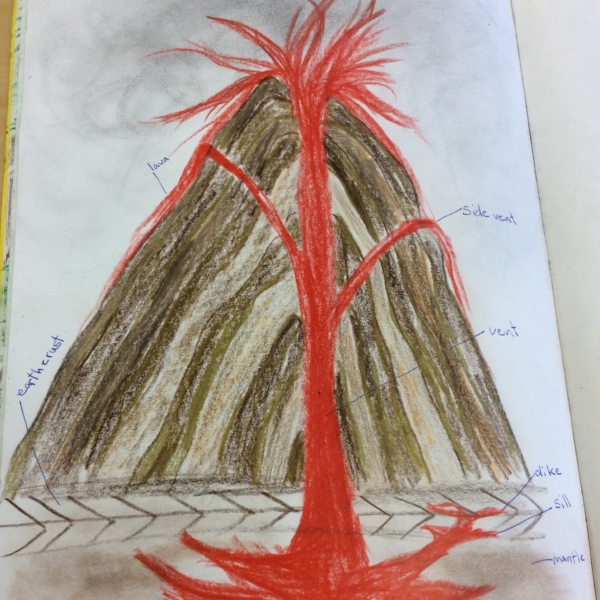
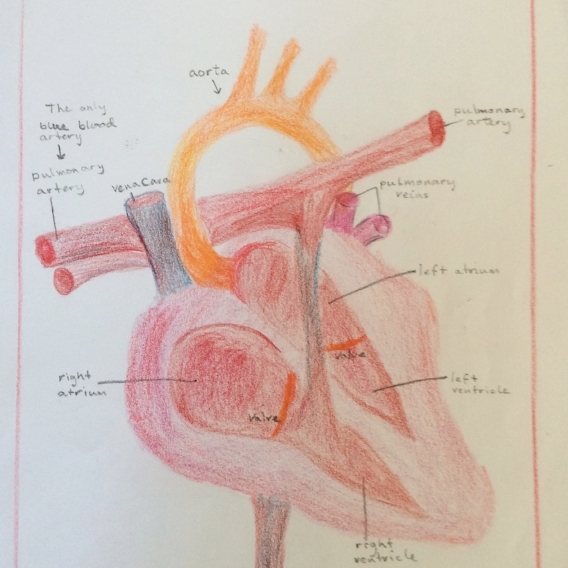
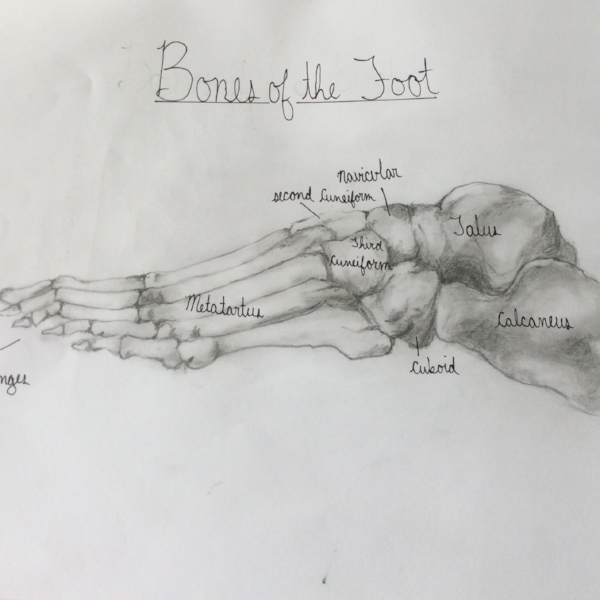
In middle school, we continue to teach through a connection to our observable world, and to the universe at large, using students' observation and communication skills in combination with their awakening capacities for abstract thinking. In 6th grade, the students study more science than they have to date, and we offer geology, astronomy and physics -- a close look at our planet and what it is made up of, the study of what surrounds us, and a first taste of a lab science. The Waldorf methodology takes a phenomenological approach to teaching science, which means we offer opportunities for observation of the laws of nature without teaching the theory first. In chemistry and physics blocks, for example, students will watch an experiment performed, take careful notes on what they see (learning the scientific format of procedure, equipment, observation and conclusion), then discuss possible explanations and reach conclusions as a class. Sometimes, after this process, a teacher will elaborate on the relevant theories and scientific laws further, but the hope is that the students can approach the theory themselves. Even when we teach a physiology block, the approach is an experiential one, where they begin with what they can observe or feel about their bodies, before talking about what makes up a particular part of the body.

When a child graduates from 8th grade, they've had a broad introduction to various scientific disciplines, from the natural sciences, to chemistry, to physics and beyond. They can express themselves with clarity and with beauty. And they have honed their observation skills, and practiced finding ways to express observable phenomena, providing a basis for learning and thinking about new subjects as they go on into high school. 

Madrona School Alphabet (D)

What makes a Madrona School education unique and special?
During the 2013-2014 school year, we celebrated what a Waldorf education offers both our children and our community as we strive to graduate creative and eager lifelong learners. Using the alphabet gave us 26 aspects to celebrate! 

D is for Drama! We enjoy good drama (of a certain kind!) at Madrona School. In our early childhood programs, we nurture imaginative play acting each and every day. And, each grade school class puts on a play every year.  From the simplest beginnings in 1st grade, to full blown productions in 7th and 8th, our students learn to be comfortable performing on a stage. They memorize lines, work together on sets and staging, speak clearly and with passion, sing and make music. Drama enhances literacy, creativity, self-confidence, flexibility -- and it's fun!

-- edited from our school newsletter on October 1, 2013