Play + Development

The Purpose of the First Grade Circle

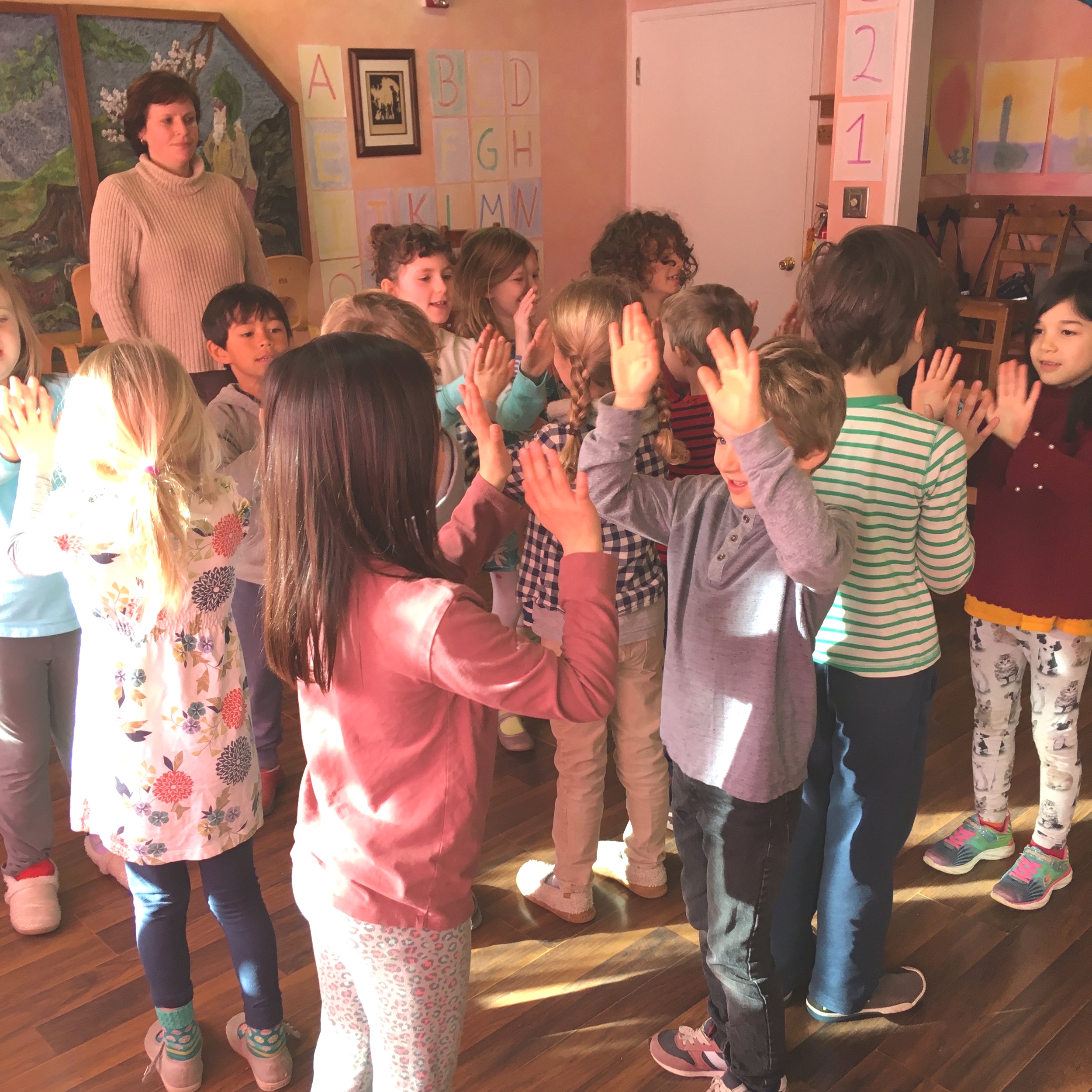
Back in October, at our Experience Waldorf event for parents, our 1st grade teacher, Ms. Hartz, shared the why and what of circle time in first grade. There is a lot behind what looks like fun to these eager students at the very beginning of their grade school journeys!

A first grader’s day begins with a handshake and a greeting to and from the teacher. The mood in the classroom is one of calm and expectation, sometimes with some excitement about something from home, or in anticipation of the day. The class speaks their morning verse together, and then, before moving into work at their desks, they will clear a space in the classroom for some circle time. A circle in 1st grade incorporates movement, music and singing, spoken word, rhythm, breathing, and concentration. It’s purpose includes:

  • Joy and delight

  • Awakening a healthy imagination

  • Wake up! Get out of breath, prepare to sit

  • Immersion in the season or “mood” of a block

  • Incarnation into hands/feet and fingers/toes

  • Creation of artistic and beautiful movement

  • Strengthen uprightness, endurance, coordination

  • Connect hemispheres of the brain

  • Working on body geography and spatial relationships

  • Enhancing a sense of touch, balance, controlled movement

  • Supporting speech development an sound/letter connection

  • Working on rhythm: foundational for math as well as music

  • Flexibility: work between polarities.

Ms. Hartz writes: “A first grader continues to be a being in movement. A first grader imitates out of an attitude of devotion and trust in the goodness of the world. Out of this feeling of goodness (reverence) will come an internal sympathy for goodness, a moral compass that does not need its own direct instruction.”

She shared her autumn circle with parents, including some of the “whys” behind its design:

  • Morning Verse to imbue and experience reverence and silence.

  • Seasonal Songs: Yellow the Bracken; The Autumn Winds; Golden is the Garden (to learn the months, movement crossing midline); Ghost of John (for fun).

  • Form a Ring: Expansion Contraction (to learn to make a beautiful circle); One for the Golden Sun; A Sailor Went to Sea; Tony Chestnut (for slow, fast, quick, slow); Bean bags passed to Hickory Dickory Dock (coordination with your neighbor and the group).

  • Balance boards and beam.

  • Drink of water and move desks back in preparation for the day.

Morning verse, movement circles, music including singing and recorders, and recitation continue up through the grades and develop depending on the needs of the class and the teacher. Often, teachers include some math games and mental math too. Some teachers employ movement as a mid-morning break, while others prefer to begin the morning with circle time. Please ask your child’s teacher if you have questions about how she or he incorporates movement and music into a morning’s lesson!

Art and Painting at Madrona School

At Madrona School art is infused into every lesson, and children learn artistic techniques that they utilize each and every day. Morning main lessons with a class teacher employ drawing, alongside writing, recitation and movement, and every student creates their own book for each subject and world language. We also teach standalone art classes during specialty class periods, including modeling beeswax and clay, form drawing, and painting with watercolors. We also offer handwork classes, teaching knitting, crochet and embroidery.

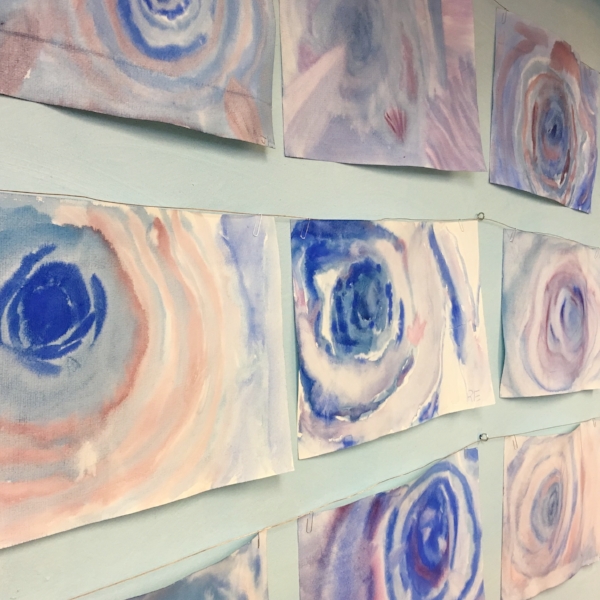
Beginning in our early childhood classes, and throughout grade school, students explore color and composition through a “wet on wet” technique, where wet paint is laid onto wet paper. This type of painting creates a wonderful flow of color, and takes time to learn. The results can be unexpected!

By the time our students are in middle school, they have years of drawing, painting, handwork, and a variety of craft experiences to inform their artistic efforts; they further their education with more sculpting, woodwork and perspective drawing. We value art as a human endeavor, and every one of our students is an artist.


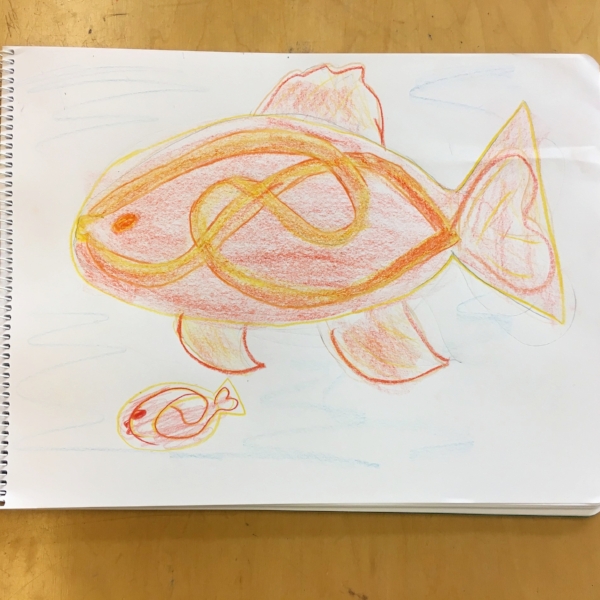
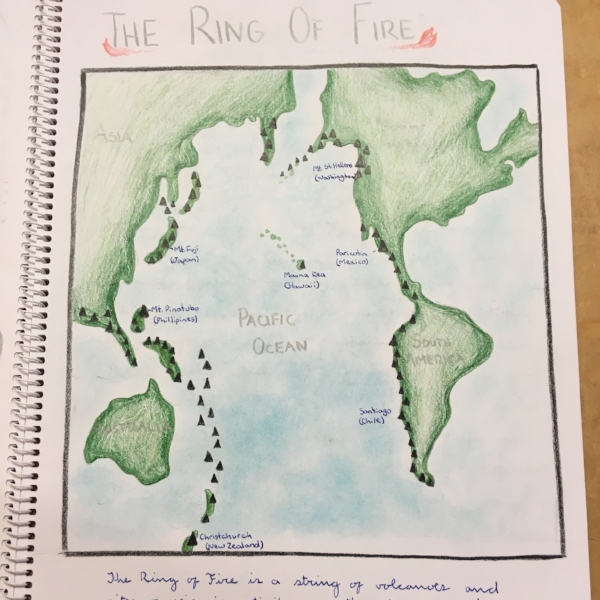
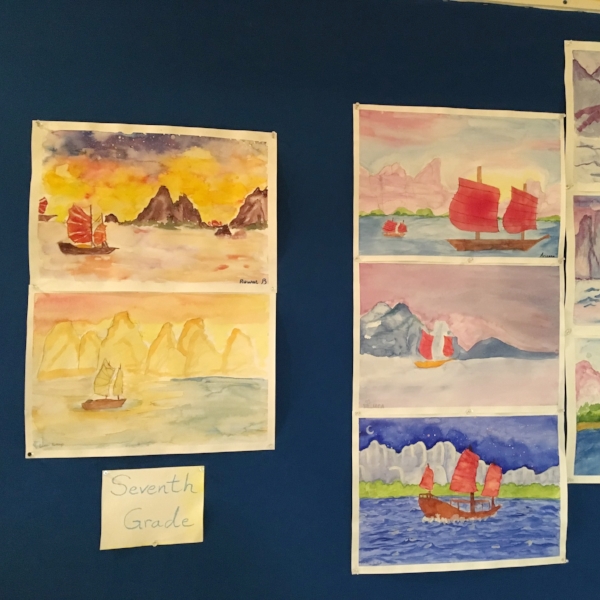
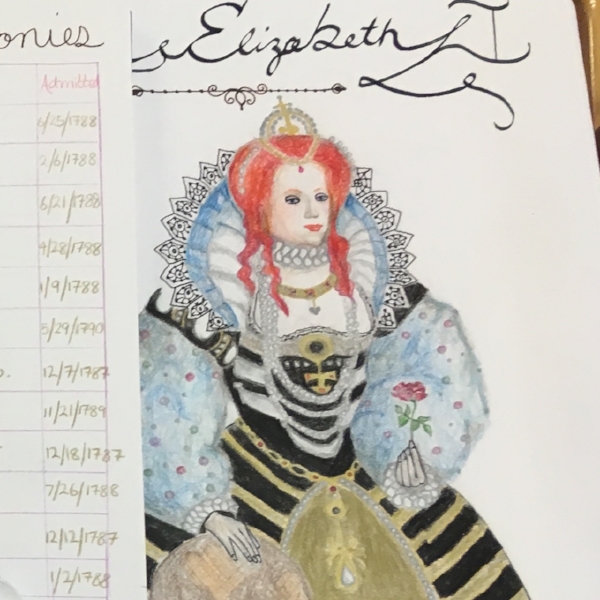
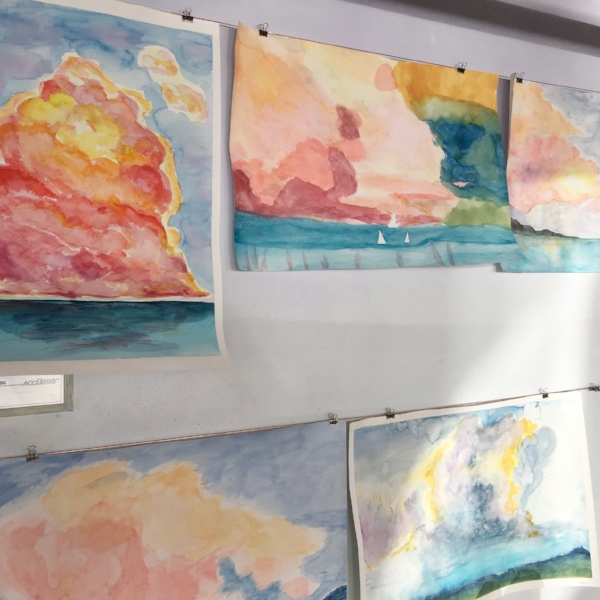
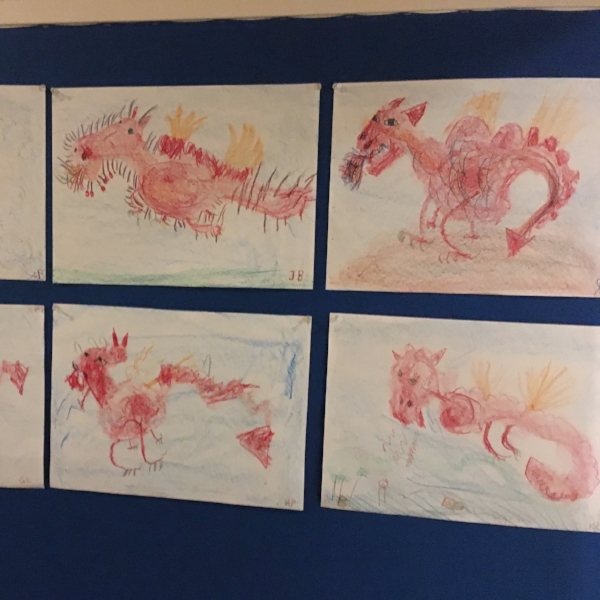
Examples from around the school so far this fall: preschool paintings, 1st grade dragon drawings, 1st grade beeswax trees, 2nd grade house drawings, 4th grade form drawing, a 4th grade seasonal Spanish lesson, 5th grade paintings, both from botany and a seasonal still life, a 6th grade main lesson book in geology, 7th grade paintings, an 8th grade history drawing and 8th grade paintings of clouds.


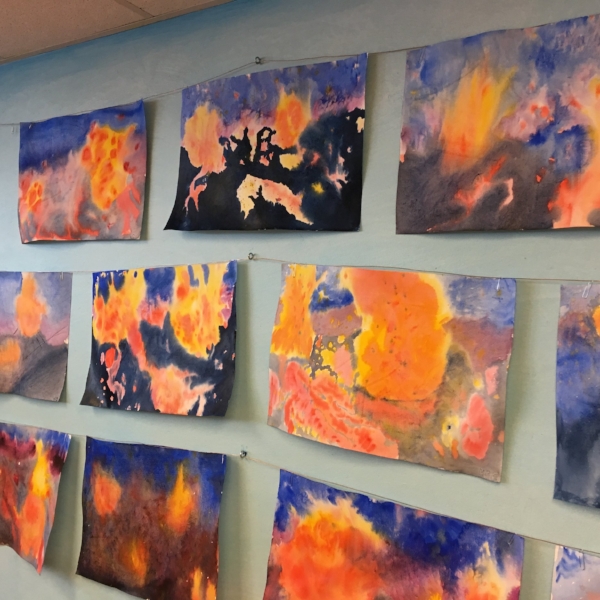
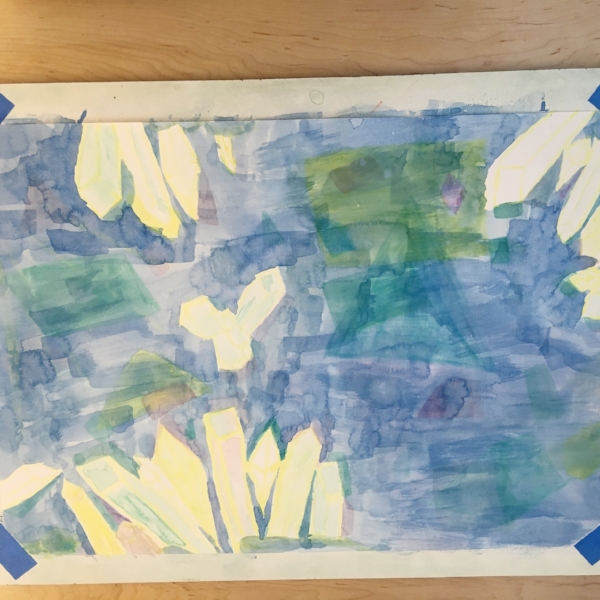
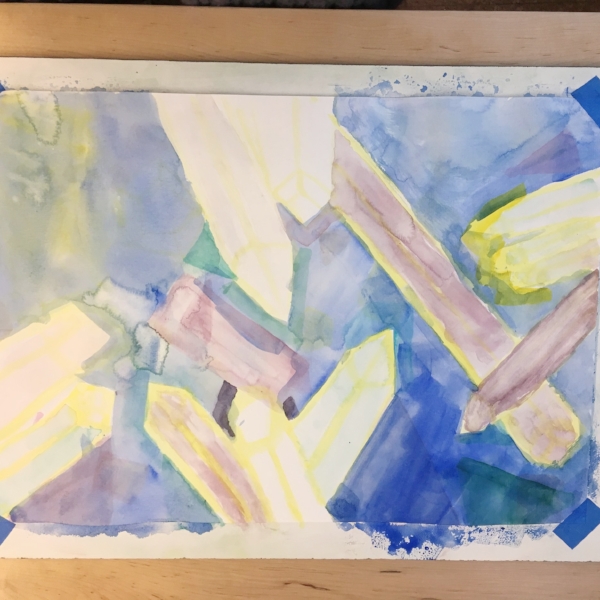
In preparation for parent/teacher conferences, specialty teacher, Dana Ashton wrote a summary of the 6th grade art class to share with parents, and we thought it offered a lovely glimpse into a couple month’s work in one class. See images of their work below.

We began our school year in 6th grade art with wet-on-wet watercolor work and mineralogy.  The first painting was loose in format to help the students warm up their hand/eye coordination and to stress the importance of light and dark contrasts used in middle school art.  We painted a receding cave or tunnel with Prussian Blue, Ultramarine and Red Violet, blending colors and striving to achieve dimension.  Our second painting featured crystals and we added a new color to our palette, blue-green.  Geometric shapes, straight lines, shading, light reflections and some blending of colors were emphasized.  Our third painting used warm colors and indigo along with lots of movement to depict a volcano erupting and lava flowing.  The careful use of indigo or charcoal-colored watercolor pigment was a new experience.  Keeping the illuminated areas of fire and light free from the opaque darkness of solidified, black rock is always a challenge.  

Our fourth painting tied in with the Geometry block and required several weeks to complete, being a veil painting on dry paper and building up layers of shapes and color by using weak pigments.  Most of the students had never tried veil painting and were surprised at how different it is.  We painted crystals again but had to be much more careful about the precision of geometric shapes.  Towards the end of October we started woking with charcoal for the first time and discovered its wonderful properties of mood setting through smudging and blending.  The first charcoal work depicted a Halloween scene and the second piece focused on Roman architecture - The Garni Temple in Armenia.  Next we will return to working with watercolors and paint a Roman aqueduct.  

Early Childhood at Madrona School -- Salmonberry Kindergarten

“To young children, of course, nature is full of doors — is nothing by doors, really — and they swing open at every step. A hollow in a tree is the gateway to a castle. An ant hole in dry soil leads to the other side of the world. A stick-den is a palace. A puddle is the portal to an undersea realm. To a three- or four-year old, ‘landscape’ is not backdrop or wallpaper, it is a medium, teeming with opportunity and volatile in its textures.” — Robert Macfarlane, Landmarks

The early childhood programs at Madrona School are full of the magic of outdoor exploration and imaginative play. Our students demonstrate their kinship with doorways to other worlds on a daily basis!

This past summer, our Salmonberry Kindergarten teacher, Isaac Kemsley, offered an overview of his classroom to other early childhood educators, and we thought you might find parts of it interesting too, as it illuminates some of why we do what we do in our early childhood classes:

In the Salmonberry mixed-age kindergarten, we believe that each individual child comes to us with their own unique destiny and purpose. Though we can’t know what that might be we task ourselves, as educators and facilitators, with availing them the opportunities to build their skills and strengthen their foundational senses. We also know from experience that by our modeling expected interactions and successful techniques, we show them a path to impulse control and higher executive functioning. Through repeated rhythms and routines, we foster the sense of connection and relationship to people and place…and we are blessed to witness building confidence within the children to engage in their learning with a lifetime of interest and wonder.

We educate through the will, offering opportunities to engage each child’s fine and gross motor dexterity, proprioceptive system, sense of touch, vestibular system and ability to work in a group, among many other things. In class we:

  • Bake Bread (measuring, scooping, pouring, stirring, kneading, sculpting)

  • Build Fires (choosing/carrying logs, hammering, stoking fire)

  • Hammock and Swing (swinging, rocking, hanging upside down, cuddling, resting)

  • Explore Trees and Trails (running and walking on uneven ground, exploring out of sight, imaginative play)

  • Play in the Sandbox (digging, scooping, sifting, imaginative play)

In each of these activities, the children wait their turn and practice patience. This is so very important. Patience is exercised in the children anytime you have an activity working together. It is a gift to learn to wait. Each child is unique in their starting place with this skill and all will grow if given the opportunity! These activities also offer opportunity for learning safety rules and for practicing those rules each and every time.

Children at this age learn new skills through their engagement, interest, and wonder in the world they see. Through imitation of those around them, they find meaning. Thus it is important that we, as educators, be worthy of imitation in our actions and words. If we are sparing with our word and action, imbuing each with thought and feeling, then we will see the fruits of our work in the children’s repeating familiar phrases, verses and songs as they go about their work and play. If they see us doing the good, important work of caring for our space and each other, we see it reflected in the children’s treatment of one another and the environment.

Madrona School Alphabet (I)

In our alphabet-based exploration on what makes a Madrona School education unique, 'I' is for imagination -- Our students develop and nurture flourishing imaginations, making them wonderful readers, good problem solvers, flexible thinkers and in possession of a rich, creative inner life to take into adulthood. 

Preschool play

A Waldorf school curriculum highlights the importance of imagination with lots of time and room for play in early childhood, both indoors and out. Isn't it magical to see the development of a young child's play, and the richness that happens when the planning and storytelling almost become the play? A well-developed imagination lays the groundwork for academic work, as well as enhances self-discipline. 

Drawing of a fair from a 6th grade student's medieval history work.

Throughout grade school, the curriculum continues to value imagination as a part of a healthy childhood. In first grade, for example, letters and numbers are brought through story, further developing that full inner pictorial life for each student. And storytelling enhances main lessons in every grade, adding depth to the academic work. A well developed imagination blossoms again and again throughout our children's lives.

"Imagination is more important than knowledge. For knowledge is limited to all we now know and understand, while imagination embraces the entire world, and all there ever will be to know and understand." –Albert Einstein