Some Parent Testimonials

We are grateful for those parents who chose to include testimonials for our website with their answers to our end-of-year survey this past summer. We highlight a selection of them here:

“Madrona School's approach to nurture our children's love of learning has been deeply moving. We appreciate how the school weaves the emerging scientific understanding of child's psychoneuro-developmental process along with the wisdom of Waldorf education. The school's ability to hold open and growing spaces for new information and the lived knowledge of the past to coexist has been important. Such a discerning and non-judging attitude the school embodies, we hope our children will continue to learn to practice to become who they are as unique individuals and as vital members of a meaningful community.” —Sierra, mother to two students

“The first week of school, my daughter said: ‘Mom , I wish school lasted until 5 pm’. The last month of school, she told me: ‘Mom, I wish school did not end so soon’.” —Mom of a 7th grade student

“This school brings so much joy to our child's life which in turn makes our lives so much richer. The wholesomeness and care each teacher puts into their students is in invaluable.” —parent to a kindergarten student

“Madrona is a gift to our children and the whole community! Keep up the great work! I tell everyone I come in contact about the school and what it has meant to our lives and our daughters! I have watched [them both] change dramatically since becoming part of the Madrona community. They entered unhappy and with a lack of confidence. Now I am in awe of how confident, happy and well rounded my daughters are! I for one will never be able to thank you enough for what your wonderful school has given them.” —Dad of two students

“My child’s teacher is ALWAYS prepared. Every week, everyday. She is amazing.” — from a parent of a rising 6th grader

“Rooted in the reliable insights of Waldorf and renewed by the inspired, loving presence of its teachers, Madrona School has been a wonderful blessing to our family. I'm very grateful.” -- parent of two students
The Purpose of the First Grade Circle

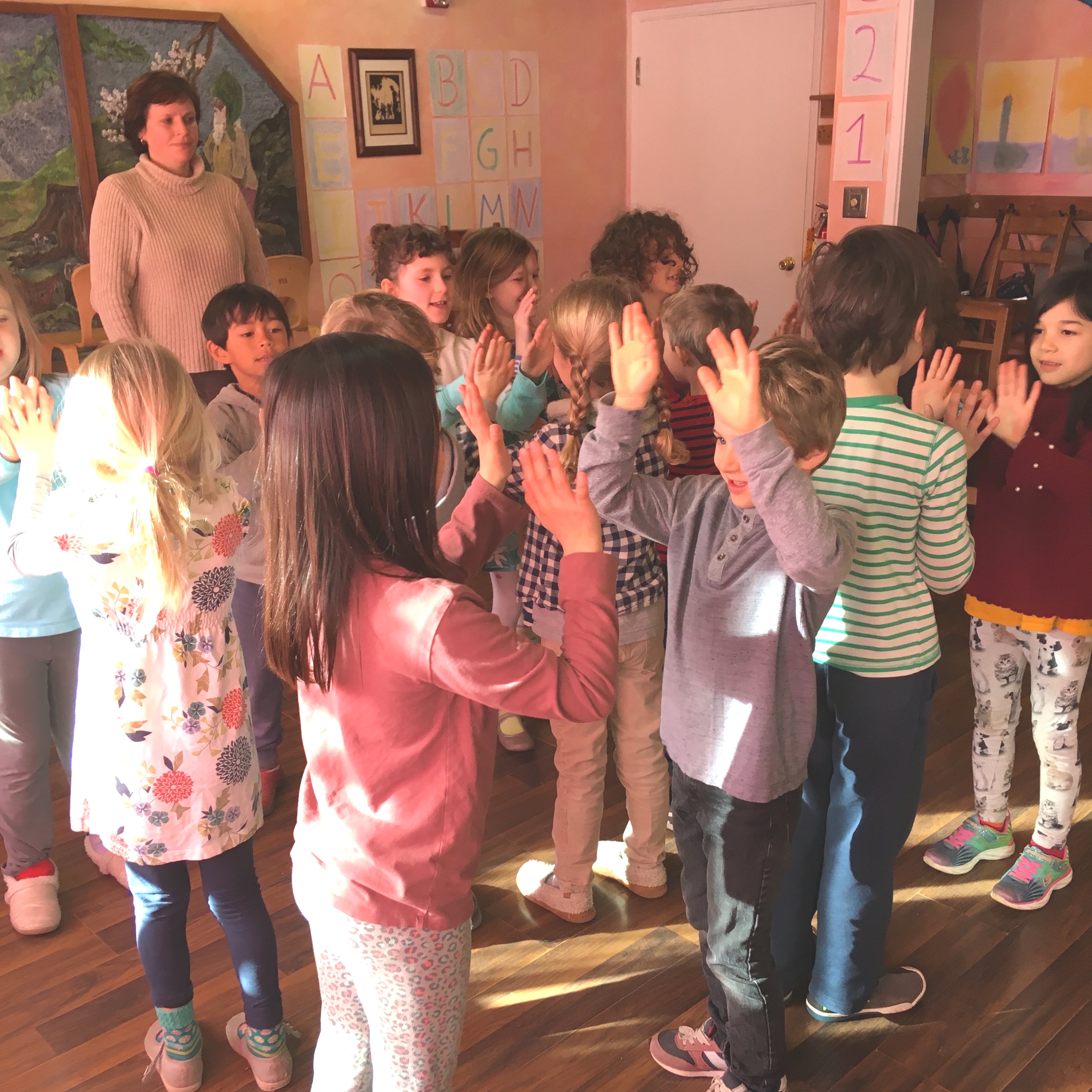
Back in October, at our Experience Waldorf event for parents, our 1st grade teacher, Ms. Hartz, shared the why and what of circle time in first grade. There is a lot behind what looks like fun to these eager students at the very beginning of their grade school journeys!

A first grader’s day begins with a handshake and a greeting to and from the teacher. The mood in the classroom is one of calm and expectation, sometimes with some excitement about something from home, or in anticipation of the day. The class speaks their morning verse together, and then, before moving into work at their desks, they will clear a space in the classroom for some circle time. A circle in 1st grade incorporates movement, music and singing, spoken word, rhythm, breathing, and concentration. It’s purpose includes:

  • Joy and delight

  • Awakening a healthy imagination

  • Wake up! Get out of breath, prepare to sit

  • Immersion in the season or “mood” of a block

  • Incarnation into hands/feet and fingers/toes

  • Creation of artistic and beautiful movement

  • Strengthen uprightness, endurance, coordination

  • Connect hemispheres of the brain

  • Working on body geography and spatial relationships

  • Enhancing a sense of touch, balance, controlled movement

  • Supporting speech development an sound/letter connection

  • Working on rhythm: foundational for math as well as music

  • Flexibility: work between polarities.

Ms. Hartz writes: “A first grader continues to be a being in movement. A first grader imitates out of an attitude of devotion and trust in the goodness of the world. Out of this feeling of goodness (reverence) will come an internal sympathy for goodness, a moral compass that does not need its own direct instruction.”

She shared her autumn circle with parents, including some of the “whys” behind its design:

  • Morning Verse to imbue and experience reverence and silence.

  • Seasonal Songs: Yellow the Bracken; The Autumn Winds; Golden is the Garden (to learn the months, movement crossing midline); Ghost of John (for fun).

  • Form a Ring: Expansion Contraction (to learn to make a beautiful circle); One for the Golden Sun; A Sailor Went to Sea; Tony Chestnut (for slow, fast, quick, slow); Bean bags passed to Hickory Dickory Dock (coordination with your neighbor and the group).

  • Balance boards and beam.

  • Drink of water and move desks back in preparation for the day.

Morning verse, movement circles, music including singing and recorders, and recitation continue up through the grades and develop depending on the needs of the class and the teacher. Often, teachers include some math games and mental math too. Some teachers employ movement as a mid-morning break, while others prefer to begin the morning with circle time. Please ask your child’s teacher if you have questions about how she or he incorporates movement and music into a morning’s lesson!

A Note from Missi About Spiral of Light

Dear families and friends,

We are truly into the darkest days of winter with solstice just ten days away.  Amazingly, it will be lighter when we return from break in January than it is now!  While I find myself longing for the light to return, I am also grateful for the opportunities of reflection that this season offers.  

For me the season really kicks off with the Spiral of Light festival that we celebrated this past Sunday.  For those who haven't had the chance to come yet, imagine a room all in darkness.  In the center of a spiral of evergreen boughs laid on the floor, a candle is lit.  Solitary and dim, it barely begins to light the room.  Everyone sitting around the edges is swathed in darkness.  Our sweet-voiced teachers are singing an array of seasonal songs from both Christian and Jewish traditions: they sing in delicious harmonies in English, German, and French.  Through the singing, family after family walks the spiral to light a candle and set it down on golden paper stars sprinkled among the boughs.  Bit by bit the room becomes filled with a golden glow.  Suddenly, I realize that I can make out the faces of the people sitting across the room from me.  Friends old and new, grown-ups and children.  I am struck by the lovely metaphor that I have just witnessed, articulated in the words of one of the carols being sung: "Each little child shall shed her light, till all the world is warm and bright."

In this season of veritable darkness, I appreciate the unique light that each child and each parent shines into the world.  Thank you for sharing yourselves with this precious school community.

Reflectively yours,
Missi

— From our newsletter, December 11, 2018

Dia de los Muertos Celebration in 7th grade

This year our 7th grade class worked on a special project with Maestra Mabí to mark Dia de los Muertos. They each chose someone to remember through a painting or drawing, and they spent some time sharing (in Spanish, of course) about their choice. The resulting art was hung at our local art museum, BIMA, and helped round out the museum’s community-wide celebration.

Lowery Farm Campaign Update: Mark Your Calendars for November 28

Dear Madrona Families,

This is a very exciting time in Madrona School’s history. With our 20th anniversary just around the corner, Madrona School has a unique opportunity to create a legacy of Waldorf education on Bainbridge Island with the purchase of the Lowery Farm property. This very special piece of land has become an integral part of our school’s curriculum and culture, serving as our second kindergarten classroom, providing gardening and outdoor space for our 1st through 8th grade students, and hosting many of our lively school festivities.

Many people in our school community have been hard at work on a long-term plan to purchase the Lowery Farm property with the ultimate goal of building a new home for Madrona school on the site in the years to come. While that is still very much our goal, the reality is that without the farm we could not even continue to serve our current students and families—we quite literally do not have enough rooms in our current building for all of our students!

As we move closer to the 2019 deadline for purchasing the land, many of you have asked where we stand in the process. While the Board and Lowery Farm Acquisition Committee have been hard at work putting into place all the pieces that will go into making this dream a reality, nearly all that work has been “behind the scenes.” We’d like to take this opportunity to share with you our progress and alert you to some upcoming opportunities for greater involvement that we believe will be of interest to you.

To date, the Lowery Farm Acquisition Committee has been meeting weekly to accomplish the following items:

• Explore various financing options for the land purchase

• Develop a timeline for the land acquisition and corresponding capital campaign

• Lay the groundwork for an initial capital campaign focused on the land acquisition, including researching campaign consultants

• Work with the City of Bainbridge Island regarding the additional traffic study requested during the Conditional Use Permit proceedings

• Work with the architect on construction budgets and timelines for each of the three phases

While this is by no means an exhaustive list of all our activities, it does provide a snapshot into the work that has been going on behind the scenes to make Lowery Farm a permanent part of Madrona School’s future.

You can be involved as well! As we transition from planning to launching the campaign, we are looking for volunteers in the areas of construction, finance, fundraising and marketing to serve on active committees. The input from these committees will be crucial to the long-term success of the campaign.

To bring more transparency to the process and share additional details about the upcoming campaign, we hope you’ll join us for a Community Info Night on Wednesday, November 28 from 7-8pm in the EHCC Fellowship Hall. We’ll be presenting information on plans for purchasing the farm property, details on the capital campaign launch, and leave plenty of time for Q&A.

Rudolf Steiner said, “Man is not a being who stands still, he is a being in the process of becoming. The more he enables himself to become, the more he fulfills his true mission.” The success of the campaign and the acquisition of Lowery Farm will enable Madrona School to become more than we ever thought possible and fulfill our mission of bringing the joy of Waldorf education to generations of local families now, and in the future.

Sincerely,
Cindy Smith
Chair of the Madrona School Board

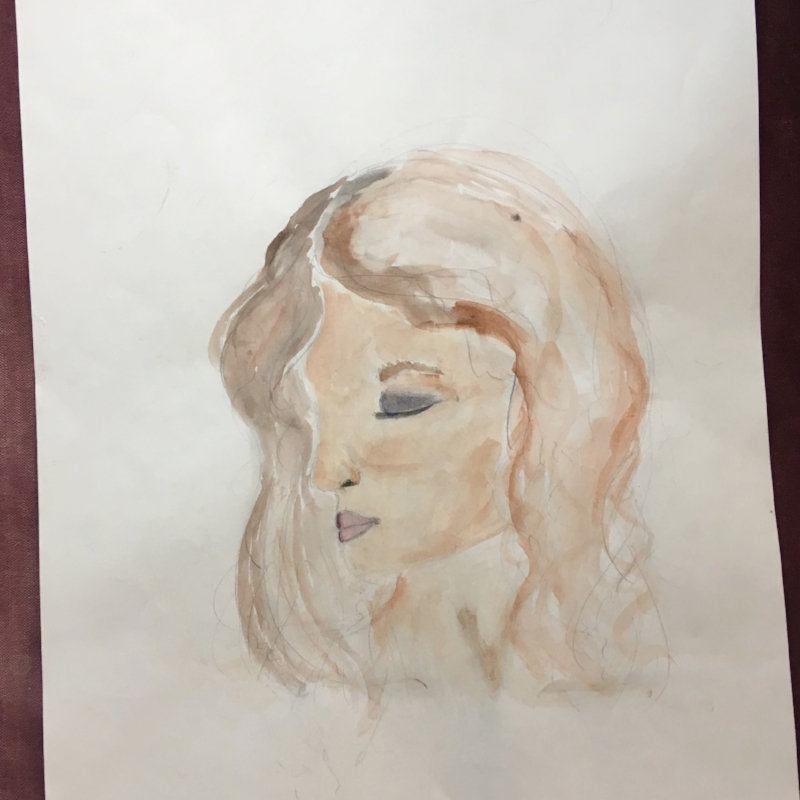
Art and Painting at Madrona School

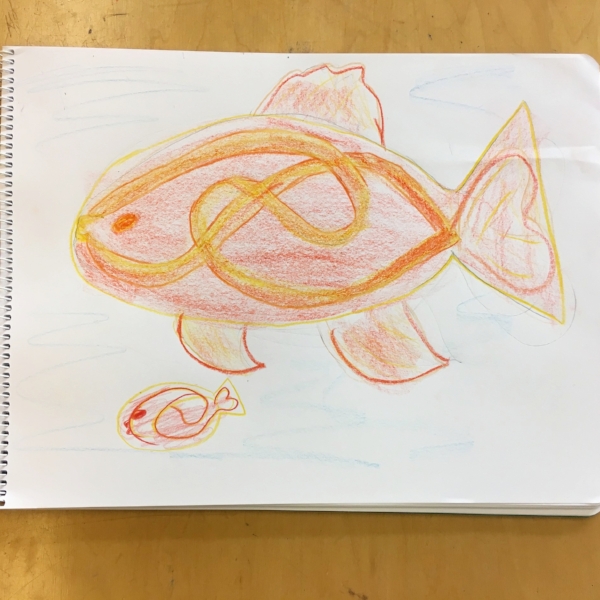
At Madrona School art is infused into every lesson, and children learn artistic techniques that they utilize each and every day. Morning main lessons with a class teacher employ drawing, alongside writing, recitation and movement, and every student creates their own book for each subject and world language. We also teach standalone art classes during specialty class periods, including modeling beeswax and clay, form drawing, and painting with watercolors. We also offer handwork classes, teaching knitting, crochet and embroidery.

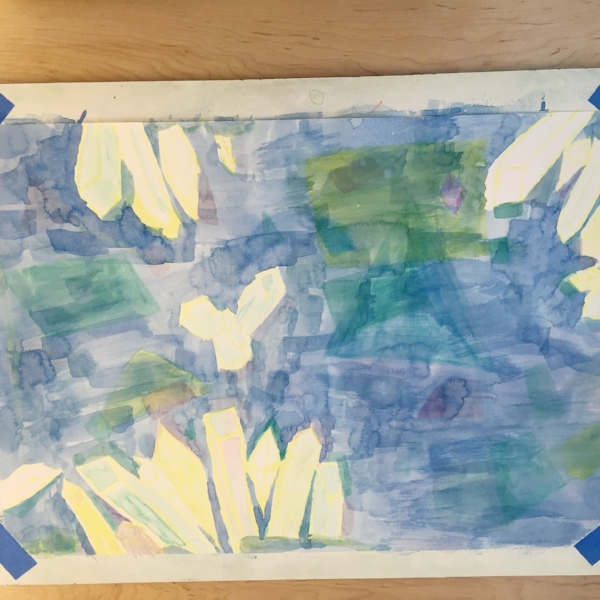
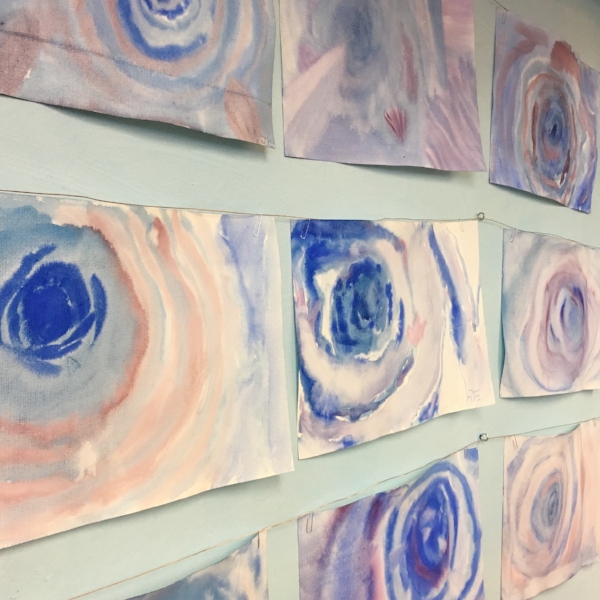
Beginning in our early childhood classes, and throughout grade school, students explore color and composition through a “wet on wet” technique, where wet paint is laid onto wet paper. This type of painting creates a wonderful flow of color, and takes time to learn. The results can be unexpected!

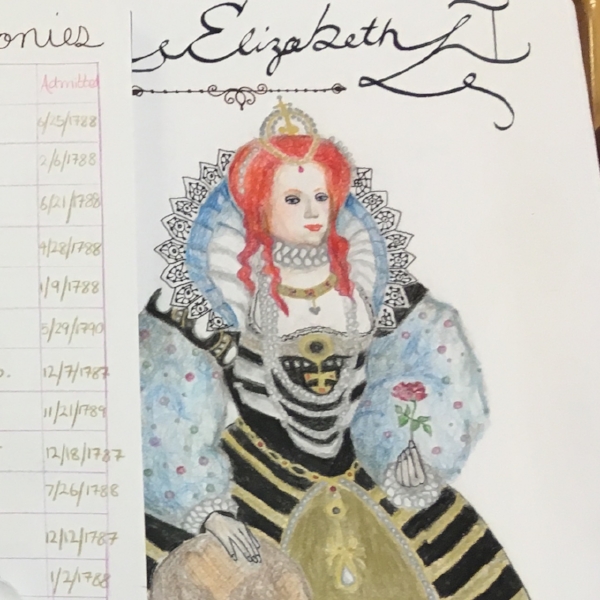
By the time our students are in middle school, they have years of drawing, painting, handwork, and a variety of craft experiences to inform their artistic efforts; they further their education with more sculpting, woodwork and perspective drawing. We value art as a human endeavor, and every one of our students is an artist.
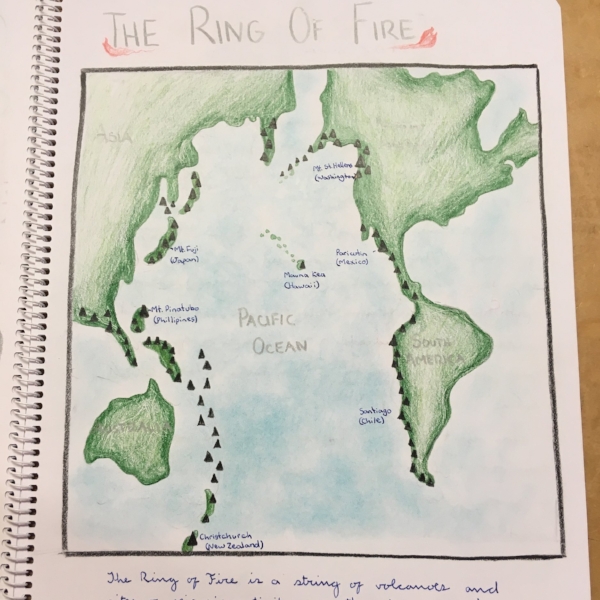
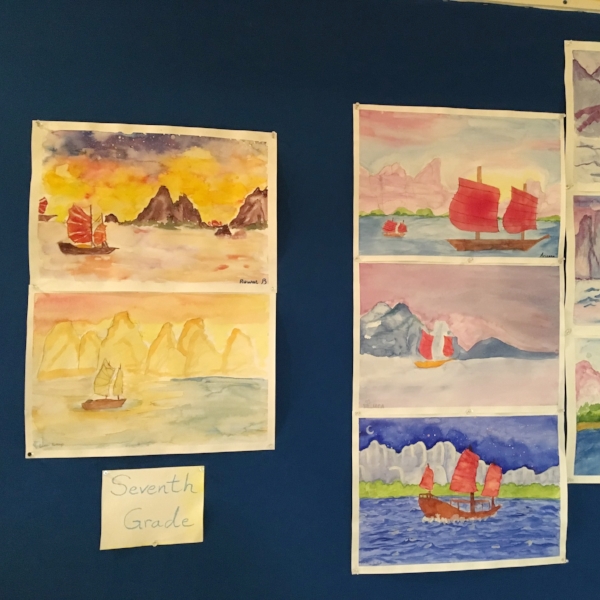

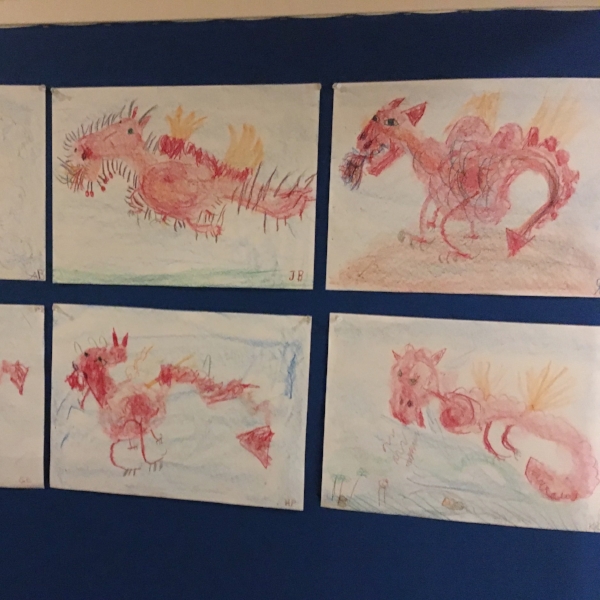
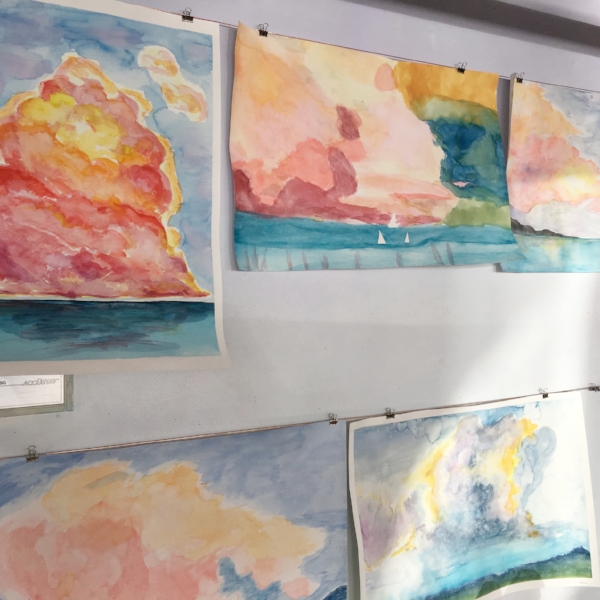
Examples from around the school so far this fall: preschool paintings, 1st grade dragon drawings, 1st grade beeswax trees, 2nd grade house drawings, 4th grade form drawing, a 4th grade seasonal Spanish lesson, 5th grade paintings, both from botany and a seasonal still life, a 6th grade main lesson book in geology, 7th grade paintings, an 8th grade history drawing and 8th grade paintings of clouds.


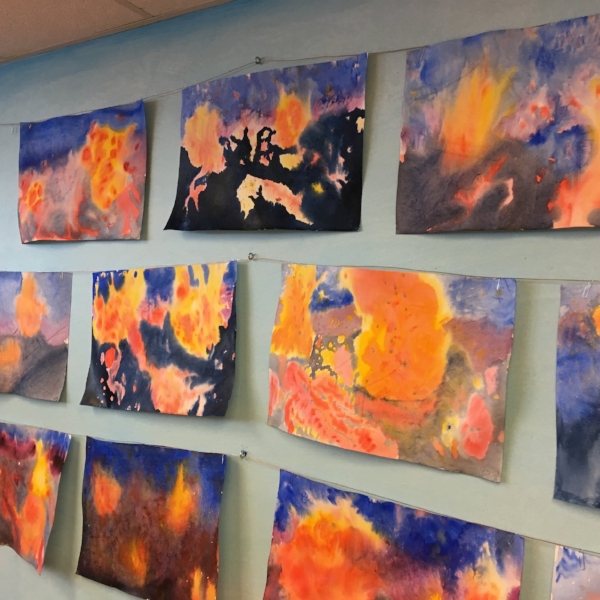
In preparation for parent/teacher conferences, specialty teacher, Dana Ashton wrote a summary of the 6th grade art class to share with parents, and we thought it offered a lovely glimpse into a couple month’s work in one class. See images of their work below.

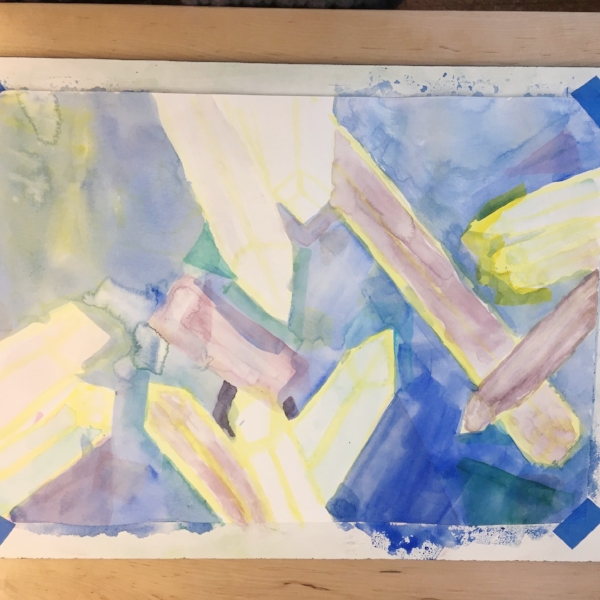
We began our school year in 6th grade art with wet-on-wet watercolor work and mineralogy.  The first painting was loose in format to help the students warm up their hand/eye coordination and to stress the importance of light and dark contrasts used in middle school art.  We painted a receding cave or tunnel with Prussian Blue, Ultramarine and Red Violet, blending colors and striving to achieve dimension.  Our second painting featured crystals and we added a new color to our palette, blue-green.  Geometric shapes, straight lines, shading, light reflections and some blending of colors were emphasized.  Our third painting used warm colors and indigo along with lots of movement to depict a volcano erupting and lava flowing.  The careful use of indigo or charcoal-colored watercolor pigment was a new experience.  Keeping the illuminated areas of fire and light free from the opaque darkness of solidified, black rock is always a challenge.  
Our fourth painting tied in with the Geometry block and required several weeks to complete, being a veil painting on dry paper and building up layers of shapes and color by using weak pigments.  Most of the students had never tried veil painting and were surprised at how different it is.  We painted crystals again but had to be much more careful about the precision of geometric shapes.  Towards the end of October we started woking with charcoal for the first time and discovered its wonderful properties of mood setting through smudging and blending.  The first charcoal work depicted a Halloween scene and the second piece focused on Roman architecture - The Garni Temple in Armenia.  Next we will return to working with watercolors and paint a Roman aqueduct.  
Early Childhood at Madrona School -- Salmonberry Kindergarten

“To young children, of course, nature is full of doors — is nothing by doors, really — and they swing open at every step. A hollow in a tree is the gateway to a castle. An ant hole in dry soil leads to the other side of the world. A stick-den is a palace. A puddle is the portal to an undersea realm. To a three- or four-year old, ‘landscape’ is not backdrop or wallpaper, it is a medium, teeming with opportunity and volatile in its textures.” — Robert Macfarlane, Landmarks

The early childhood programs at Madrona School are full of the magic of outdoor exploration and imaginative play. Our students demonstrate their kinship with doorways to other worlds on a daily basis!

This past summer, our Salmonberry Kindergarten teacher, Isaac Kemsley, offered an overview of his classroom to other early childhood educators, and we thought you might find parts of it interesting too, as it illuminates some of why we do what we do in our early childhood classes:

In the Salmonberry mixed-age kindergarten, we believe that each individual child comes to us with their own unique destiny and purpose. Though we can’t know what that might be we task ourselves, as educators and facilitators, with availing them the opportunities to build their skills and strengthen their foundational senses. We also know from experience that by our modeling expected interactions and successful techniques, we show them a path to impulse control and higher executive functioning. Through repeated rhythms and routines, we foster the sense of connection and relationship to people and place…and we are blessed to witness building confidence within the children to engage in their learning with a lifetime of interest and wonder.

We educate through the will, offering opportunities to engage each child’s fine and gross motor dexterity, proprioceptive system, sense of touch, vestibular system and ability to work in a group, among many other things. In class we:

  • Bake Bread (measuring, scooping, pouring, stirring, kneading, sculpting)

  • Build Fires (choosing/carrying logs, hammering, stoking fire)

  • Hammock and Swing (swinging, rocking, hanging upside down, cuddling, resting)

  • Explore Trees and Trails (running and walking on uneven ground, exploring out of sight, imaginative play)

  • Play in the Sandbox (digging, scooping, sifting, imaginative play)

In each of these activities, the children wait their turn and practice patience. This is so very important. Patience is exercised in the children anytime you have an activity working together. It is a gift to learn to wait. Each child is unique in their starting place with this skill and all will grow if given the opportunity! These activities also offer opportunity for learning safety rules and for practicing those rules each and every time.

Children at this age learn new skills through their engagement, interest, and wonder in the world they see. Through imitation of those around them, they find meaning. Thus it is important that we, as educators, be worthy of imitation in our actions and words. If we are sparing with our word and action, imbuing each with thought and feeling, then we will see the fruits of our work in the children’s repeating familiar phrases, verses and songs as they go about their work and play. If they see us doing the good, important work of caring for our space and each other, we see it reflected in the children’s treatment of one another and the environment.

Michaelmas Festival 2018

Each September we gather to celebrate Michaelmas, our first seasonal festival of the school year. Our festivals connect us to the natural world and renew our connections between classes, and among parents and friends. Michaelmas is a celebration of courage and harvest. This time of year we observe the seasonal changes in the natural world as plant life bears fruit and then begins to die back, leaves turn and animals prepare for the coming winter. Personally we find ourselves of two minds — trepidation for the shorter, darker, cold, wet days ahead, even as we feel a surge of energy and a counter force to the slowing in nature around us. The story of St. George fighting a dragon with the angel Michael’s help embodies this time of year, a call to gather courage and engage the dragons we need to battle and transform.

As the pictures below reflect, our festival includes challenges for all ages, a baked potato feast utilizing the bounty of our school garden, and a pageant of grade school students to both sing and tell the story of St. George taming the dragon.

Thank you so much to parent Julie Rings for sharing her beautiful photography of the festival with all of us. We are grateful!