Baking bread helps with brain development, a sense of ones own capabilities and provides warmth and comfort.

Our blog shares some of what is unique and wonderful about Madrona School and the worldwide Waldorf education movement. Madrona School is an independent, private school on Bainbridge Island (WA) offering Waldorf education for children ages 18 months - 12 years. We have parent-child classes, play - based preschool, nature - intensive kindergarten, and grade school classes. Our grade school offers arts - infused academics. We are located a ferry ride away from Seattle, WA in Kitsap County. Find out why Waldorf education is a time-tested alternative educational methodology.
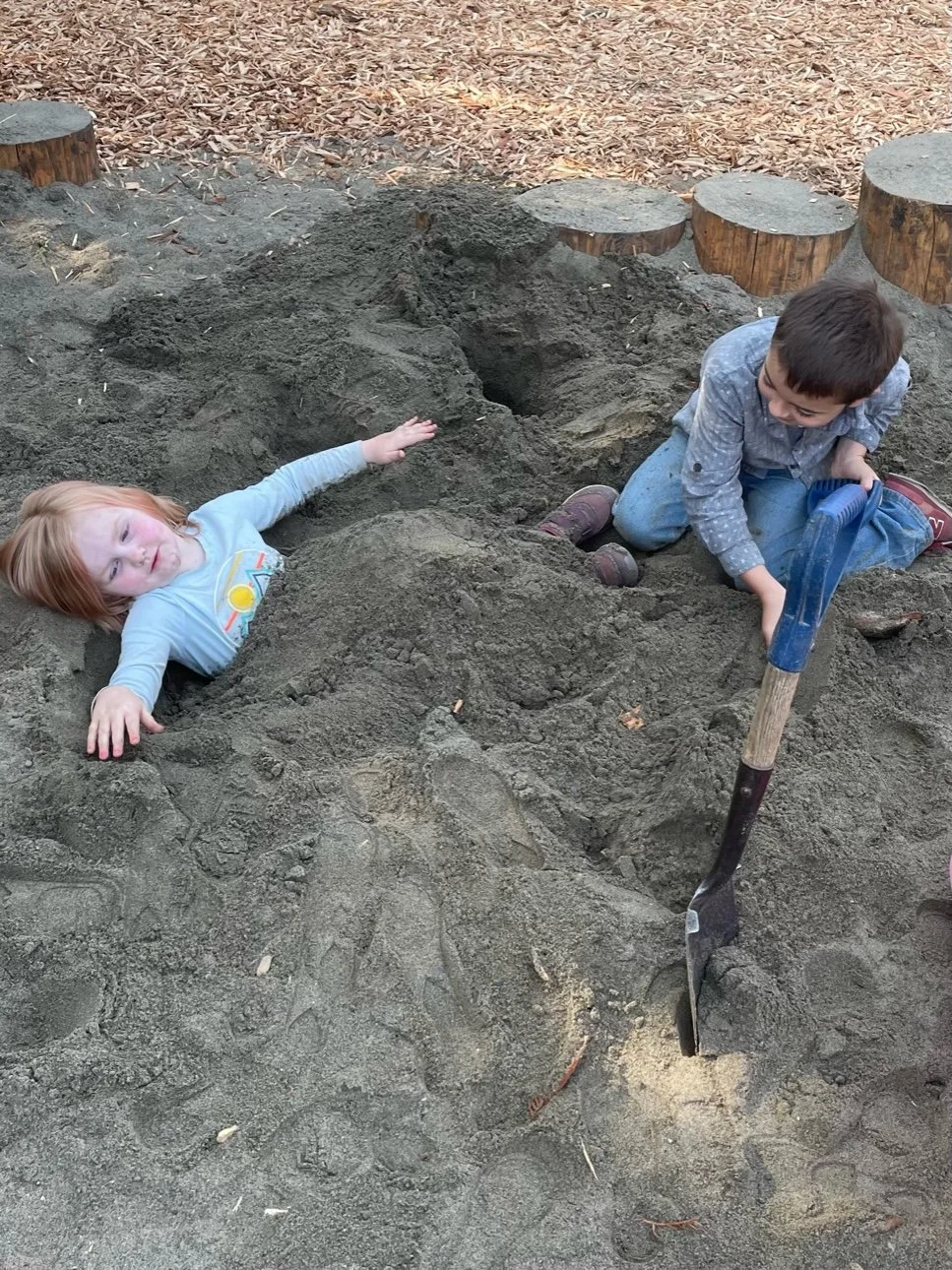
We help our children prepare for a life of learning by helping them develop their tactile sense. We do this by hugging & massaging, playing finger games, giving them bread or play dough to kneed, and exposing their skin to a variety of natural materials. Do you want your kids ready for school? Let them play in the mud.
By Isaac Kemsley, Salmonberry Kindergarten Teacher
Madrona School, Bainbridge Island, Washington
“The school strives to create a healthy learning atmosphere devoid of commercial or media promotion. We request that clothing be simple and “quiet.” Please avoid as much as possible pictures or images derived from cartoons, movies, TV, computer games, or the internet.”
The excerpt above is from our Family Handbook in the Supporting Your Child At School chapter, under the Dress Code section. But why does Madrona ask parents to avoid graphic tees and logo prominent gear when dressing a child to go to school?
First and foremost, it is important to acknowledge that it is a gift to the focus of a student and their peers in the class to forgo the distraction that graphics and logos demand. When standing across from one another in the circle or sitting at the snack table or story circle, a cartoon character on a sweatshirt or a busy graphic patterned t-shirt calls for the attention of the children, pulling that focus away from the story or game at hand. To send a child to school in solid colors or subdued patterns allows for a visual exhale so everyone can relax into the tasks of the present moment.
Secondly, the video game and cartoon imagery from shows and games triggers performed and pre-formed plot-lines/scenes/dialogue in the children’s minds. This upsets the natural inclination of the young child to play freely and imaginatively. Instead of drawing upon their environment and surroundings to collaboratively and interactively create play with their classmates, they often reenact storylines and scenes that have already been formed and tend to have an inflexibility to change, as the outcome has already been written by teams of screenwriters or video game designers.
The young child does not yet differentiate between fantasy and reality. All that is perceived through the senses feels very real to them and builds their conceptions of reality. At this age it is extremely important that what is available to them is worthy of their absorption and digestion. That is why in Waldorf Schools, teachers take great care to bring lessons and stories that contain archetypal human truths and are built upon the essential reality and wonder of the natural world.
Finally, it is important to remember that the characters and logos and cartoons are not well-intended visitors to our classroom and school. They are not good friends to the children, as the children often believe that they are. As adults know, they are “spokes-creatures,” carefully crafted by multi-million dollar teams of marketers, sociologists, psychologists, graphic designers to create the next generation of consumers. The show or game or shirt or water bottle or lunchbox is only one of many opportunities for crossover merchandising and building lifetime brand loyalty in a child. The video game/streaming/toy industries are all vying for our attention and our loyalty and ‘love’… but mostly our dollars. Do we really want to support and enable these corporations to market to our children?
One of our goals at Madrona School is to provide a break from the fast-paced, anxiety producing hustle and bustle of everyday life. We do that by surrounding the children with beauty and nature. Please help us achieve our goal by dressing your children in calm, quiet clothing. Thank you.
Discord between children happens because they are human beings, and like the rest of humanity, they are learning to manage differences, handle conflict and power, come to terms with violence and aggression, and test their own human capacities. Madrona School responds to these situations with consciousness and compassion.
Waldorf Early Childhood Teachers make a conscious effort to model work that is important to skill building in the young child. Cooking, cleaning, preparing our activities and space, tidying, mending and repairing, all of these activities are made available to the children as we do them throughout our day. The children dabble, in child-sized portions, with trying real work and then quickly translate it into their imaginary play world to process and practice these new skills.
By Isaac Kemsley, Salmonberry Kindergarten Teacher
Madrona School, Bainbridge Island, Washington
Working with young children for the past several decades has shown me the absolute importance of sincere reflection upon how I present myself. As a teacher and as a parent, the children in my care have taught me that my actions carry more weight than my words.
Children in their early years learn from observation and imitation. They are watching the adults in their lives for non-verbal cues to see what is acceptable and worthwhile in our culture. A child learns not only from the classroom, but constantly throughout the day in a myriad of environments: home, car, grocery store, playground, etc.
This sponge-like absorption of the world around the young child allows them to grow at a rapid rate in their early years, absorbing language, social norms, and behavioral expectations. It also pushes the adult responsibility of self-reflection to the forefront of our parenting tool chest.
I am challenged every day, as a teacher and a parent, to grow as a conscious human being and to attempt to display actions that are worthy of emulation. It is sometimes a difficult, daunting task. At times I fail and must be forgiving of my personal shortcomings. But I feel that I owe it to myself, the children, and society as a whole to continue trying.
I challenge you all to approach parenting as a path to your own personal growth. Consider mentally picturing your children as YOUR teachers, who are here to show you the areas in yourself that you could reflect upon and perhaps evolve over time.
In that vein, I ask you all to approach drop offs and pickups this school year with a high level of consciousness.
Try to give your child your undivided attention when saying goodbye in the morning. Some physical expression of your affection, a verbal reminder of who will be picking them up after school, and the firm inner conviction that they will be well cared for and emotionally successful in their day; these actions will buoy them through the gate into new waters.
At pickup in the afternoon, please put away your phone or wrap up your adult conversation before greeting your child. Drop down to their level, look them in the eyes, giving them your whole attention and hearing what they have to share with you. This will show them that their experience matters. It models for them the listening skills that we hope they will to develop in their lifetime.
I also recommend that at the beginning of the year, you limit after school activities and play dates, as your child will be quite tired from the physical activities and social output that they have exerted during their day. They might ask or even beg for more stimulation, but as the wise adult, you know that they need to have some lunch/water/quiet time or a nap, so a firm and loving plan for downtime is the best way to begin the year.
There are times where these approaches might not be possible, and that, too, is alright. If the children regularly see that direct, meaningful connections are important to us, those connections will remain important to them.



Madrona School is a non-profit, tax exempt public charity organization incorporated in the State of Washington. Madrona School does not discriminate on the basis of race, color, gender expression or identity, national and ethnic origin, sexual orientation, or religion in any of its programs, classes or activities.