early childhood

Madrona At Home

Hello to you all from our bedroom offices, our couch classrooms and our kitchen science labs! We wish you good health and lots of rest. We miss our in-person community very much and we look forward to a time in the near future when we can gather together in our classrooms and as a school. In the meantime, Madrona School is continuing to offer learning materials and community through our program, Madrona At Home. Please reach out if you have any questions or concerns — we are always happy to hear from you!

Our head of school, Deborah Newlen shared the following in our newsletter after our first full week of COVID-19 related closure:

A Few Madrona at Home Tips for Families From Deborah

As we all live into our new shared experience, we can discover what works and supports us and our children. What follows is my list of tips based on the last week of alternate reality. Please feel free to email me with your ideas and we will include them in next week’s newsletter. It would be great to have the “Madrona Brain” transcend sharing in individual classes and represent community wide thinking.

  • Absolutely get outside for an hour a day, especially if you are spending more time at the computer than is normal.

  • Take a bath with Epsom salts and/or an essential oils.

  • Do something to distinguish down time from “on” time and remember to still create dedicated personal and family time that is not about work or school or specific responsibilities.

  • Check out the many museums online that have posted some or all of their collections because of the coronavirus.

  • Write a physical letter to someone you care about.

  • Notice that it is glorious spring; nature’s shelter in place season has passed.

— edited from our weekly newsletter, March 24, 2020

Madrona School Alphabet (U)

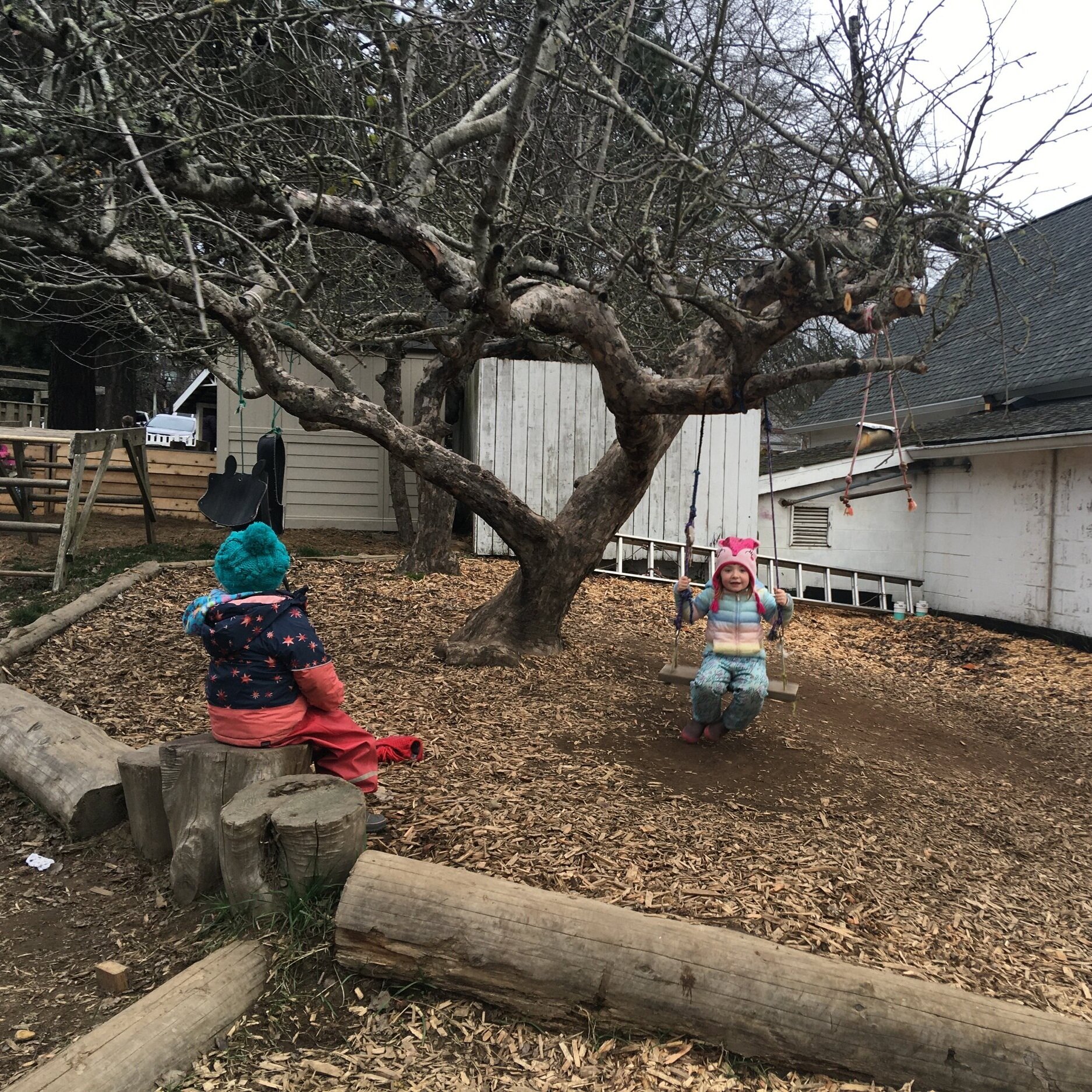
‘U’ is for Madrona School’s unhurried approach to beginning school. Our youngest students attend Madrona with their parents or caregivers as a part of our parent-child program. This unique once-weekly class allows children a gentle, warm and nurturing introduction to school as a social setting outside of their homes, and it provides a community for their caregivers too. We offer a warm snack, lots of time to play with our open-ended and natural toys both indoors and out, a circle time with songs and story and some parent education. It's a mini-version of our preschool and kindergarten classes, in effect, and serves to introduce families to Waldorf education, as well as support them in creating a rich, nurturing home environment. As a parent, you'll find yourself learning songs for transitions that you'll still sing years later! This class is also often the beginning of a class community , and some of our grade school students (and their parents!) "met" in parent-child.

Madrona School Alphabet (S)

The letter ‘S’ highlights the unique way in which Waldorf education honors the human spirit. In Waldorf language, we say we educate "the hands, the heart and the head", referring to the curriculum's reach to the doing (our hands), the feeling (our heart) and the thinking (our heads). We strive to honor and recognize (rather than instruct) each child's soul, each child's developing inner life, as they grow and mature, as well as those of our classmates, our teachers and the cultures and civilizations that we study throughout elementary and middle school.

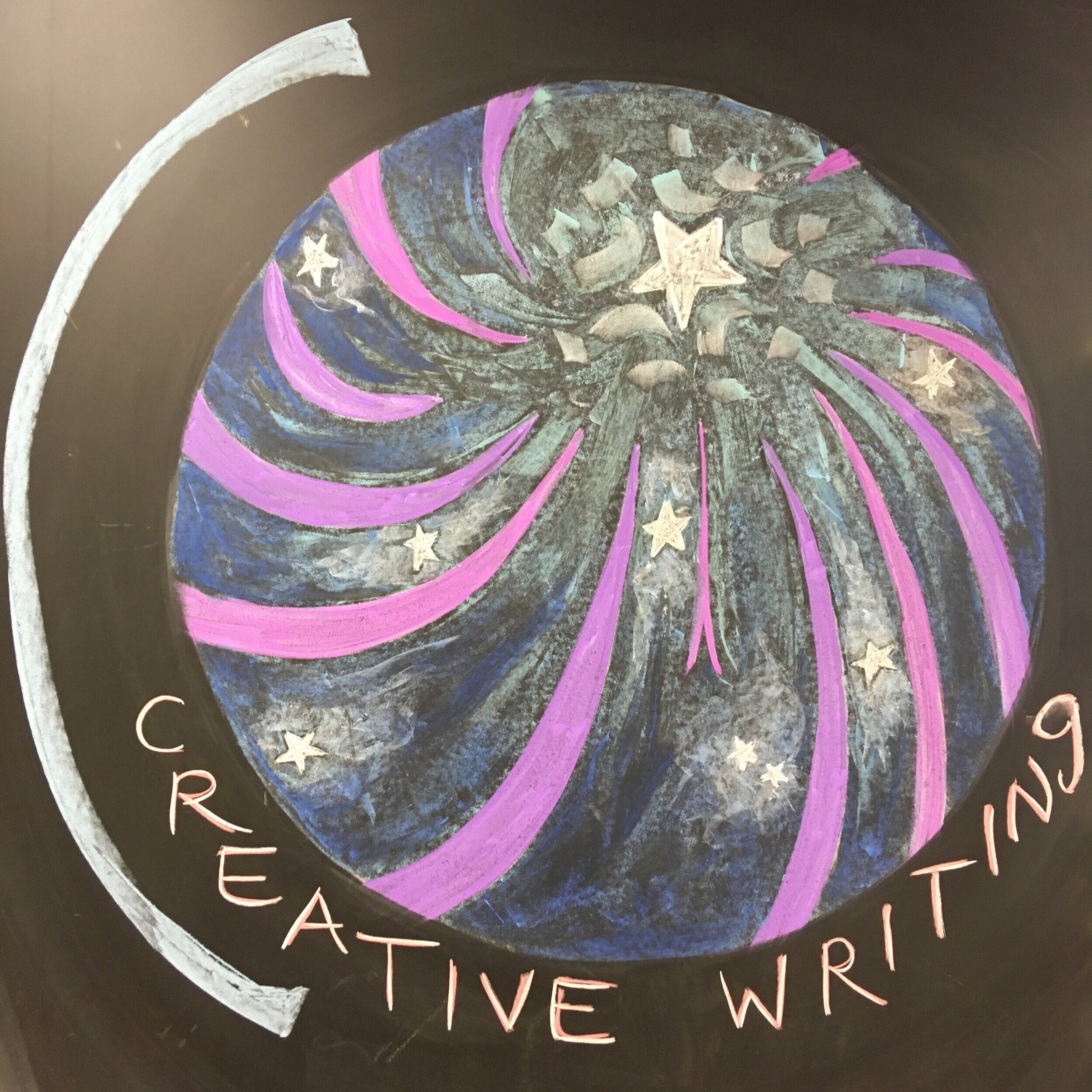
Chalkboards from the grade school classrooms in 2019.

Embedded in this liberal arts non-parochial education is a profound sensibility that there is a spiritual element to our humanity, and an innate capacity in all of us for reverence and wonder. What does this recognition look like on a daily basis? In his book, "The Way of the Child", AC Harwood writes: "It is perhaps this life of feeling, this soul life, which is least understood in education today. We instruct our children in the classroom -- or in the more modern fashion we allow printed books to instruct them -- and then when they are tired we send them out to play games. But between knowledge and activity lies a whole world of wonder and reverence, pity, joy tenderness and sorrow….Everything they learn must be transformed into wonder and beauty, there must be no 'ordinary' lessons. Painting, modeling, acting, rhythmical movement, these must become for these young children the very way of knowledge. If you succeed in teaching in this way, you are uniting what is nowadays divided -- the forces of the head with the forces of feeling and of movement."

There is an element of mindfulness in the way we begin each morning. The grade school children begin each day with a morning verse, calling out for strength in body, mind and spirit. For example, in 1st through 4th grades, they stand and say together: "The sun with loving light, makes bright for me each day. / The soul with spirit power, gives strength unto my limbs. / In sunlight shining clear, I do revere, Oh God, the strength of humankind that thou hast so graciously planted in my soul. / That I with all my might, may love to work and learn. / From thee come light and strength, to thee rise love and thanks." God, as referred to in this verse, can stand for those higher aspirations we all possess, including honor, truth, beauty and nobility. This moment is just one way we offer a sense of reverence, a call to purpose in order to begin the day.

And, by the time a student graduates the 8th grade, they've not only spent years honoring their own inner life, but they've also learned something about the religious and spiritual traditions of Buddhists, Jews, Christians, Muslims, Hindus, and many other cultures around the world. This reinforces the basic humanity of our soul life, the importance of being fully human and alive.

This is, of course, a glancing skim over this topic in Waldorf education. But, at the core, what a gift it is to honor a child's spirit, to help them to grow with the full recognition of the importance of their own humanity, and the necessity of respecting that of people around them -- truly something wonderful to take into adulthood.

If you are curious to learn more, please talk with your child(ren)’s teacher(s)!

— adapted from our school newsletter

Madrona School Open House -- Join Us!

The whole family is very welcome to join us on Saturday, January 11 between 10am and 12pm for our annual school-wide Open House. Come meet teachers and see classrooms. We’ll have information available on next year’s early childhood programs and we are eager to show off work and teachers for grades 1-8 too! Bring a friend or neighbor — this is truly a “more is merrier” morning at school. Hope to see you there!

Madrona School Alphabet (Q)

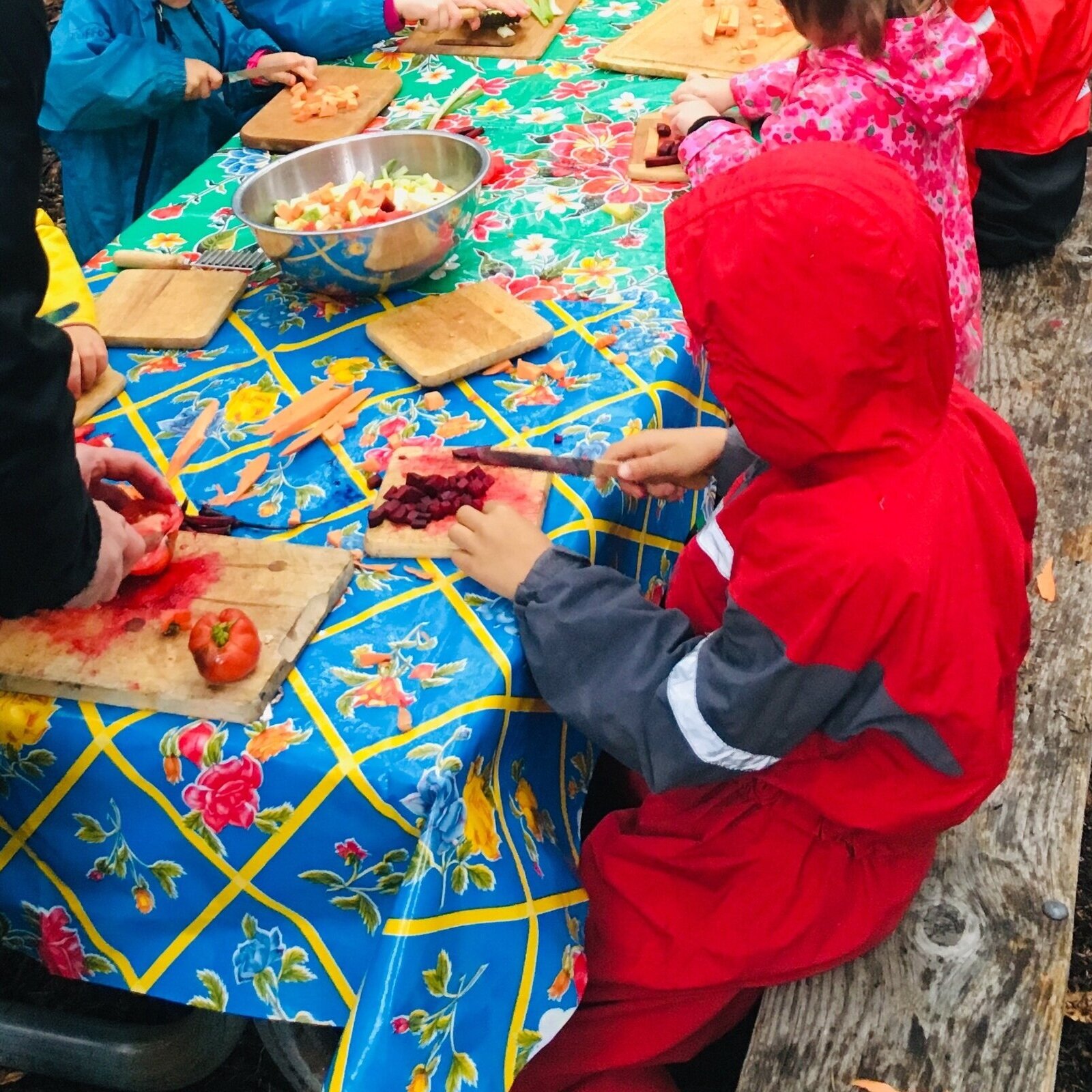
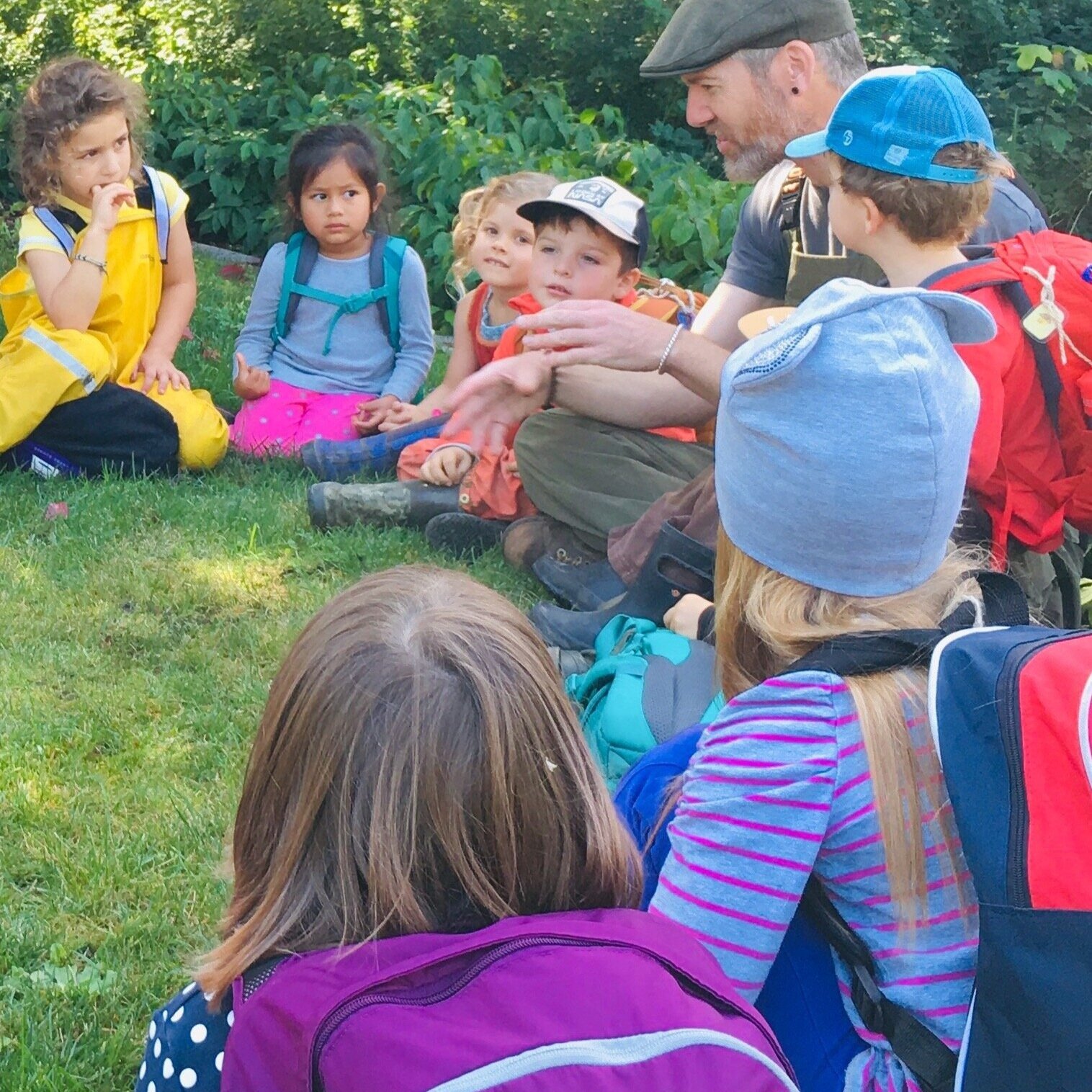
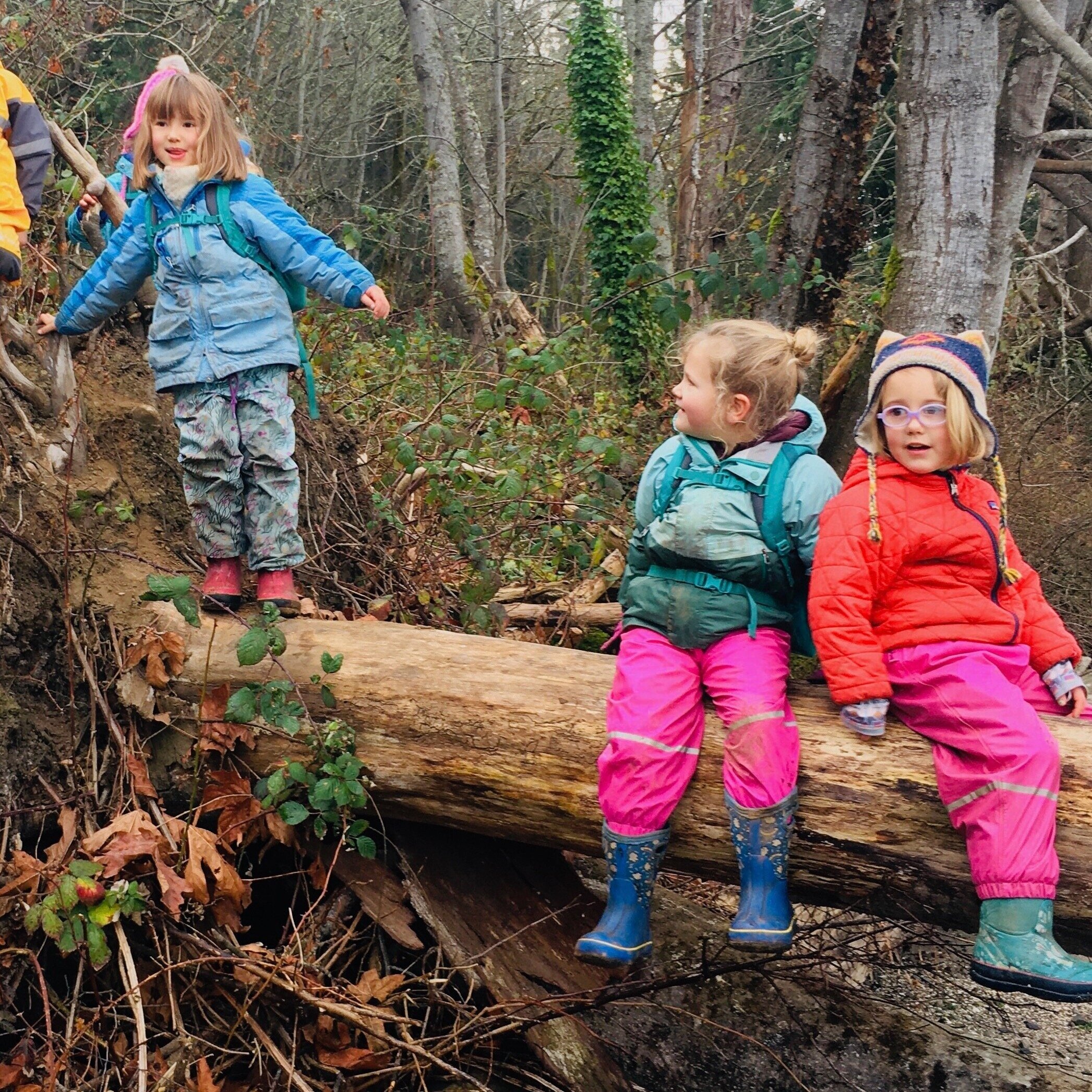
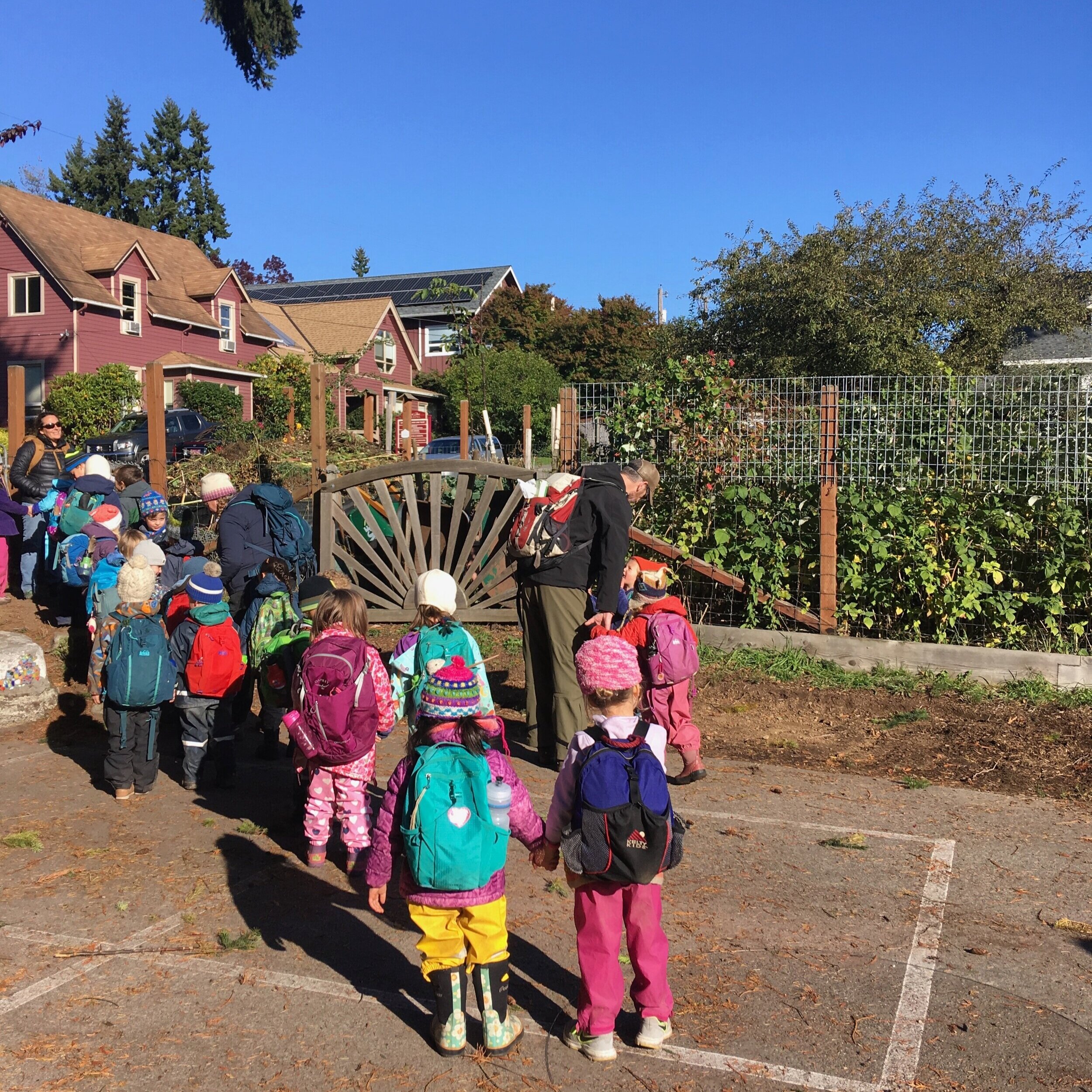
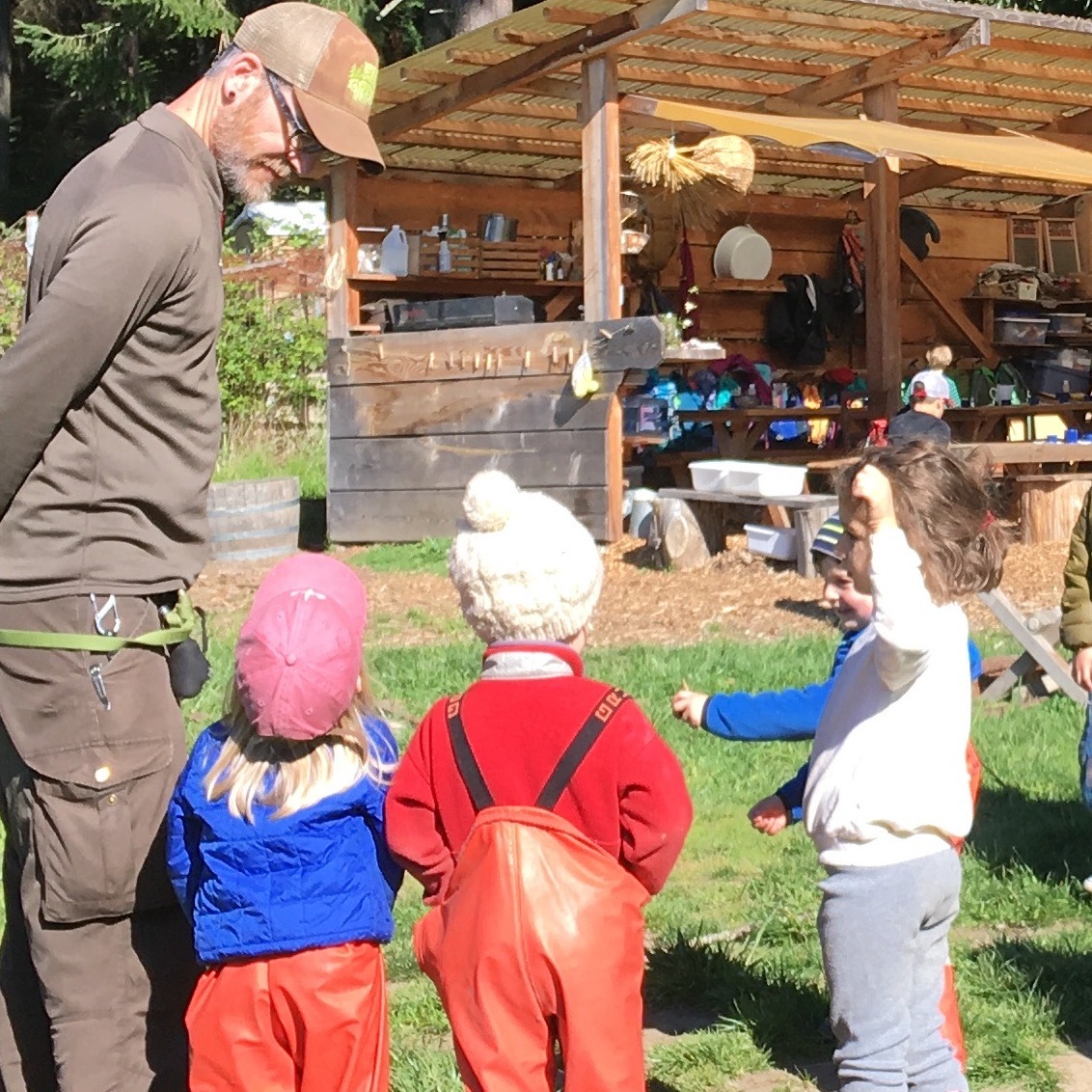
At Madrona School, ‘Q’ stands for quesadillas…and peppermint tea in enamel mugs, good rain pants and boots, and a healthy dose of fresh air. Everything that makes outdoor kindergarten a pure joy! Children need time outdoors -- time to explore, problem solve, work hard, get dirty, lay quietly watching bugs or clouds, run, yell, chase, climb…. Each day, our kindergarteners do just that and more, at school and in nearby parks and beaches around the island. And, Friday’s class also enjoys an additional day out hiking and exploring on “adventure Fridays”. Experiencing the outdoors is an integral part of our curriculum, and represents a whole and healthy childhood. Rosy cheeks and the muddy boots are wonderful things! In our society at large, today's children spend an average of over seven hours (!) each day engaging with media of some sort, according to one study by the Kaiser Family Foundation -- and this was after data collection three separate years showed steady growth in that time. The National Wildlife Federation offers a list of recent research studies, many of them concluding that children's outdoor time is shrinking, and stands at well under an hour a day. Follow the link here to download their report entitled "Whole Child Report: Developing Mind, Body and Spirit Through Outdoor Play". Sound familiar? It's an excellent read. What a gift we give our youngest students, who can prepare for grade school with a healthy dose of movement and imaginative, nature-rich play. Engaging the whole child is a basic principle of Waldorf education, and one that ideally prepares our children to be resilient, hardy contributors to the world around them, and to find pleasure in the "great outdoors". We believe a Waldorf kindergarten education is beneficial to your children, your family, and to the wider world!

— adapted from our school newsletter

Madrona School Alphabet (P)

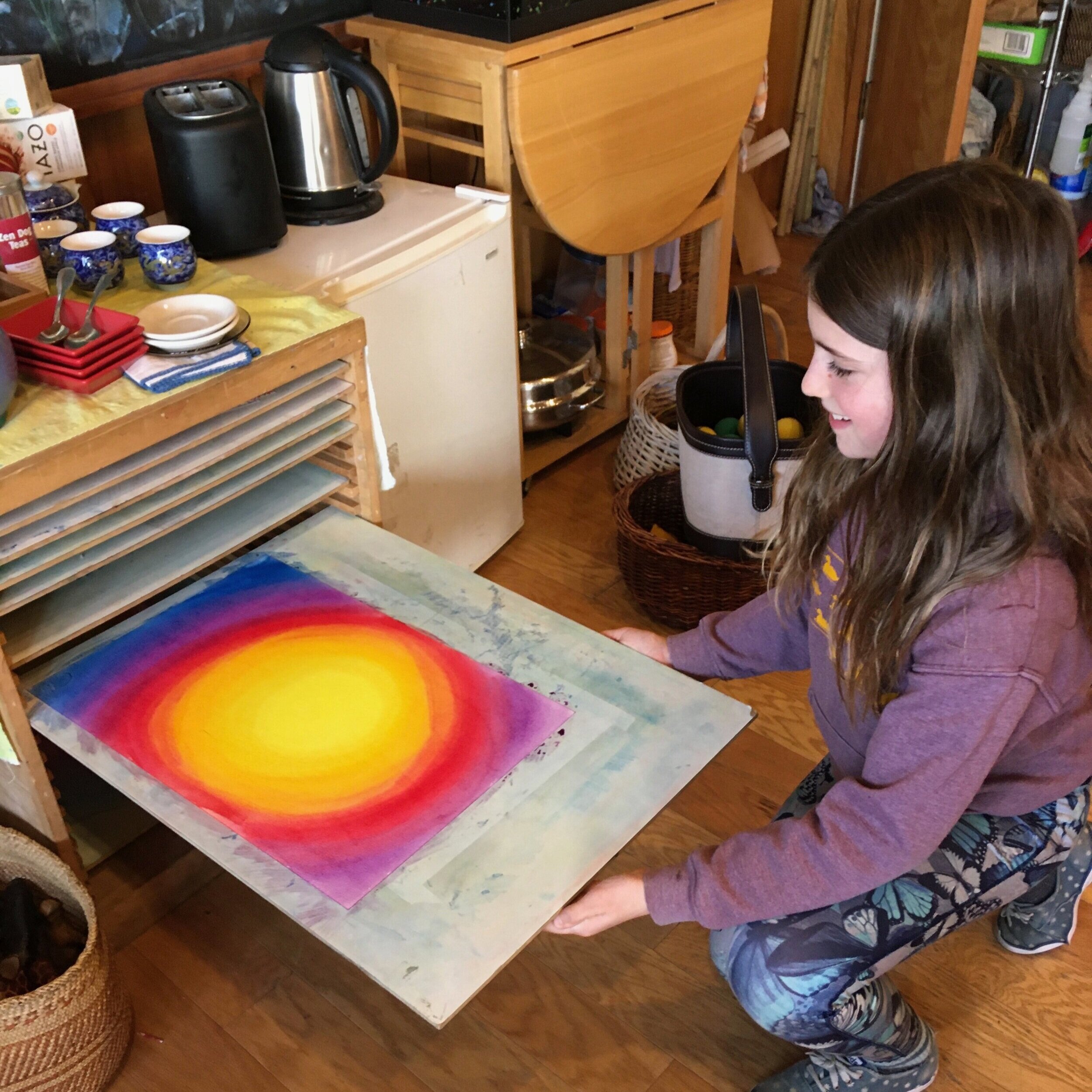
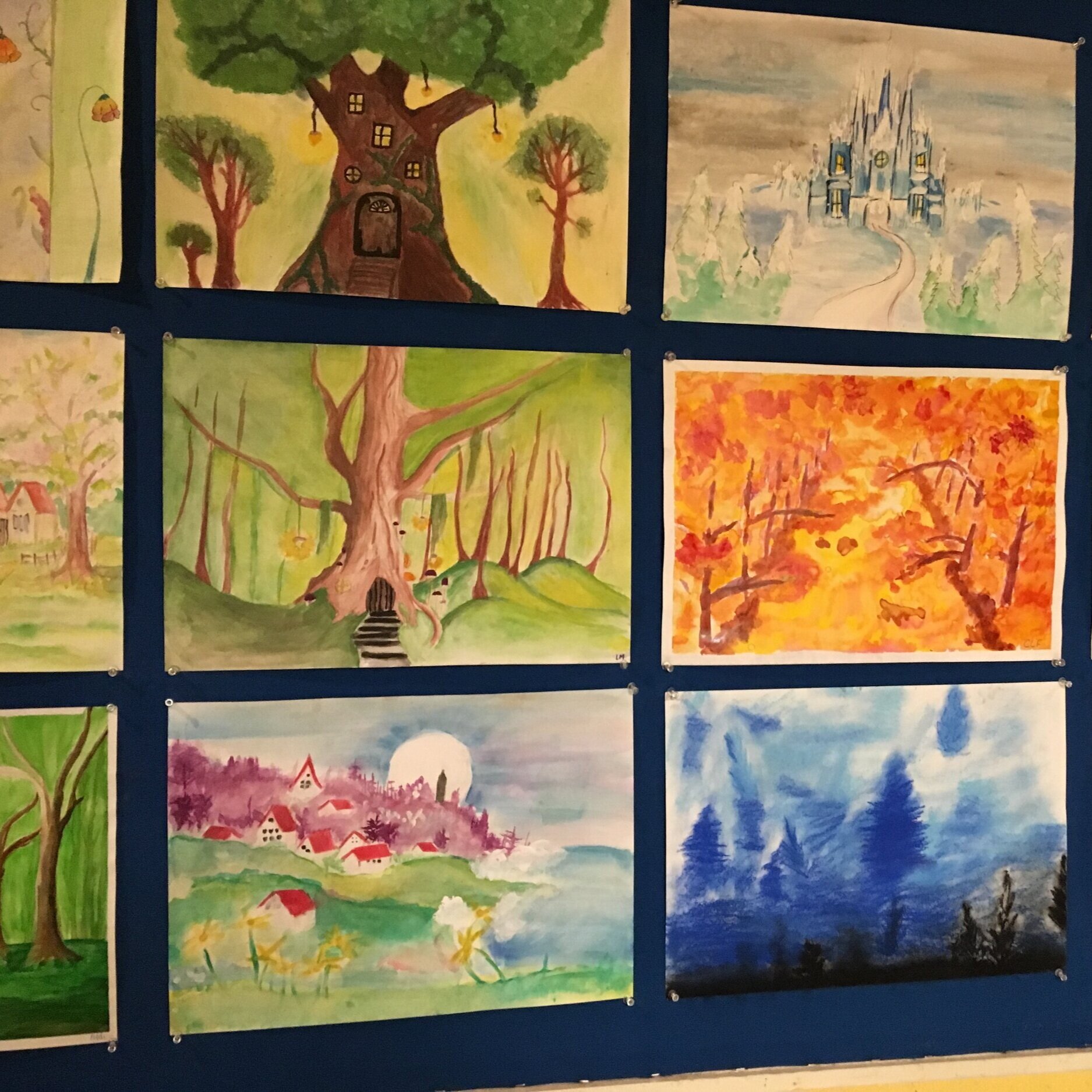
We’ve reached the letter ‘P’ in our 26-part series on what makes a Madrona School education unique, and P is for painting. Art infuses our curriculum, and a basic tenet of Waldorf education confirms artistic expression as elemental to our humanity. Every one of us is an artist, a creative being. In addition to drawing in main lesson and other specialty periods at Madrona, we include watercolor painting as a weekly activity in our early childhood classes, as well as a specialty class throughout the grade school. Our students learn techniques around wet-on-wet painting, applying watercolors to wet paper. This technique demonstrates the fluidity of color and requires time to learn, so the children build on what they know as they move through the grades. And, as with much of our curriculum, the full flowering of painting technique reveals itself in the middle school years. In kindergarten and 1st grade, students learn to work with color, experiencing colors both separately and blended, and they also begin to acquire brush control. As they develop skills, paintings reflect current main lesson blocks, and augment main lesson drawings and essays, becoming more detailed and skilled as they master techniques. We invite you to walk through the school building every so often - the teachers hang art in the halls on a regular basis. It's inspiring!

— adapted from our school newsletter

Madrona School Alphabet (O)

Hand drawn world maps by our 2019 8th graders — done as a part of their economic geography block.

We’re into the second half of our alphabet highlighting what makes a Madrona School education unique! ‘O’ celebrates Waldorf education as a part of our larger world. Madrona School, as a developing Waldorf school, is a member of a worldwide and growing independent education movement celebrating 100 years in 2019. According to the latest figures, there are more than 1,100 Waldorf schools in more than 60 countries; if you look specifically at early childhood programs, there are more than 2,000 on five continents. 

Waldorf education originated in Germany in 1919, when a factory owner asked Rudolf Steiner to develop a school for his workers' children. The original co-educational school, open to all and administered by teachers, was a direct outgrowth of Germany's social renewal efforts following World War I. And, even though the Waldorf education movement began in one place at a specific time, it continues to grow and evolve, seeking always to educate the whole child, recognizing a child reaches his or her full potential when education addresses not only the mind, but the body and spirit as well. Today, each Waldorf school is independently run, and each school reflects local culture and practice -- just as we make use of all the natural beauty in our local woods and beaches and incorporate our region's history and culture into our curriculum, the same is true for schools around the world. At the same time there are elements of Waldorf education that are recognizable and translate across cultures, as each and every school strives to educate and develop each student's awakening capacities, and graduate creative thinkers who feel themselves a part of not only their culture, but of a common humanity.

Postcards received as a part of the global postcard exchange between Waldorf schools in 2018-2019.

Postcards received as a part of the global postcard exchange between Waldorf schools in 2018-2019.

If you are interested in reading more, please investigate the information on the AWSNA (Association of Waldorf Schools of North America) website, or all of the work that the German organization, Friends of Waldorf, highlights on their webpages. And, for a visual trip around the world, check out the Waldorf100 videos: Learn to Change the World, and the early childhood focused, Becoming. It is so interesting to see snippets of so many schools in so many different cultures! 

In the day to day work of educating our students, we don't often think of our little school on Bainbridge Island with global connections, but indeed they are there!

—adapted from our school newsletter

Madrona School Alphabet (N)

N is for nurturing….nurturing that underlies education at Madrona School. From our youngest students, introduced to a school setting through the sweet unfolding of a parent-child class, to the relationships that develop between students and teachers in both our early childhood program and our grade school, our faculty work hard to see each individual child and meet them where they are.

Our parent-child program offers a small child, ages 18-36 months, a home-like introduction to school and a social setting. Our teachers set up the room with care, selecting toys and activities, as well as parent education materials. This is often the way a family learns about Waldorf education. We run this program in two sessions, fall and winter/spring. If you know a family with young children, invite them to inquire about this most nurturing of classes!

Our preschool and kindergarten classes are both mixed-age, allowing for teachers to get to know a young student over two or more years together. Our teachers value their role as a parenting ally, and our students have a real opportunity to connect with another loving adult.  

This continuity is also an important nurturing element in our grade school. Class teachers move up through the grades with their students, getting to know a family over time; and our specialty teachers also enjoy building relationships. The teachers really get to know a family and their student, able to see growth from year to year, able to foster interpersonal relationships in the classroom, able to be another regular relationship in a young person's life. 

Teachers are, by definition, nurturing folks. At Madrona School, they gather for a morning verse of their own, a daily reminder of our school's focus on each student, on partnering with families to teach each child and see them go on into the world to become a whole and contributing member of society!

Finally, and not at all least, our parent community strives to nurture one another, through regular events like parent meetings and parent society, volunteering in the classrooms to share talent and time with teachers and students, and in helping when a family needs a little extra help. We invite you to enter into the school community in whatever way feels comfortable for you. Join us!

—adapted from our school newsletter