Art and Painting at Madrona School

At Madrona School art is infused into every lesson, and children learn artistic techniques that they utilize each and every day. Morning main lessons with a class teacher employ drawing, alongside writing, recitation and movement, and every student creates their own book for each subject and world language. We also teach standalone art classes during specialty class periods, including modeling beeswax and clay, form drawing, and painting with watercolors. We also offer handwork classes, teaching knitting, crochet and embroidery.

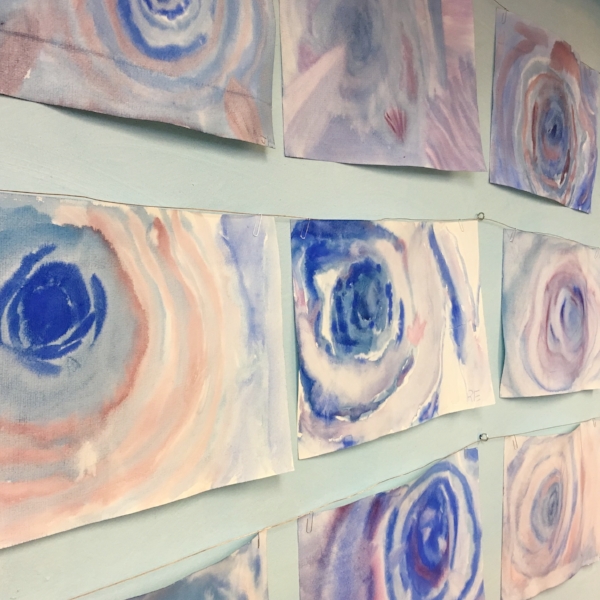
Beginning in our early childhood classes, and throughout grade school, students explore color and composition through a “wet on wet” technique, where wet paint is laid onto wet paper. This type of painting creates a wonderful flow of color, and takes time to learn. The results can be unexpected!

By the time our students are in middle school, they have years of drawing, painting, handwork, and a variety of craft experiences to inform their artistic efforts; they further their education with more sculpting, woodwork and perspective drawing. We value art as a human endeavor, and every one of our students is an artist.

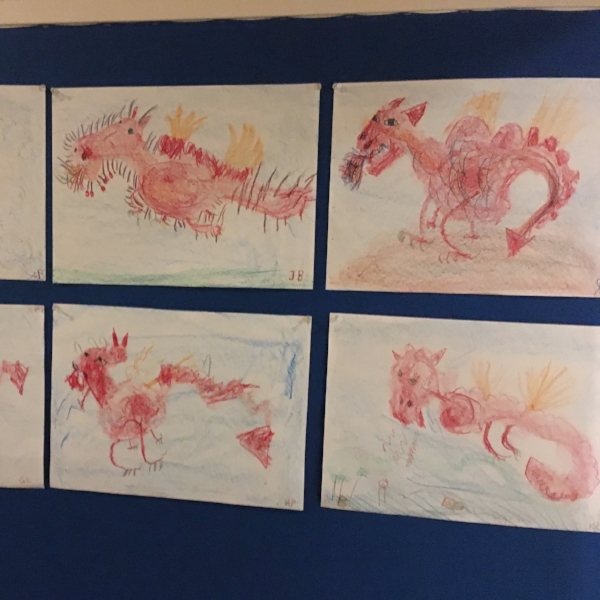
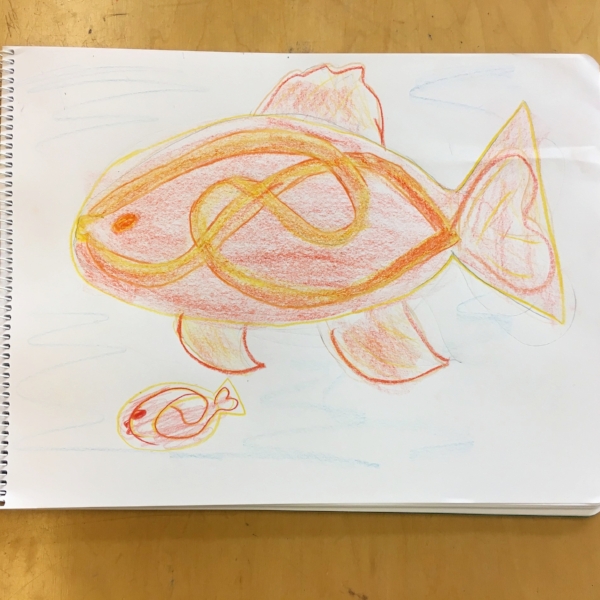
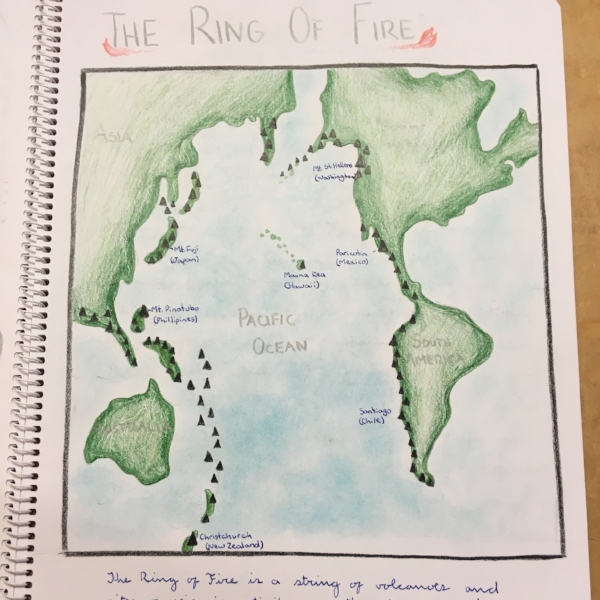
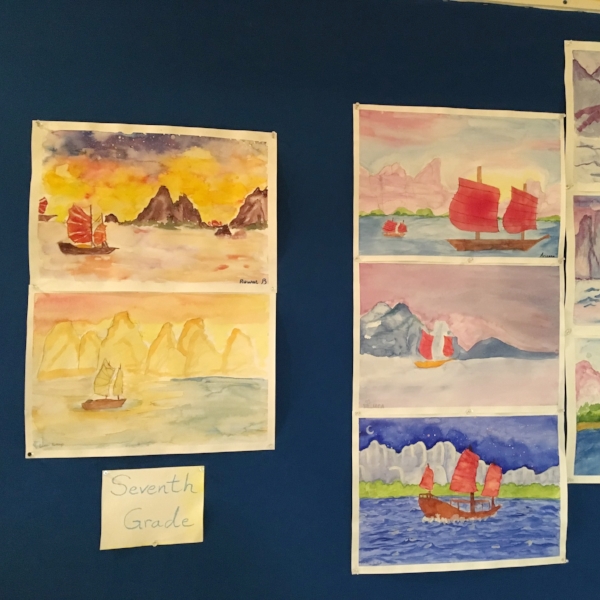
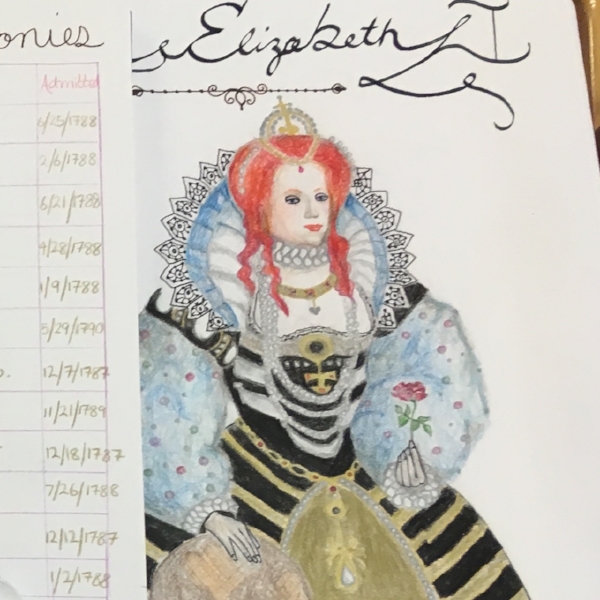
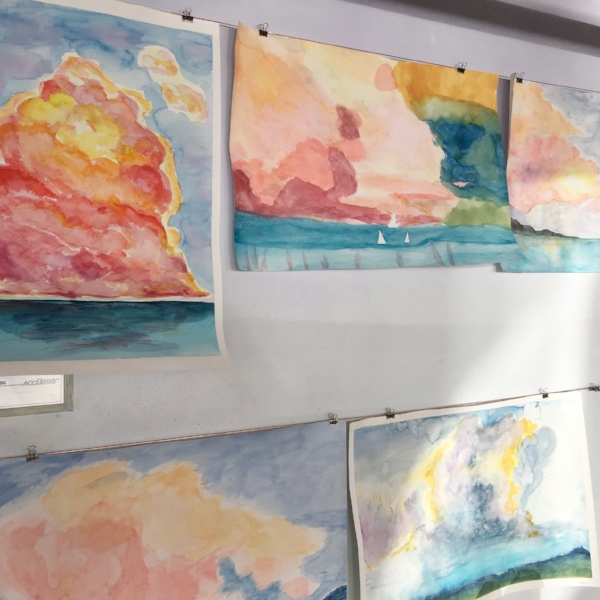
Examples from around the school so far this fall: preschool paintings, 1st grade dragon drawings, 1st grade beeswax trees, 2nd grade house drawings, 4th grade form drawing, a 4th grade seasonal Spanish lesson, 5th grade paintings, both from botany and a seasonal still life, a 6th grade main lesson book in geology, 7th grade paintings, an 8th grade history drawing and 8th grade paintings of clouds.


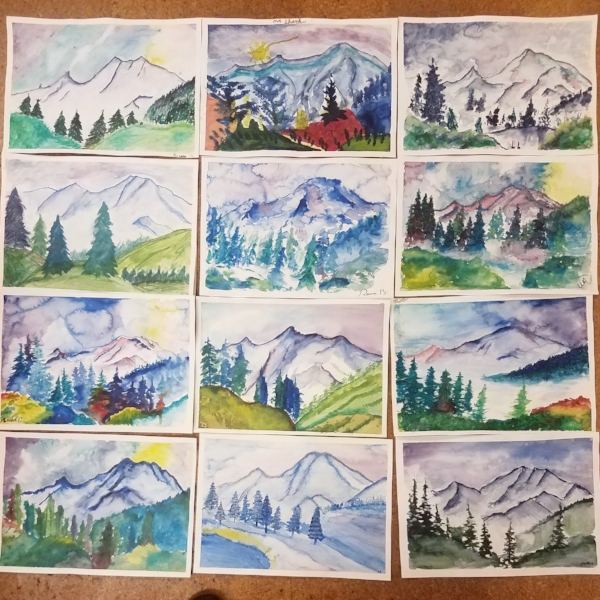
In preparation for parent/teacher conferences, specialty teacher, Dana Ashton wrote a summary of the 6th grade art class to share with parents, and we thought it offered a lovely glimpse into a couple month’s work in one class. See images of their work below.

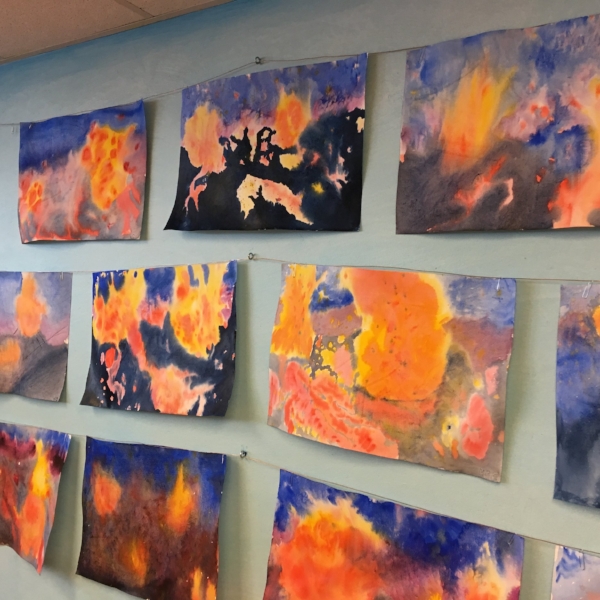
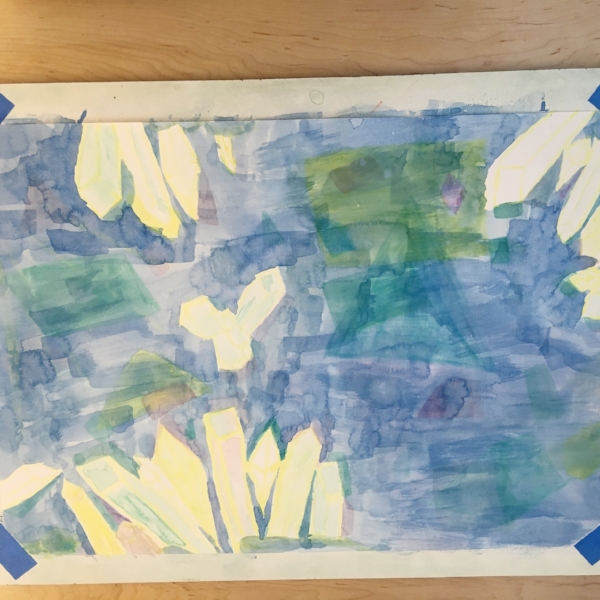
We began our school year in 6th grade art with wet-on-wet watercolor work and mineralogy.  The first painting was loose in format to help the students warm up their hand/eye coordination and to stress the importance of light and dark contrasts used in middle school art.  We painted a receding cave or tunnel with Prussian Blue, Ultramarine and Red Violet, blending colors and striving to achieve dimension.  Our second painting featured crystals and we added a new color to our palette, blue-green.  Geometric shapes, straight lines, shading, light reflections and some blending of colors were emphasized.  Our third painting used warm colors and indigo along with lots of movement to depict a volcano erupting and lava flowing.  The careful use of indigo or charcoal-colored watercolor pigment was a new experience.  Keeping the illuminated areas of fire and light free from the opaque darkness of solidified, black rock is always a challenge.  

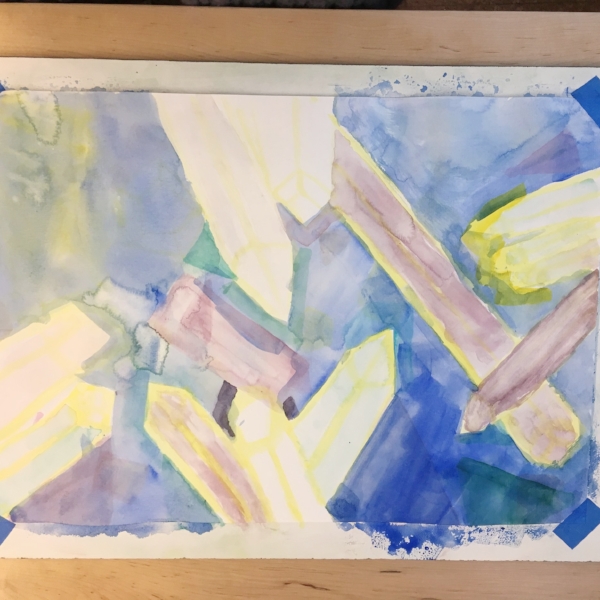
Our fourth painting tied in with the Geometry block and required several weeks to complete, being a veil painting on dry paper and building up layers of shapes and color by using weak pigments.  Most of the students had never tried veil painting and were surprised at how different it is.  We painted crystals again but had to be much more careful about the precision of geometric shapes.  Towards the end of October we started woking with charcoal for the first time and discovered its wonderful properties of mood setting through smudging and blending.  The first charcoal work depicted a Halloween scene and the second piece focused on Roman architecture - The Garni Temple in Armenia.  Next we will return to working with watercolors and paint a Roman aqueduct.  
Early Childhood at Madrona School -- Salmonberry Kindergarten

“To young children, of course, nature is full of doors — is nothing by doors, really — and they swing open at every step. A hollow in a tree is the gateway to a castle. An ant hole in dry soil leads to the other side of the world. A stick-den is a palace. A puddle is the portal to an undersea realm. To a three- or four-year old, ‘landscape’ is not backdrop or wallpaper, it is a medium, teeming with opportunity and volatile in its textures.” — Robert Macfarlane, Landmarks

The early childhood programs at Madrona School are full of the magic of outdoor exploration and imaginative play. Our students demonstrate their kinship with doorways to other worlds on a daily basis!

This past summer, our Salmonberry Kindergarten teacher, Isaac Kemsley, offered an overview of his classroom to other early childhood educators, and we thought you might find parts of it interesting too, as it illuminates some of why we do what we do in our early childhood classes:

In the Salmonberry mixed-age kindergarten, we believe that each individual child comes to us with their own unique destiny and purpose. Though we can’t know what that might be we task ourselves, as educators and facilitators, with availing them the opportunities to build their skills and strengthen their foundational senses. We also know from experience that by our modeling expected interactions and successful techniques, we show them a path to impulse control and higher executive functioning. Through repeated rhythms and routines, we foster the sense of connection and relationship to people and place…and we are blessed to witness building confidence within the children to engage in their learning with a lifetime of interest and wonder.

We educate through the will, offering opportunities to engage each child’s fine and gross motor dexterity, proprioceptive system, sense of touch, vestibular system and ability to work in a group, among many other things. In class we:

  • Bake Bread (measuring, scooping, pouring, stirring, kneading, sculpting)

  • Build Fires (choosing/carrying logs, hammering, stoking fire)

  • Hammock and Swing (swinging, rocking, hanging upside down, cuddling, resting)

  • Explore Trees and Trails (running and walking on uneven ground, exploring out of sight, imaginative play)

  • Play in the Sandbox (digging, scooping, sifting, imaginative play)

In each of these activities, the children wait their turn and practice patience. This is so very important. Patience is exercised in the children anytime you have an activity working together. It is a gift to learn to wait. Each child is unique in their starting place with this skill and all will grow if given the opportunity! These activities also offer opportunity for learning safety rules and for practicing those rules each and every time.

Children at this age learn new skills through their engagement, interest, and wonder in the world they see. Through imitation of those around them, they find meaning. Thus it is important that we, as educators, be worthy of imitation in our actions and words. If we are sparing with our word and action, imbuing each with thought and feeling, then we will see the fruits of our work in the children’s repeating familiar phrases, verses and songs as they go about their work and play. If they see us doing the good, important work of caring for our space and each other, we see it reflected in the children’s treatment of one another and the environment.

Michaelmas Festival 2018

Each September we gather to celebrate Michaelmas, our first seasonal festival of the school year. Our festivals connect us to the natural world and renew our connections between classes, and among parents and friends. Michaelmas is a celebration of courage and harvest. This time of year we observe the seasonal changes in the natural world as plant life bears fruit and then begins to die back, leaves turn and animals prepare for the coming winter. Personally we find ourselves of two minds — trepidation for the shorter, darker, cold, wet days ahead, even as we feel a surge of energy and a counter force to the slowing in nature around us. The story of St. George fighting a dragon with the angel Michael’s help embodies this time of year, a call to gather courage and engage the dragons we need to battle and transform.

As the pictures below reflect, our festival includes challenges for all ages, a baked potato feast utilizing the bounty of our school garden, and a pageant of grade school students to both sing and tell the story of St. George taming the dragon.

Thank you so much to parent Julie Rings for sharing her beautiful photography of the festival with all of us. We are grateful!

Postcards from a new school year!

We are so excited to begin the new school year — our 19th! Here are a few images from around the school and from Lowery Farm in these early days of the year.

Clockwise from the top left: August in the school garden; kindergarteners eagerly watching a dump truck delivery of woodchips; opening day assembly for 2nd-8th grades; 1st grade chalkboard; 2nd grade morning movement on the balance beam; 4th grade has begun each morning with recorders and cursive writing practice; 5th grade mandalas kick off botany studies; first paintings of the year in 6th grade; 8th grade is going backpacking in the Olympics and there is a lot to learn and prepare!

May Day at Madrona School

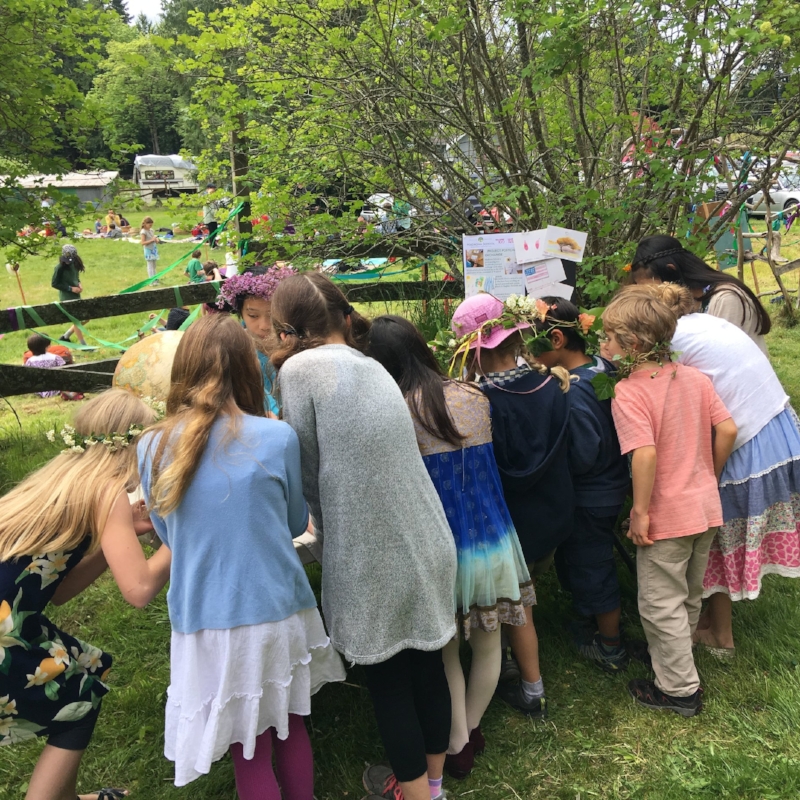
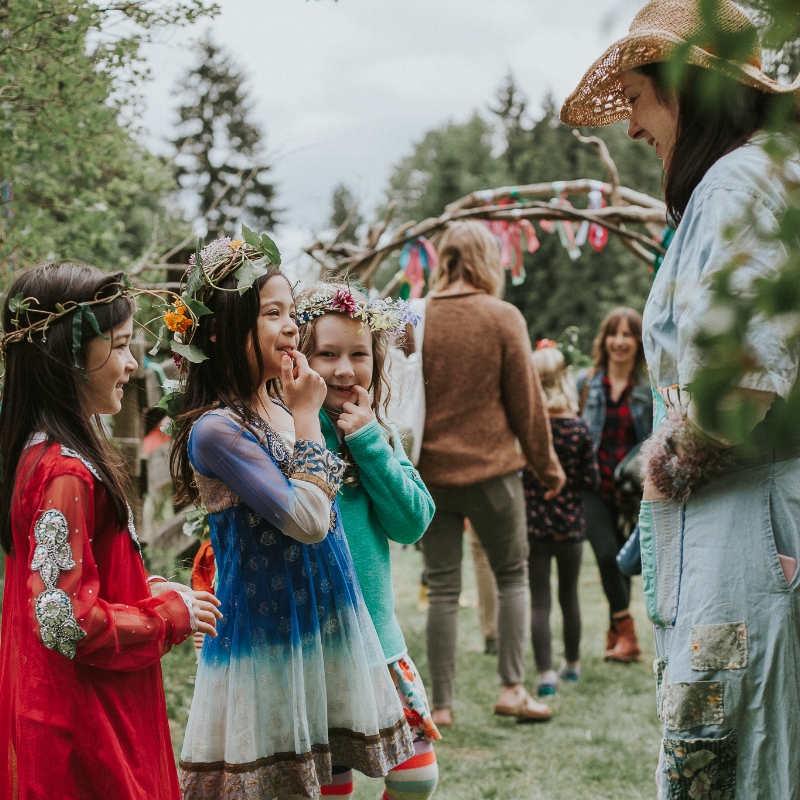
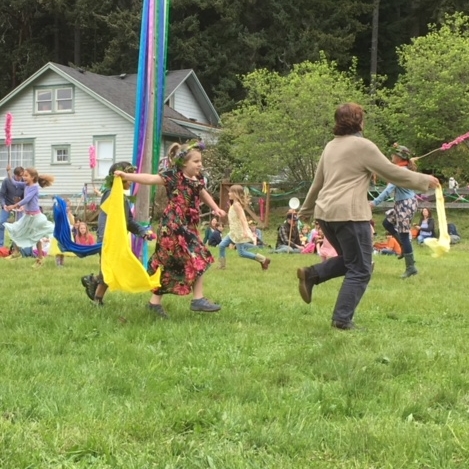
Spring is upon us and at Madrona School, like many other Waldorf schools in the northern hemisphere, we celebrate with a May Day festival. Our traditions include making flower crowns, an all-too popular cake walk, lemon peppermints, maypole dancing, community picnicking and May cake and wine. It is a festive, beautiful day at school for all ages, especially joyful when the sun shines! We treasure the couple of times each year when we gather as a whole school community.

Here are some images from our most recent festival, taken by a few of our photographer parents, as well as the office -- thank you to all who shared their pictures!

8th Grade Independent Projects

The 8th grade provided tremendous presentations of their independent projects last Friday evening. We were happy to have so many in our community present to support these remarkable young people too. Thank you to all those who made it a priority to come! 

Mr. Nottage, our 8th grade teacher, introduced our presenters with some brief remarks that got right to the heart of why our 8th grade students do these projects each year. He reminded us all that our children learned to stand upright in their first year without direct instruction -- it came from within. That is also the idea of these efforts, where the 8th graders reflect and propose a project of their own choosing and embark on a months-long journey that culminates in presentations where we see their inner volition to stand independently before their school community. Poise, humor, flexibility and problem solving are all on display in abundance!

We offer a brief glimpse into the variety of this year's projects:

Evan was inspired by an outdoor art show he attended last summer. When it came time to choose a project, he reached out to one of the artists he admired, a sculptor working in recycled metal. Learning different welding techniques, he created a ten a…

Evan was inspired by an outdoor art show he attended last summer. When it came time to choose a project, he reached out to one of the artists he admired, a sculptor working in recycled metal. Learning different welding techniques, he created a ten and a half foot metal arch and planter that will have a permanent home at the school's Lowery Farm.

Macy chose to learn digital photography and editing, shifting her focus from sports photography to nature photography when her mentor changed mid-project. Her photos, shown here on canvas, were beautiful! 

Macy chose to learn digital photography and editing, shifting her focus from sports photography to nature photography when her mentor changed mid-project. Her photos, shown here on canvas, were beautiful! 

Emily was inspired by a trip to Venice to explore Italian cooking. Working with our own (staff member and parent) Italian chef, she learned to make fresh pasta and ravioli, marinara sauce and cannolis. She put it all together in a feast for friends …

Emily was inspired by a trip to Venice to explore Italian cooking. Working with our own (staff member and parent) Italian chef, she learned to make fresh pasta and ravioli, marinara sauce and cannolis. She put it all together in a feast for friends and family, and even shared cannolis with us on Friday. So tasty!

Morgan, with her love of singing and musical theater, chose to learn the basics of guitar, so that she could accompany herself. For her presentation, she learned the ABBA song, "I Have a Dream," and performed it for us. Wonderful playing and singing!

Morgan, with her love of singing and musical theater, chose to learn the basics of guitar, so that she could accompany herself. For her presentation, she learned the ABBA song, "I Have a Dream," and performed it for us. Wonderful playing and singing!

Ellie was inspired by an 8th grade project from the class of 2015 to create a yearbook for the school. She has been taking and editing photographs around school all year long, and over spring break, began her layout into a book. The yearbook is avai…

Ellie was inspired by an 8th grade project from the class of 2015 to create a yearbook for the school. She has been taking and editing photographs around school all year long, and over spring break, began her layout into a book. The yearbook is available to order with proceeds benefitting the 8th grade class trip.

Marisol worked with a community artist to learn the art of graffiti and spray painting. She practiced her new craft on the old buildings at Blakely Harbor, and in her final piece for her presentation, painted on panels and shown here.

Marisol worked with a community artist to learn the art of graffiti and spray painting. She practiced her new craft on the old buildings at Blakely Harbor, and in her final piece for her presentation, painted on panels and shown here.

Harrison, inspired by a 7th grade Friday elective, worked with a local coach to learn the sport -- the art? -- of parkour. He made a video to demonstrate his skills on a route he devised incorporating the Ordway playground. His athleticism and humor…

Harrison, inspired by a 7th grade Friday elective, worked with a local coach to learn the sport -- the art? -- of parkour. He made a video to demonstrate his skills on a route he devised incorporating the Ordway playground. His athleticism and humor were on display!

Mikel explored fashion design and honed sewing skills with his project. Working with the owner of Esther's Fabrics, he designed and completed two skirts, as well as a top from a commercial pattern, learning a lot about fabric and drape and construct…

Mikel explored fashion design and honed sewing skills with his project. Working with the owner of Esther's Fabrics, he designed and completed two skirts, as well as a top from a commercial pattern, learning a lot about fabric and drape and construction along the way!

Isaiah worked to build a stand up paddleboard from the ground up. Made of marine grade plywood and cedar, the paddleboard is a thing of beauty, and will be launched just as soon as it gets its fiberglass coating.

Isaiah worked to build a stand up paddleboard from the ground up. Made of marine grade plywood and cedar, the paddleboard is a thing of beauty, and will be launched just as soon as it gets its fiberglass coating.

Katja took herself on a creative journey into songwriting. She explored chord progressions, melody and lyric writing along the way. The result was a song which she performed through voice and ukulele at the presentation, and recorded as well. It was…

Katja took herself on a creative journey into songwriting. She explored chord progressions, melody and lyric writing along the way. The result was a song which she performed through voice and ukulele at the presentation, and recorded as well. It was a heartfelt and gorgeous piece and performance!

Madrona School Alphabet (K)

Next up in our alphabet-based exploration of what makes a Waldorf education unique...K is for knitting…and our handwork program in general. Handwork is one of the unique specialty classes offered in a Waldorf school. Developed to work in tandem with the curriculum as a whole, handwork strengthens fine motor skills and helps with hand-eye coordination, which in turn help students with writing, reading and math. Knitting, crochet, clay, woodcarving, embroidery etc., all contribute to the formative artistic foundations within a Waldorf education, fostering creativity, flexibility and independence.

Handwork is offered in kindergarten at Madrona School with some sewing and woodworking projects, but the program begins in earnest in 1st grade with knitting, providing a foundation for the rest of the program to build upon in future years. And, while students learn to knit, they come to see the beauty and utility that can be made with their own hands, simple materials and some perseverance. Often, the students will make something in this first year that they use everyday throughout their grade school years, like a flute case. Ask any older grade school student and they can probably remember what it was like to finally see their mistakes and fix them, to count the "mountains" in their knitted fabric, and the pride they felt upon the project's completion. There is a comfort in using something they made, even as they grow older and their skills improve.

For additional information, read Patricia Livingston's article "The Importance of Handwork in the Waldorf School", originally published in Renewal 9(1), 2000. Or see our blog post on handwork dated February 15, 2017.


6th Grade at Madrona School

The middle school years mark an important transition for any child, and there is much to celebrate around developing capacities and growth. 6th grade is often a year "in between" -- bridging the balance and relative ease of late childhood with the transformation of puberty, and as the year goes on there is often a palpable shift in the mood of the class. A 6th grader is often described as having "landed firmly on the earth," beginning to look inwards, even as their capacity for observation of the outside world sharpens. 6th graders want to understand the "whys" behind what their parents and teachers say, and they pay attention to what is fair. Peer groups are increasingly important too, as they begin to seek their place, and at Madrona School where a class has been together for years, there can be an ease and comfort to this process within school.

With the developmentally-appropriate curriculum in a Waldorf school, the subjects brought to the class reflect the shift into adolesecence. Sciences, both physical and laboratory, offer opportunities for observation and keep a sense of wonder in the world growing. History, through studying the Roman Empire and the Middle Ages, bring discussion of the spread of systems of law and order, as well as religion and culture. Math has a practical bent to it with business math and an introduction to economics, as well as form brought through geometry. It's a year with a broad and grounding look at the world.

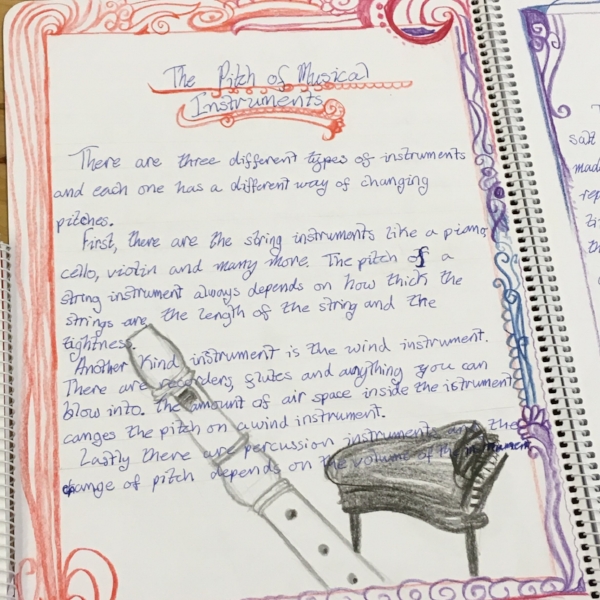
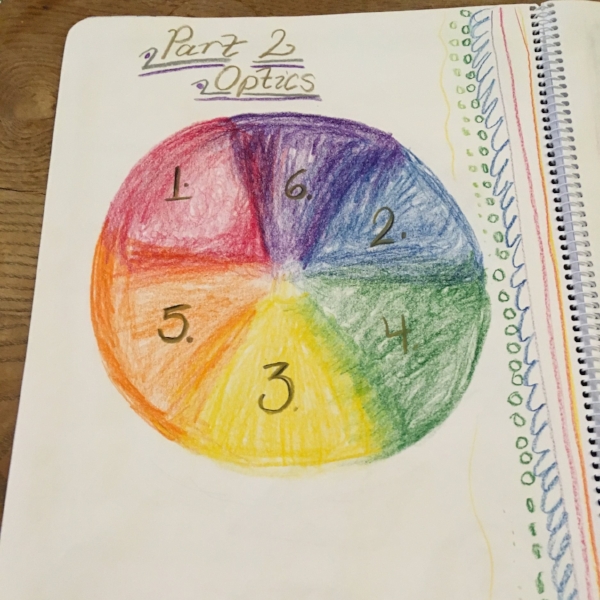
This year our 6th grade, taught by Ms. Lori (with blocks taught by Ms. Toles and Mr. Steegmans), began with a geology block, including what can be observed in our corner of the world through an overnight trip to Mt. St. Helens. Physics, taught by Mr. Steegmans, offered practice making observations, using them as a starting point for uncovering some of the laws of the universe. We use a phenomenological approach to science -- teaching through observation and experience first, practicing careful watching, and then discussing and writing and repeating an experiment. Before the winter break, the class also studied the Roman Empire, including early legal structures and architecture. The class has also had a Business Math block with Ms. Toles, investigating differing types of economies throughout history, as well as some new math including percentages and calculating interest.

Currently, the class is studying medieval history, including both the spread of Christianity and of Islam, as well as a look at social structures. As a part of this block, they look at knighting codes of conduct and honor, and they work towards a knighting ceremony of their own, with an aim towards personal growth and service, celebrating the results with a class gathering.

In the weeks that remain in the year, they will do geometry, grammar, astronomy and perform their class play. Beyond main lesson, they continue Spanish, strings and games classes. This class has long had a particular interest in painting, and this year their work is really developing as they play with new techniques and subject matters. They have handwork, with a chance to not only make something, but experience a bit of designing from paper to a 3-dimensional object. They join the other middle school classes for choir and stay later on Fridays for community electives -- artistic and active classes, often outside the confines of the school building. It is a full year, and just the beginning of a new phase in their personal and school journeys!

Want to know more about middle school and 6th grade at Madrona School? Ask your student's teacher, or contact the school office.

--edited from the school newsletter, January 23, 2018