Madrona School teachers spend the day together in nature, just like they do with the students every school day.

Our blog shares some of what is unique and wonderful about Madrona School and the worldwide Waldorf education movement. Madrona School is an independent, private school on Bainbridge Island (WA) offering Waldorf education for children ages 18 months - 12 years. We have parent-child classes, play - based preschool, nature - intensive kindergarten, and grade school classes. Our grade school offers arts - infused academics. We are located a ferry ride away from Seattle, WA in Kitsap County. Find out why Waldorf education is a time-tested alternative educational methodology.
Dear Madrona School parents,
For those of you who took the opportunity to attend our strings concert last week, you know how moving it was. The outdoor setting, the fact that we had probably not attended a concert in over a year, and the students who truly rose to the occasion after a school year of many absences and upsets to our routines all were ingredients for a magical event. Thank you, Justine Jeanotte, for creatively working with our students, whether in person or remote, for your patience with never knowing who would attend class on any given day, and for your positive attitude during a trying year. Your skill and expertise were clearly on display. Our music program, consisting of violin, viola and cello lessons, is one of the many things that makes our education special. I am so glad our students had an opportunity to show our community the hard work they have put in this year.
Sincerely, Jocelyn Waite
Head of School
The Madrona Mini Magic Challenge is a weekly activity where community members seek to infuse their own home and our shared virtual community life with a bit of fun. It is open to all and is designed to offer the possibility of a little bit of fun, playfulness, creativity and shared inspiration to our collective experience as we settle in to a longer period at home.
We’re running this theme for two weeks: Your favorite book character! Or, if you can’t choose, a character from the book you are reading now. How did you interpret this theme? See below for our entries, and click on an image to get title and author information (if you can’t guess!).


From Alden, in honor of the book Enclave, by Ann Aguirre
Deuce
Born in an enclave
Down deep in a hole
Deuce was a huntress
And would play her role
She was banished to topside
With a boy named Fade
And through these experiences
Unbreakable bonds were made
Amazingly, they killed the freaks
Both rotten and with lesions
Our deadly future is their past
Bioengineering should never use ferromagnesian
They made it through the ruins of Gotham
But two more with them in the woods
Stalker, Tegan, Fade, and Deuce
Would make it safely to Salvation
Announcing the Madrona School Mini Magic Challenge: As we settle into a longer period of at home learning we wanted to offer the possibility of a little bit of fun, playfulness, creativity and shared inspiration to our collective experience. The Madrona Mini Magic Challenge will be a weekly activity where community members seek to infuse their own home and our shared virtual community life with a bit of fun.
Each week there will be a new theme announced. Everyone in the community (current students and families, alums and friends of the school) is welcome to participate. There are no rules. You simply work with the theme to either paint, draw, photograph, craft or make a related offering. The theme is designed for families to collaborate or older students to work alone. It need not take more than an hour (except for those who go wild).
Our first week's theme is "flowers". They can be real or created, one or a field full. Using either the natural world or your imagination or both, use the theme of flower(s) to make some "mini magic" for Madrona School!


From Sofia


‘U’ is for Madrona School’s unhurried approach to beginning school. Our youngest students attend Madrona with their parents or caregivers as a part of our parent-child program. This unique once-weekly class allows children a gentle, warm and nurturing introduction to school as a social setting outside of their homes, and it provides a community for their caregivers too. We offer a warm snack, lots of time to play with our open-ended and natural toys both indoors and out, a circle time with songs and story and some parent education. It's a mini-version of our preschool and kindergarten classes, in effect, and serves to introduce families to Waldorf education, as well as support them in creating a rich, nurturing home environment. As a parent, you'll find yourself learning songs for transitions that you'll still sing years later! This class is also often the beginning of a class community , and some of our grade school students (and their parents!) "met" in parent-child.
‘T’ is for Waldorf education's unique approach to technology with a purpose — both in the classroom and in our children's lives. This is one area that certainly gets a lot of attention in the mainstream media, especially in the aftermath of the New York Times article published in October of 2011, "A Silicon Valley School that Doesn't Compute". Search for 'Waldorf education' and you find a slew of articles on Waldorf schools' purposeful lack of information technology in the classroom. It is a highly visible difference in choosing a Waldorf school over your other education options. However, the articles don't tell the full story. We do use technology in our curriculum, but always with a purpose. We approach technology in the same way we teach everything -- in a developmentally appropriate and contextual manner. Our grade school curriculum is an experiential one, building from year to year, as children become ever more capable and developmentally ready to learn, to do, to write, to read, to think. The curriculum develops deliberately, teaching hand sewing and knitting before machine sewing; printing and cursive writing before keyboarding. Computers and other information technology are introduced in their historical and cultural context, as part of a study of the modern era. And yet, by the time our middle schoolers graduate, they should be able to type and turn in word processed assignments; they've learned how to do quality research online and effectively use a library. Most importantly, they understand technology in the context of the human experience, and they tackle new elements with their characteristic flexibility and creative approach to problem solving. As you are no doubt aware, there is a growing body of research into the effects of screen time on the development of the young child. And, even beyond the profound benefits of reducing a child's exposure to screens and commercial media, the Madrona School curriculum aims to teach foundational skills to allow for the full blossoming of each individual's creativity and flexibility of thought: writing with pencil and paper and organizing one's thoughts onto the page, drawing, math facts without a calculator, etc. And in this ever evolving technological world we live in, creative problem solving and a strong sense of one's ability to tackle new issues will prepare our students well as they move out into the wider world.
— adapted from our school newsletter
The letter ‘S’ highlights the unique way in which Waldorf education honors the human spirit. In Waldorf language, we say we educate "the hands, the heart and the head", referring to the curriculum's reach to the doing (our hands), the feeling (our heart) and the thinking (our heads). We strive to honor and recognize (rather than instruct) each child's soul, each child's developing inner life, as they grow and mature, as well as those of our classmates, our teachers and the cultures and civilizations that we study throughout elementary and middle school.
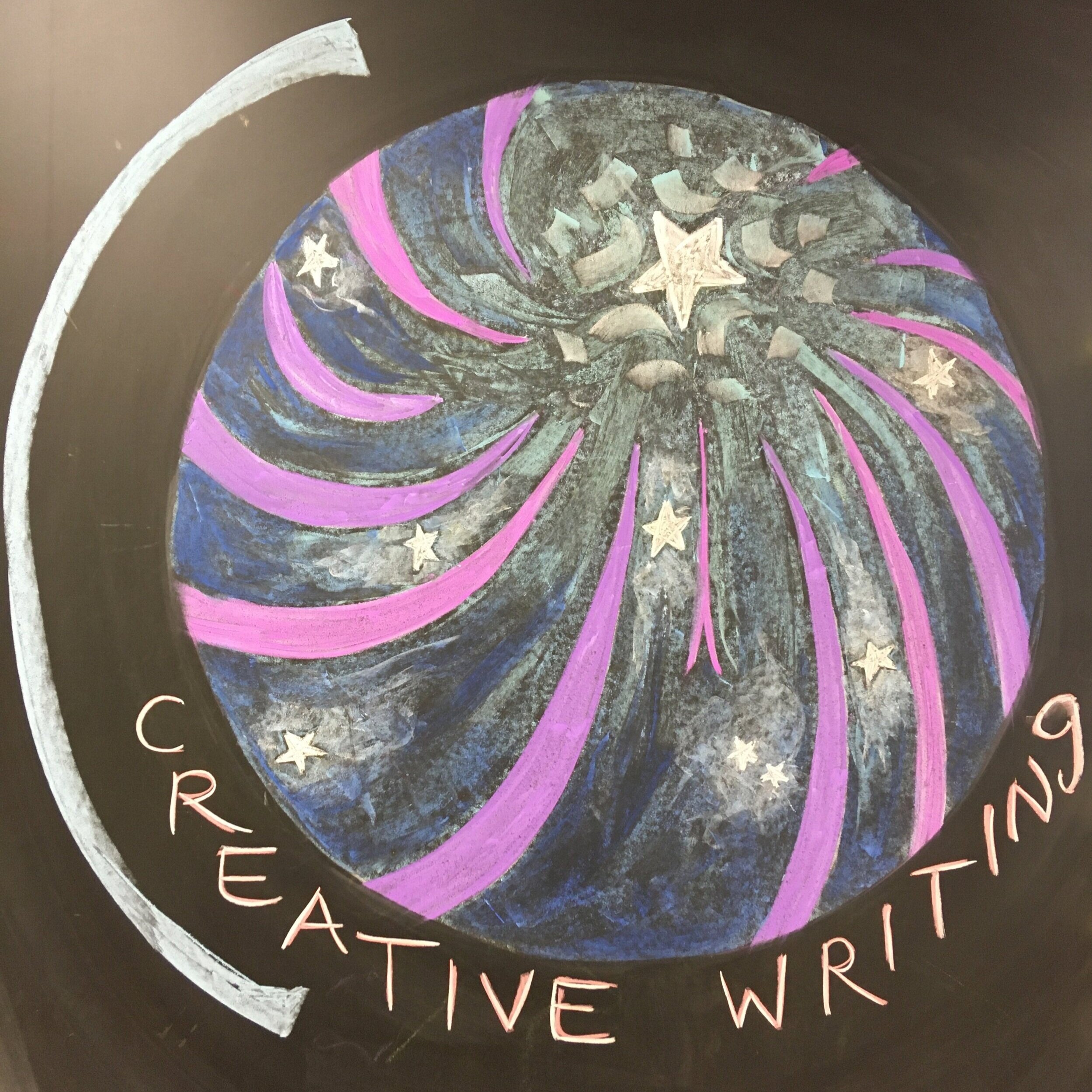
Chalkboards from the grade school classrooms in 2019.
Embedded in this liberal arts non-parochial education is a profound sensibility that there is a spiritual element to our humanity, and an innate capacity in all of us for reverence and wonder. What does this recognition look like on a daily basis? In his book, "The Way of the Child", AC Harwood writes: "It is perhaps this life of feeling, this soul life, which is least understood in education today. We instruct our children in the classroom -- or in the more modern fashion we allow printed books to instruct them -- and then when they are tired we send them out to play games. But between knowledge and activity lies a whole world of wonder and reverence, pity, joy tenderness and sorrow….Everything they learn must be transformed into wonder and beauty, there must be no 'ordinary' lessons. Painting, modeling, acting, rhythmical movement, these must become for these young children the very way of knowledge. If you succeed in teaching in this way, you are uniting what is nowadays divided -- the forces of the head with the forces of feeling and of movement."
There is an element of mindfulness in the way we begin each morning. The grade school children begin each day with a morning verse, calling out for strength in body, mind and spirit. For example, in 1st through 4th grades, they stand and say together: "The sun with loving light, makes bright for me each day. / The soul with spirit power, gives strength unto my limbs. / In sunlight shining clear, I do revere, Oh God, the strength of humankind that thou hast so graciously planted in my soul. / That I with all my might, may love to work and learn. / From thee come light and strength, to thee rise love and thanks." God, as referred to in this verse, can stand for those higher aspirations we all possess, including honor, truth, beauty and nobility. This moment is just one way we offer a sense of reverence, a call to purpose in order to begin the day.
And, by the time a student graduates the 8th grade, they've not only spent years honoring their own inner life, but they've also learned something about the religious and spiritual traditions of Buddhists, Jews, Christians, Muslims, Hindus, and many other cultures around the world. This reinforces the basic humanity of our soul life, the importance of being fully human and alive.
This is, of course, a glancing skim over this topic in Waldorf education. But, at the core, what a gift it is to honor a child's spirit, to help them to grow with the full recognition of the importance of their own humanity, and the necessity of respecting that of people around them -- truly something wonderful to take into adulthood.
If you are curious to learn more, please talk with your child(ren)’s teacher(s)!
— adapted from our school newsletter
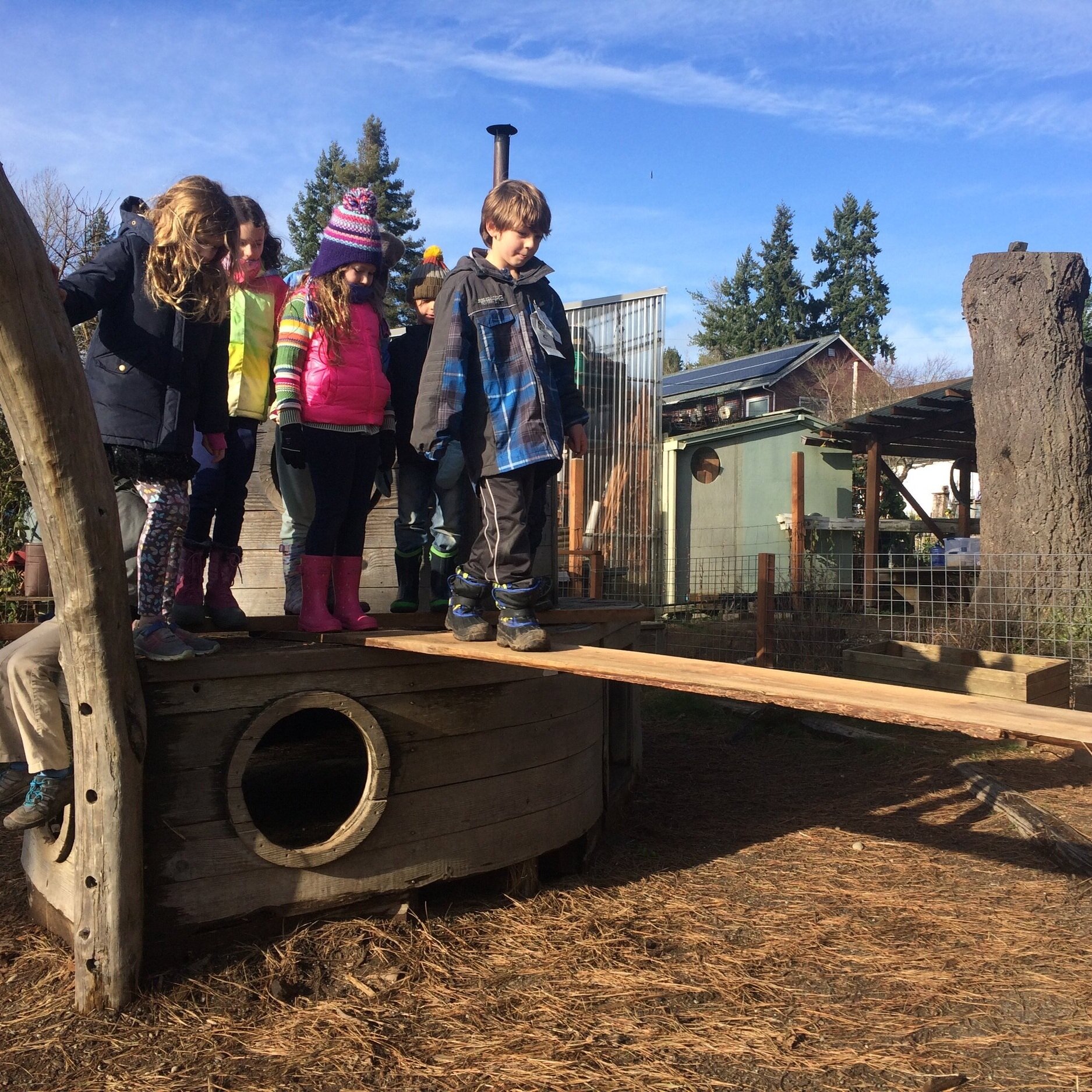
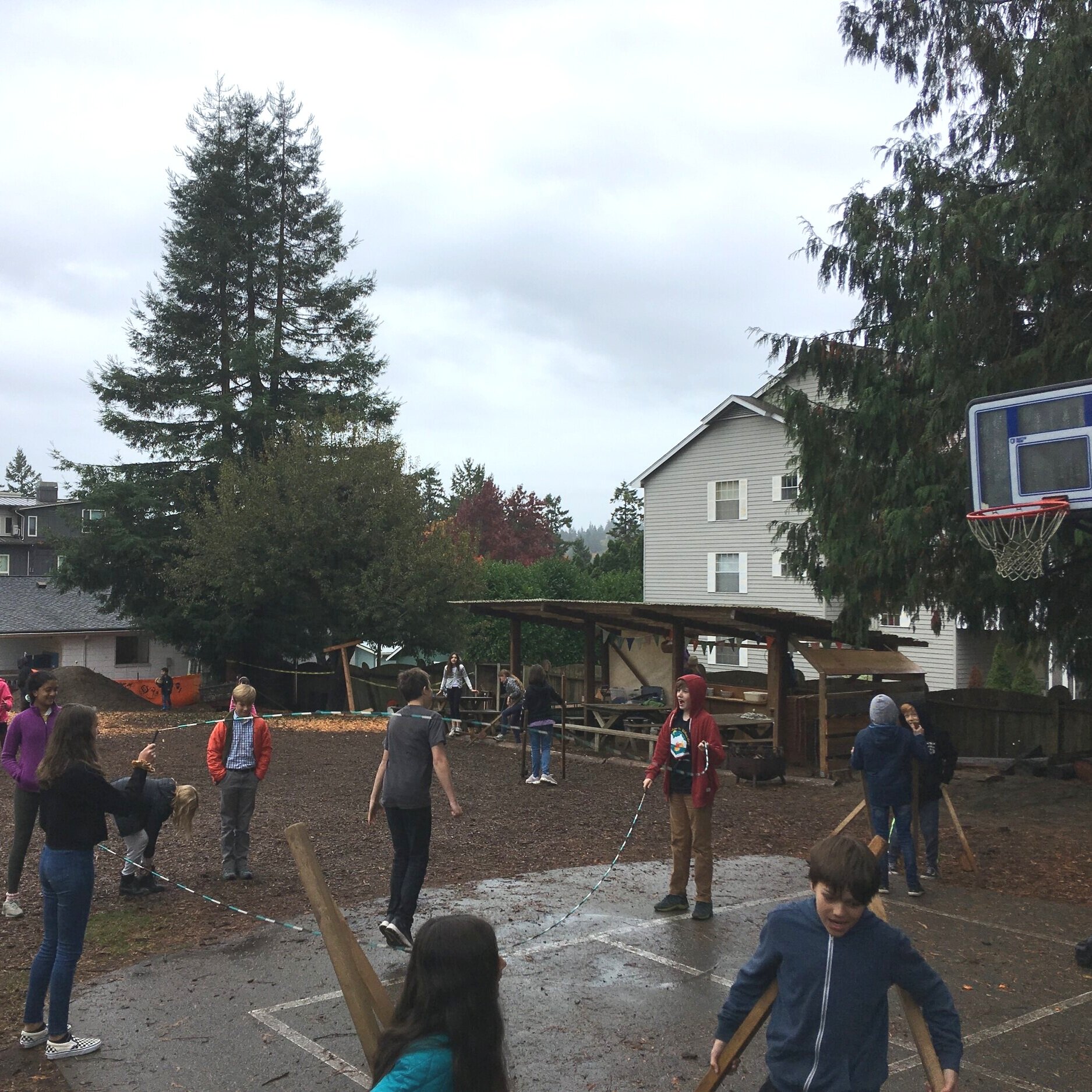
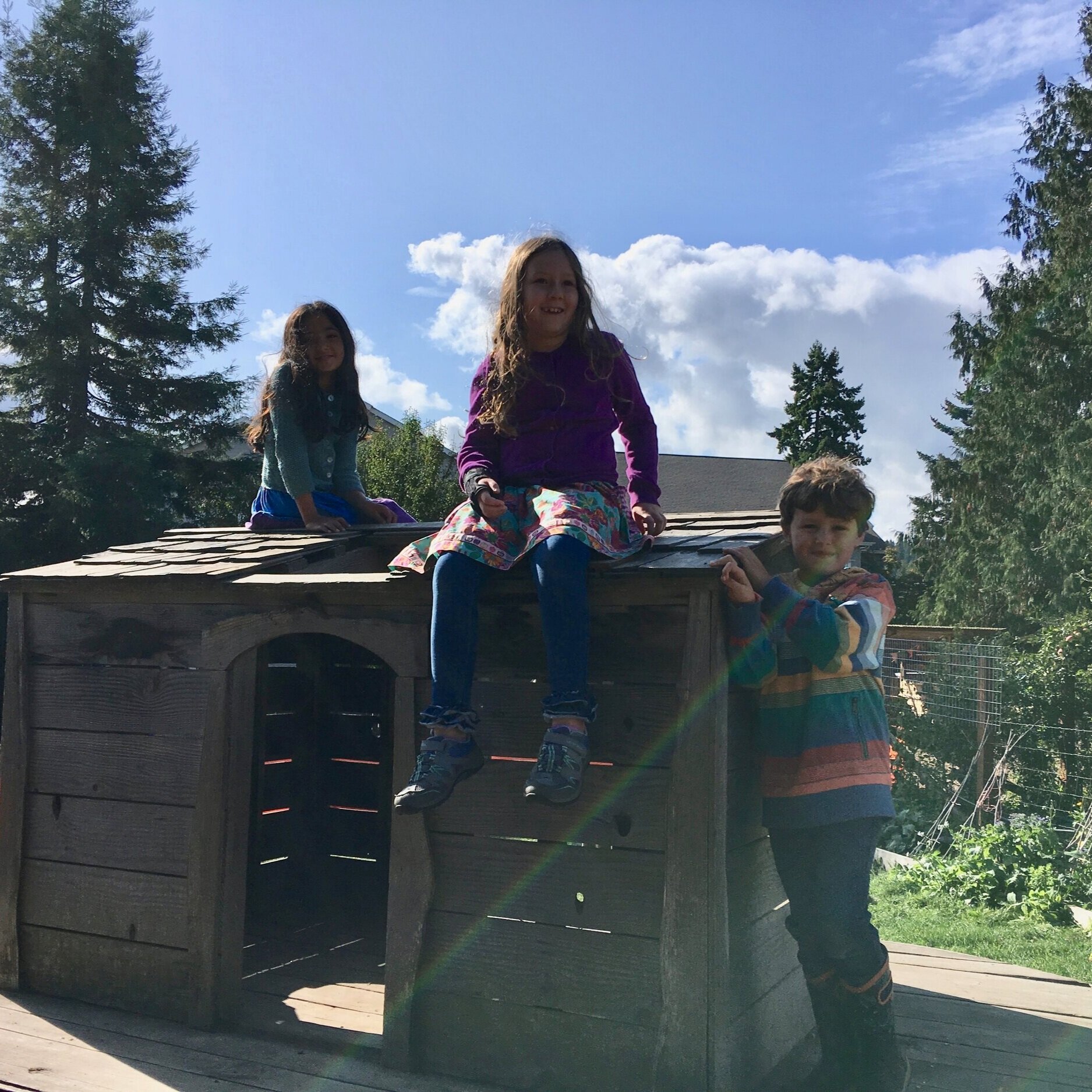
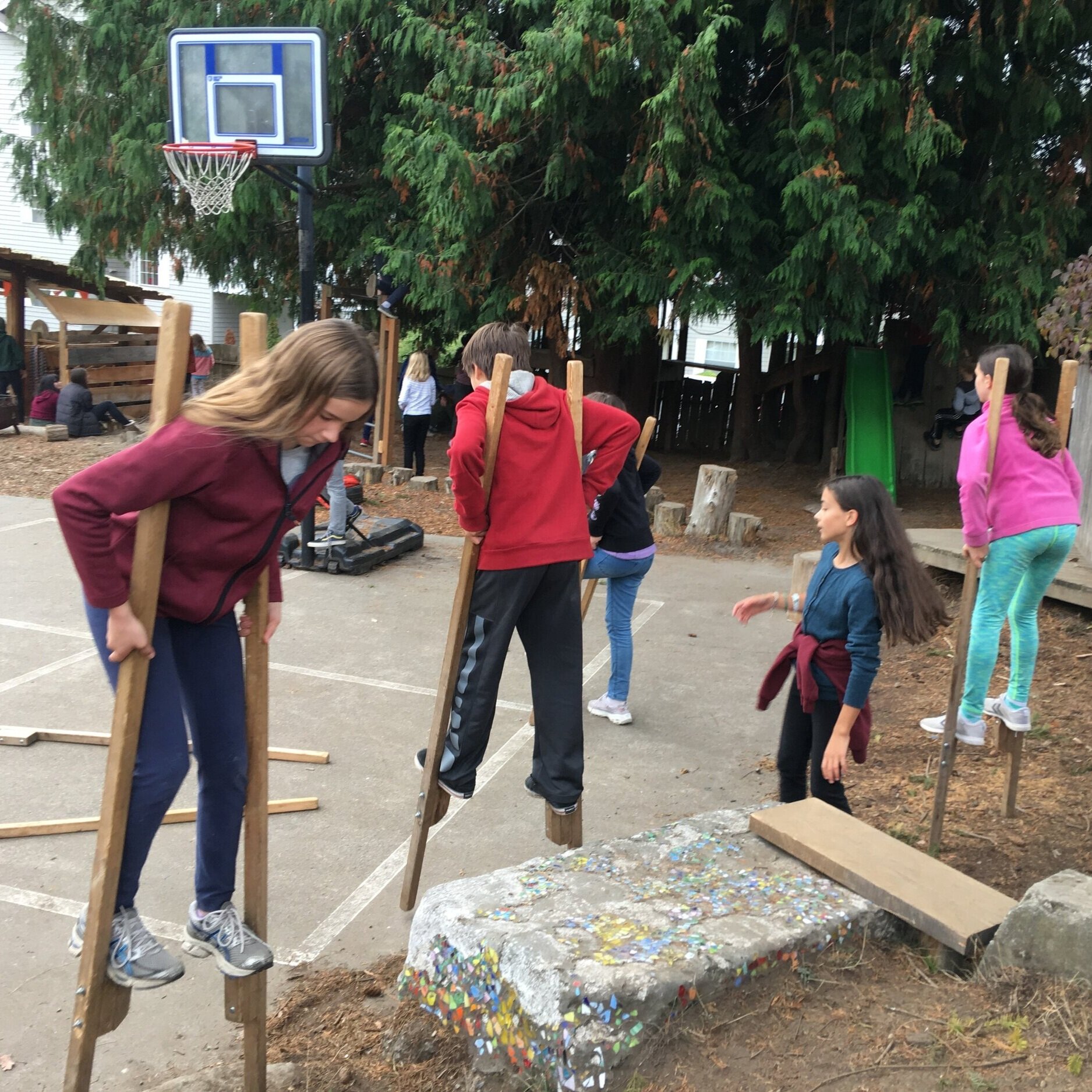
‘R’ is for recess at Madrona School. Enough said, really.
Students of all ages at Madrona School really know how to do recess well, and it is a natural outgrowth of the emphasis on outdoor play in our early childhood program. In our grade school, all of the classes go out to the play yard after morning snack and after lunch. The grades mix and there are many, many games in progress at any one time. The children play four square, basketball, dodgeball, tetherball, "squirrel tag", jump rope, turn cartwheels, dig moats, swing from the monkey bars, and congregate in the apple trees or on top of the ‘ark’ to chat. They even get some non-tackle football in with a game someone dubbed "catch ball". Always supervised by three teachers or office staff, it is a joyful and inventive time, an opportunity for blowing off steam and getting those extra wiggles out before returning to the classroom. And, middle schoolers have a chance each week to have their own recess at Waterfront Park, for that big-kid-off-campus time they so want at their age.
When we give tours to prospective grade school families, we often walk through the hallways as morning recess is in progress. Many parents comment on our two recess periods rain or shine, on how our grades play together, and on the natural setting that our children enjoy. Recess can really show off the sweet, natural, and community nature of our school.
— adapted from our school newsletter



Madrona School is a non-profit, tax exempt public charity organization incorporated in the State of Washington. Madrona School does not discriminate on the basis of race, color, gender expression or identity, national and ethnic origin, sexual orientation, or religion in any of its programs, classes or activities.