

The whole family is very welcome to join us on Saturday, January 11 between 10am and 12pm for our annual school-wide Open House. Come meet teachers and see classrooms. We’ll have information available on next year’s early childhood programs and we are eager to show off work and teachers for grades 1-8 too! Bring a friend or neighbor — this is truly a “more is merrier” morning at school. Hope to see you there!


Madrona School Alphabet (Q)
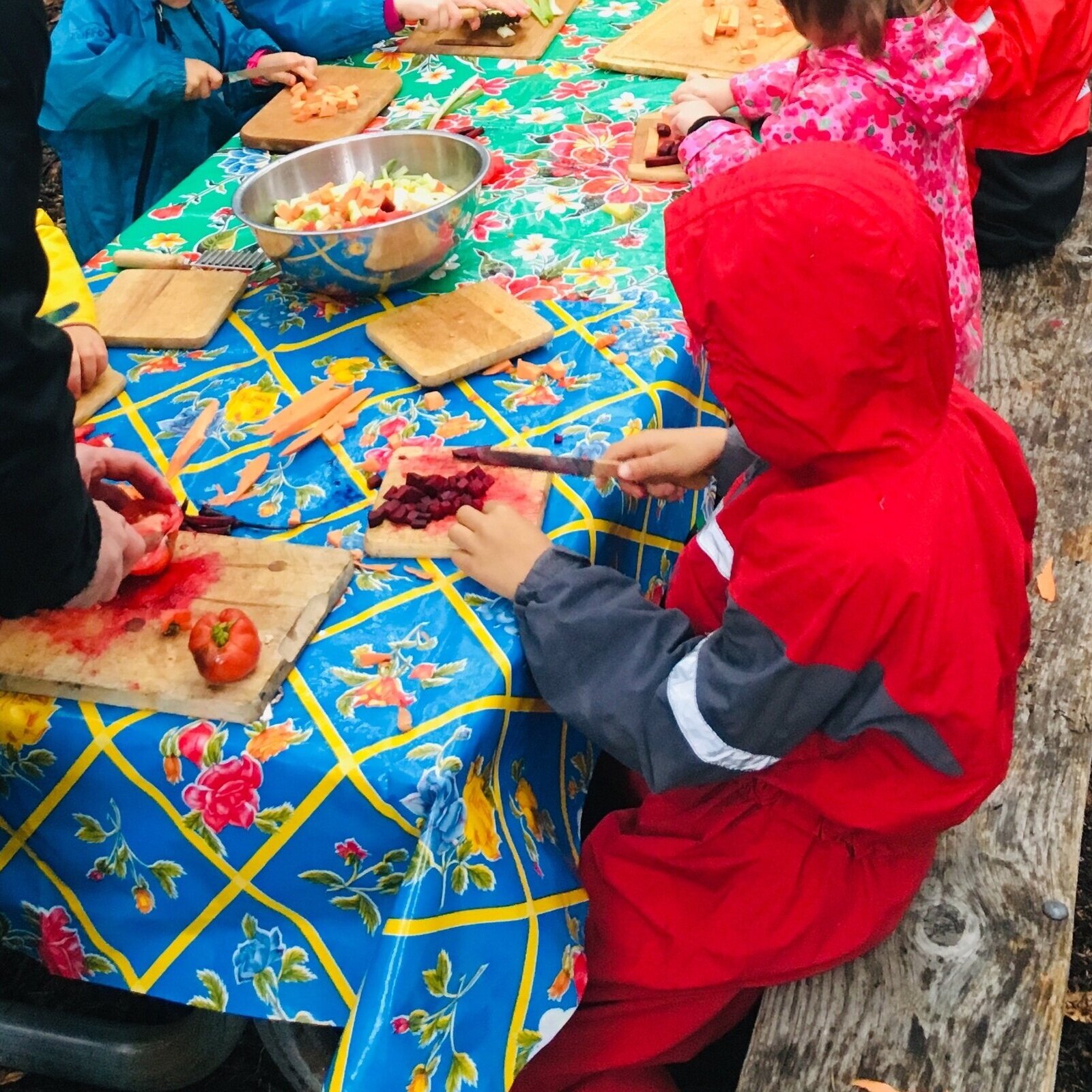
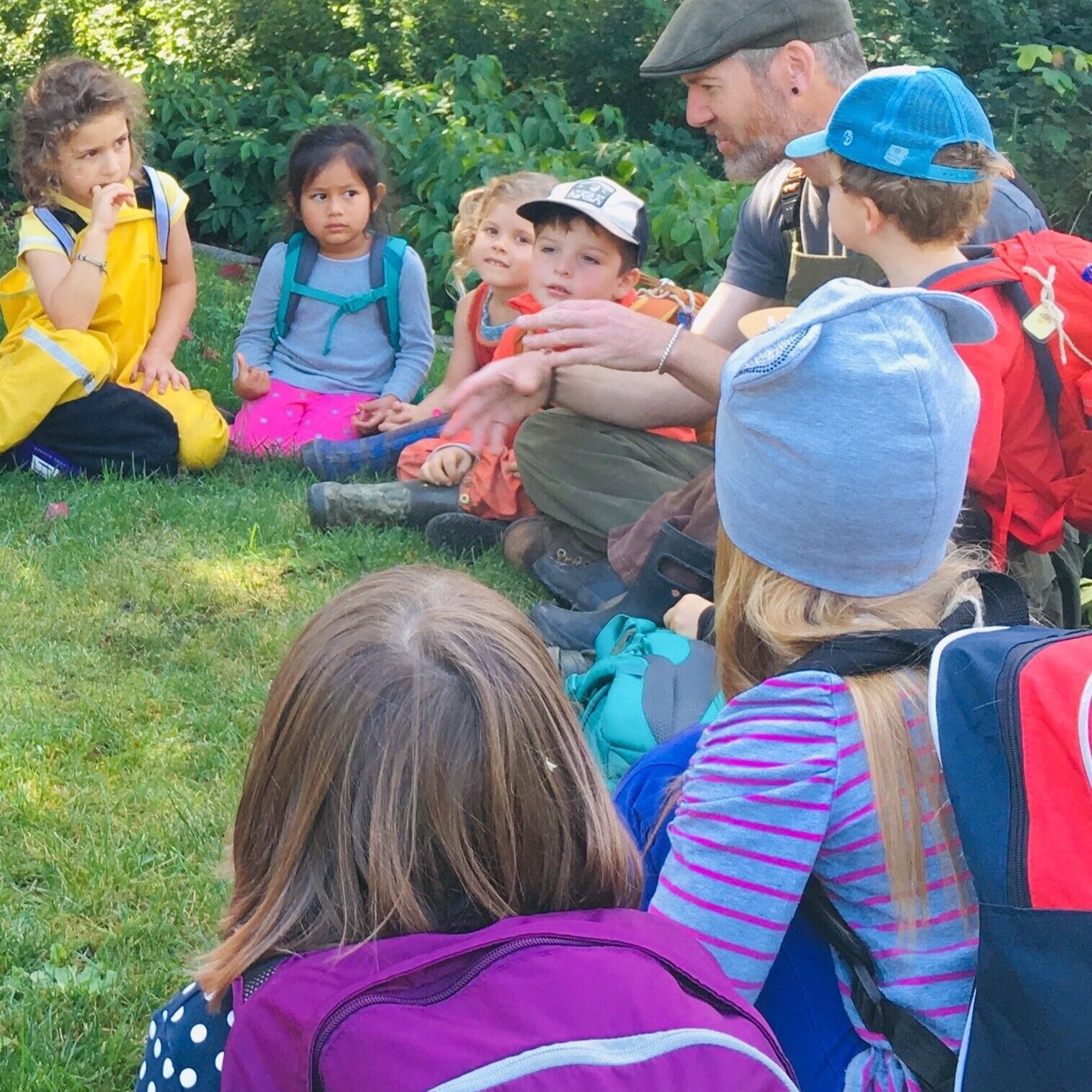
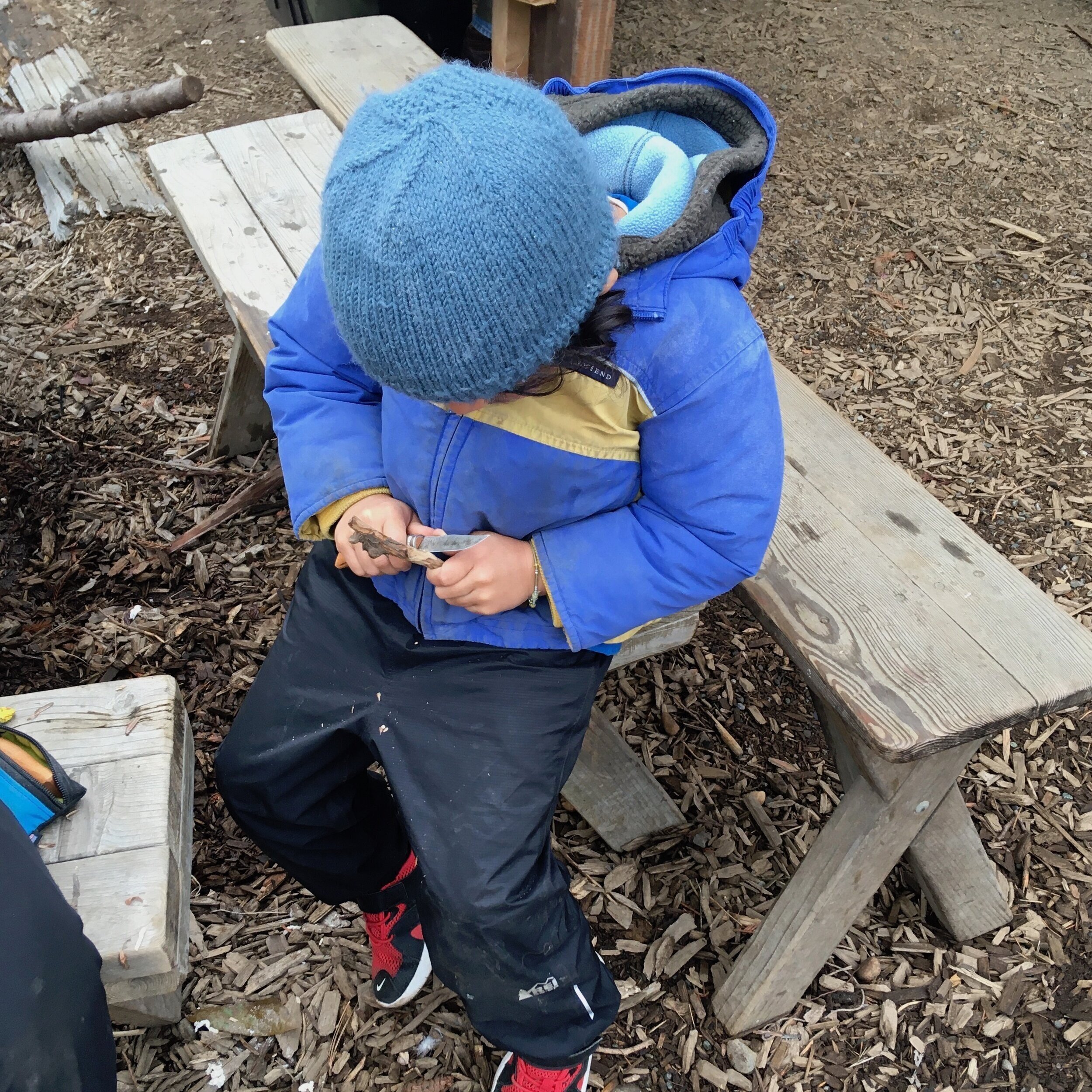
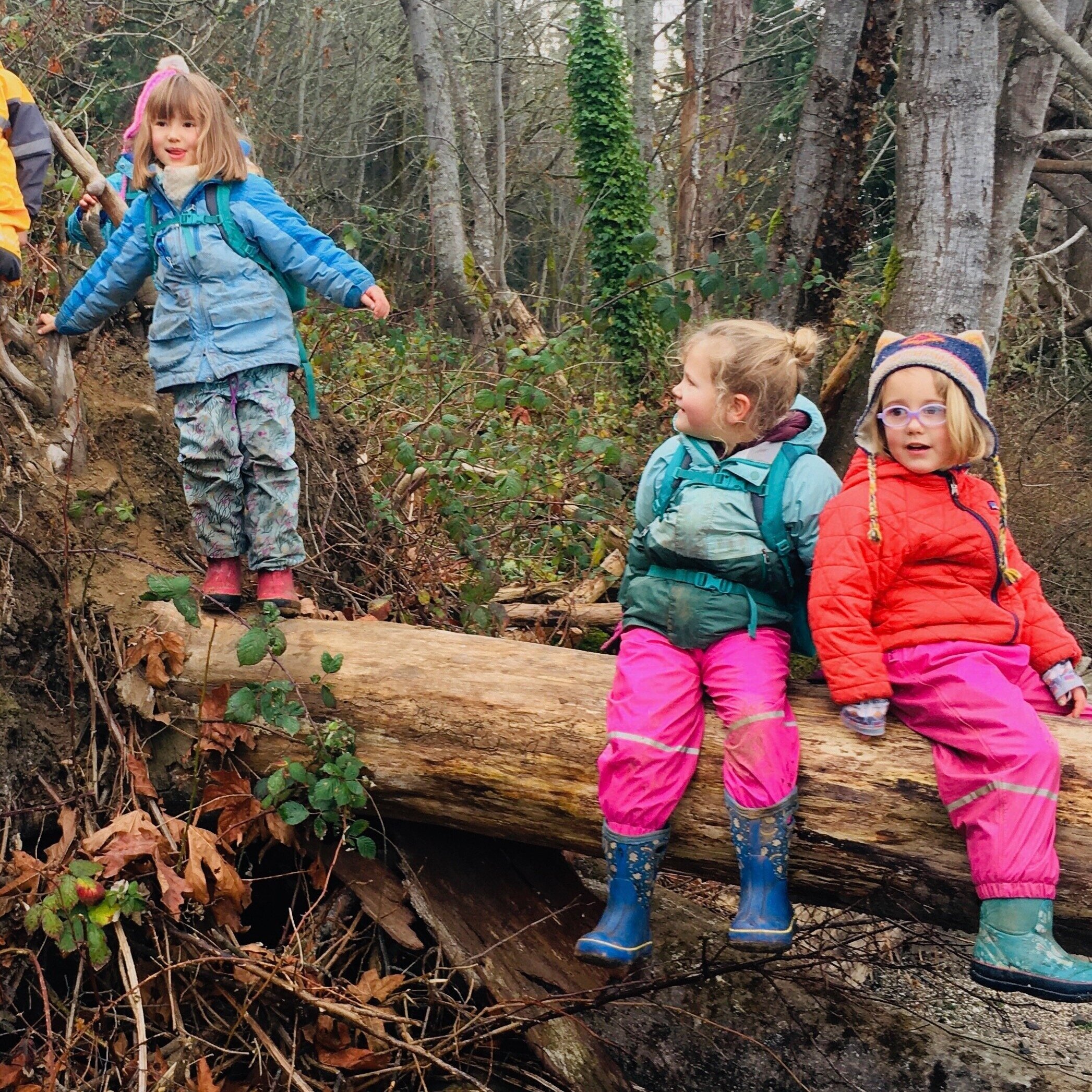
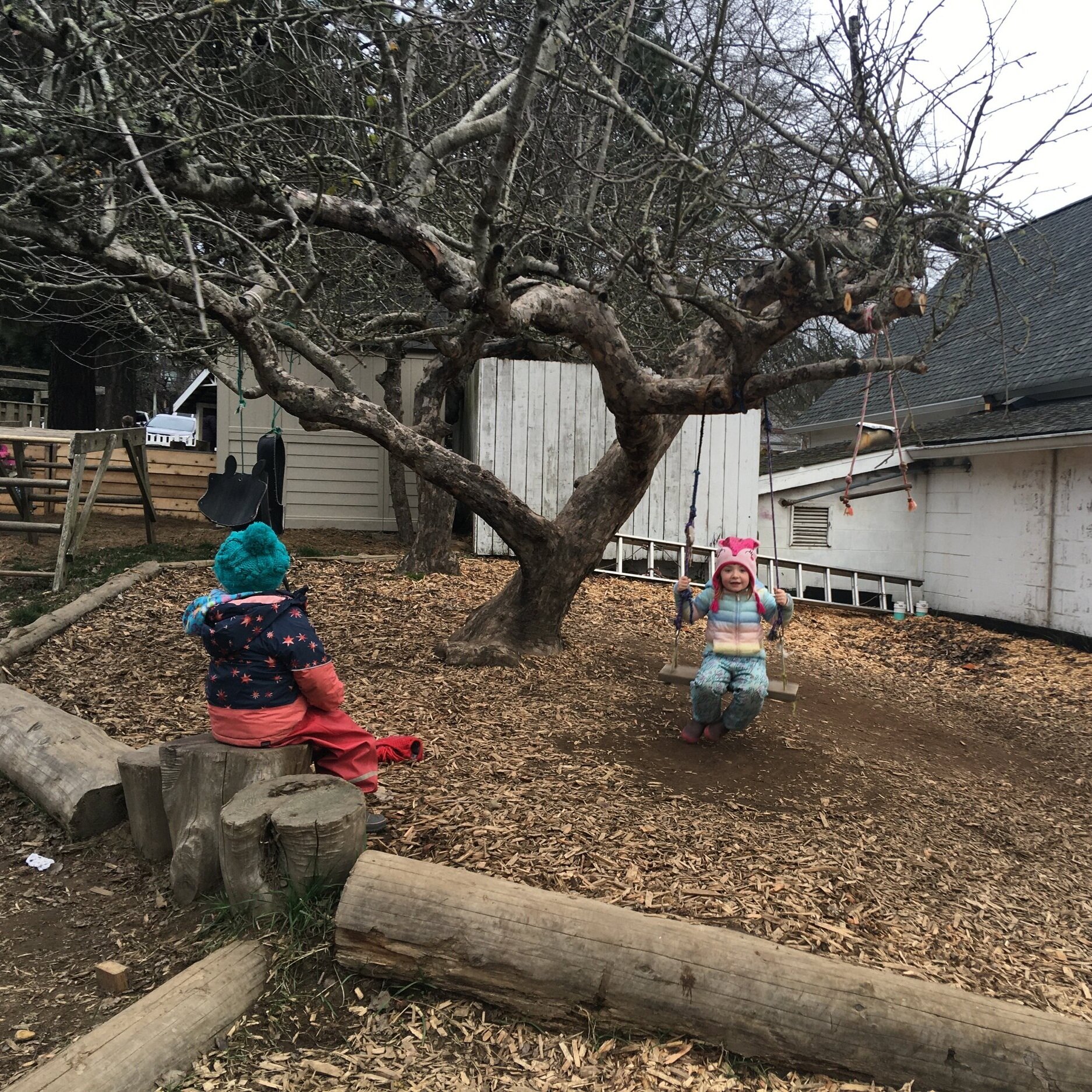
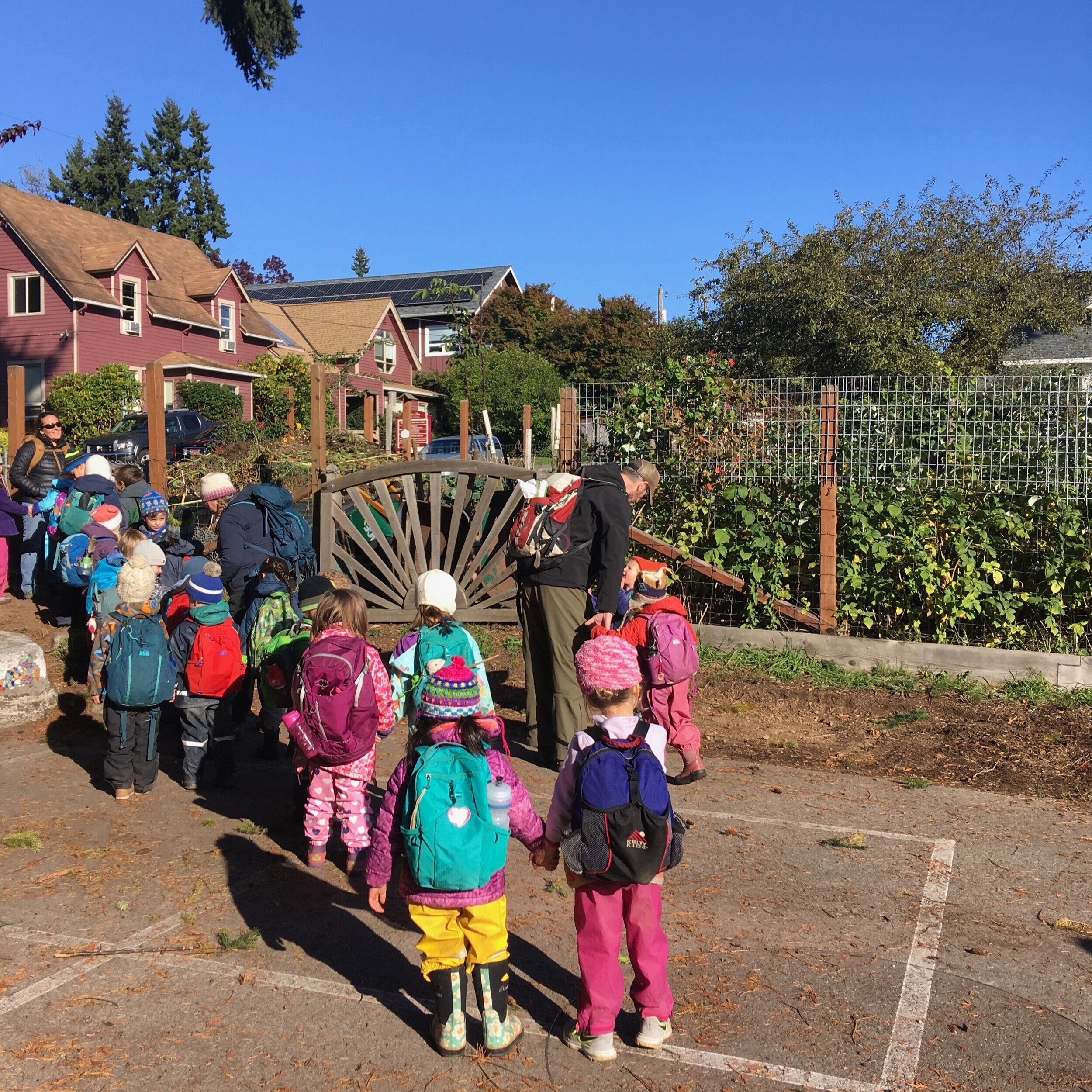
At Madrona School, ‘Q’ stands for quesadillas…and peppermint tea in enamel mugs, good rain pants and boots, and a healthy dose of fresh air. Everything that makes outdoor kindergarten a pure joy! Children need time outdoors -- time to explore, problem solve, work hard, get dirty, lay quietly watching bugs or clouds, run, yell, chase, climb…. Each day, our kindergarteners do just that and more, at school and in nearby parks and beaches around the island. And, Friday’s class also enjoys an additional day out hiking and exploring on “adventure Fridays”. Experiencing the outdoors is an integral part of our curriculum, and represents a whole and healthy childhood. Rosy cheeks and the muddy boots are wonderful things! In our society at large, today's children spend an average of over seven hours (!) each day engaging with media of some sort, according to one study by the Kaiser Family Foundation -- and this was after data collection three separate years showed steady growth in that time. The National Wildlife Federation offers a list of recent research studies, many of them concluding that children's outdoor time is shrinking, and stands at well under an hour a day. Follow the link here to download their report entitled "Whole Child Report: Developing Mind, Body and Spirit Through Outdoor Play". Sound familiar? It's an excellent read. What a gift we give our youngest students, who can prepare for grade school with a healthy dose of movement and imaginative, nature-rich play. Engaging the whole child is a basic principle of Waldorf education, and one that ideally prepares our children to be resilient, hardy contributors to the world around them, and to find pleasure in the "great outdoors". We believe a Waldorf kindergarten education is beneficial to your children, your family, and to the wider world!
— adapted from our school newsletter
Madrona School Alphabet (P)


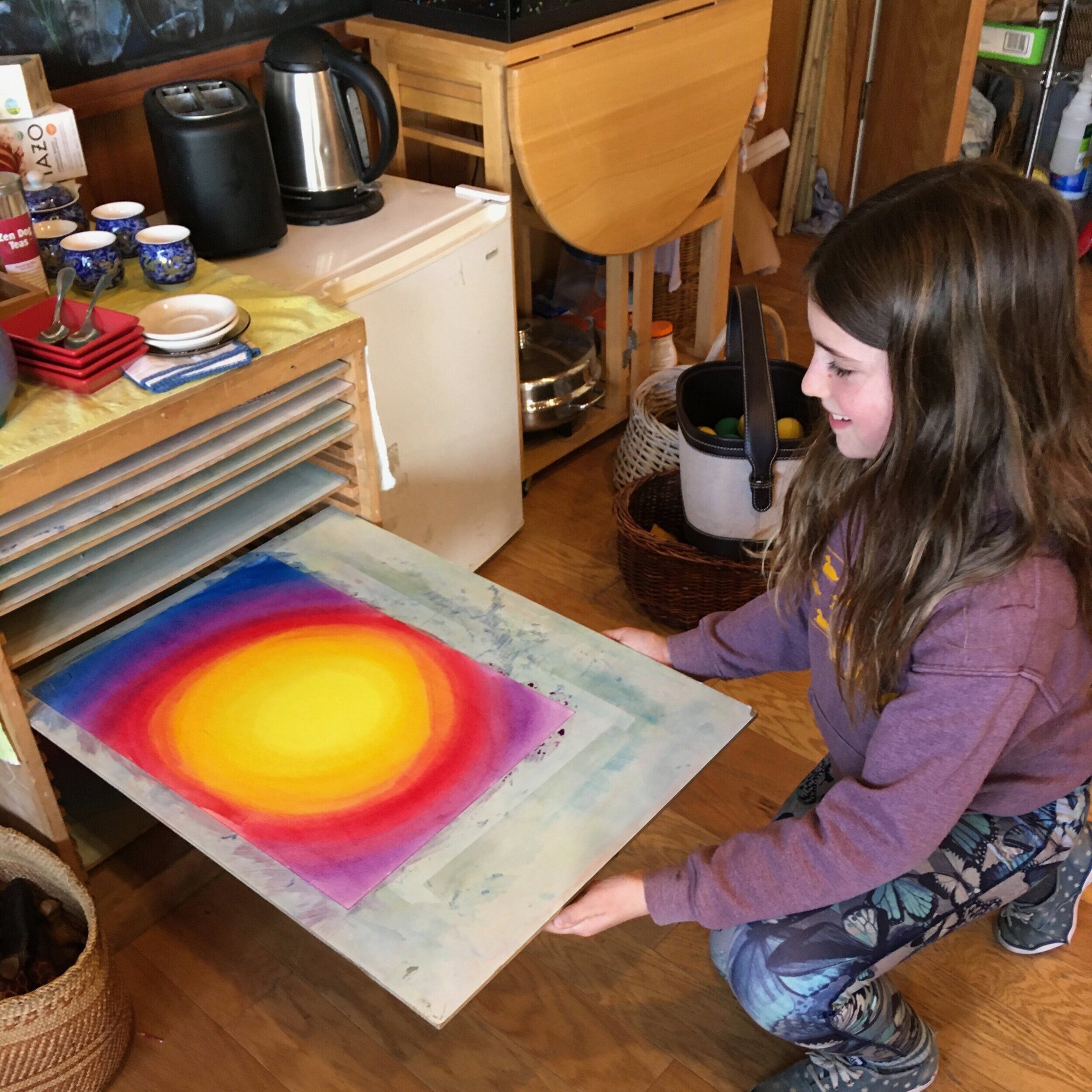
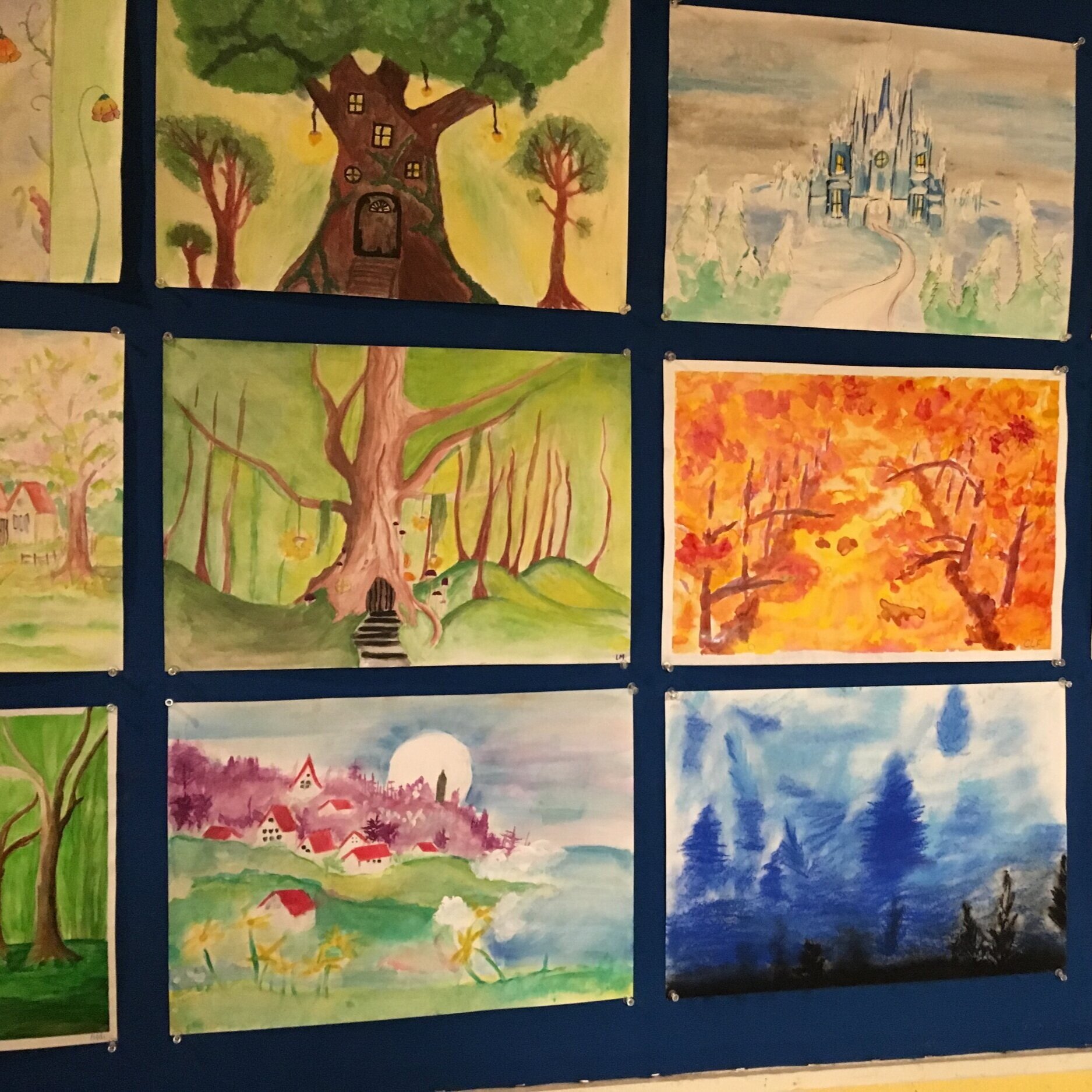
We’ve reached the letter ‘P’ in our 26-part series on what makes a Madrona School education unique, and P is for painting. Art infuses our curriculum, and a basic tenet of Waldorf education confirms artistic expression as elemental to our humanity. Every one of us is an artist, a creative being. In addition to drawing in main lesson and other specialty periods at Madrona, we include watercolor painting as a weekly activity in our early childhood classes, as well as a specialty class throughout the grade school. Our students learn techniques around wet-on-wet painting, applying watercolors to wet paper. This technique demonstrates the fluidity of color and requires time to learn, so the children build on what they know as they move through the grades. And, as with much of our curriculum, the full flowering of painting technique reveals itself in the middle school years. In kindergarten and 1st grade, students learn to work with color, experiencing colors both separately and blended, and they also begin to acquire brush control. As they develop skills, paintings reflect current main lesson blocks, and augment main lesson drawings and essays, becoming more detailed and skilled as they master techniques. We invite you to walk through the school building every so often - the teachers hang art in the halls on a regular basis. It's inspiring!
— adapted from our school newsletter


Madrona School Alphabet (O)
Hand drawn world maps by our 2019 8th graders — done as a part of their economic geography block.
We’re into the second half of our alphabet highlighting what makes a Madrona School education unique! ‘O’ celebrates Waldorf education as a part of our larger world. Madrona School, as a developing Waldorf school, is a member of a worldwide and growing independent education movement celebrating 100 years in 2019. According to the latest figures, there are more than 1,100 Waldorf schools in more than 60 countries; if you look specifically at early childhood programs, there are more than 2,000 on five continents.
Waldorf education originated in Germany in 1919, when a factory owner asked Rudolf Steiner to develop a school for his workers' children. The original co-educational school, open to all and administered by teachers, was a direct outgrowth of Germany's social renewal efforts following World War I. And, even though the Waldorf education movement began in one place at a specific time, it continues to grow and evolve, seeking always to educate the whole child, recognizing a child reaches his or her full potential when education addresses not only the mind, but the body and spirit as well. Today, each Waldorf school is independently run, and each school reflects local culture and practice -- just as we make use of all the natural beauty in our local woods and beaches and incorporate our region's history and culture into our curriculum, the same is true for schools around the world. At the same time there are elements of Waldorf education that are recognizable and translate across cultures, as each and every school strives to educate and develop each student's awakening capacities, and graduate creative thinkers who feel themselves a part of not only their culture, but of a common humanity.

Postcards received as a part of the global postcard exchange between Waldorf schools in 2018-2019.
If you are interested in reading more, please investigate the information on the AWSNA (Association of Waldorf Schools of North America) website, or all of the work that the German organization, Friends of Waldorf, highlights on their webpages. And, for a visual trip around the world, check out the Waldorf100 videos: Learn to Change the World, and the early childhood focused, Becoming. It is so interesting to see snippets of so many schools in so many different cultures!
In the day to day work of educating our students, we don't often think of our little school on Bainbridge Island with global connections, but indeed they are there!
—adapted from our school newsletter
Happy 100th Anniversary!
Waldorf education turns 100 today, and this international group of schools, 1100 strong, is marking the occasion all year long with a variety of celebrations. Madrona School is proud to be a part of this story in our 20th year on Bainbridge Island.

To mark this special day, our national organization released a new short video, An Education for the Future. Please take a look and share it widely with your family and friends!
And, review the video offerings from the international Waldorf100 committee too — they do an excellent job of highlighting some of what makes this educational model special and relevant: Waldorf100: Learn to Change the World and Becoming.
Words from a Madrona School Friend
Last spring, we were fortunate enough to hear from Seattle Waldorf School’s Tracy Bennett at our spring fundraiser. We’re reprinting her words here, as they offer a voice in our greater community in support of Madrona School and Waldorf education:
Good evening. It is truly a pleasure and honor to be with you tonight, celebrating Madrona School — your children, your teachers, and your wonderful community. I was delighted when Missi asked if I would offer some thoughts tonight, as it gives me an opportunity to say thank you. In my eight years as Head of Seattle Waldorf School, many of our most talented, committed and inspiring high school students have begun their journey in Waldorf education here, in the parks and beaches of Bainbridge Island. We have the luxury — and yes challenge — of adding the finishing touches to these extraordinary works of human development, before they head out into the world. Whether your children’s Waldorf experience spans a single year or more than a decade, I would offer that it is invaluable, and opens their eyes and hearts to the world in ways you may not see now. Trust me — our alumni and Waldorf graduates around the world are a testament to the staying power of Waldorf education.
The internet and papers (I still read hard copy!) are filled with research and reports about the skills today’s employers are seeking — creativity, collaboration, critical thinking, problem solving. This is a familiar list to Waldorf schools, who have long believed in the importance of educating children into capable, competent, and compassionate human beings. I believe we offer something more than requisite skills for success in the workplace, and of far greater importance in the long run — the capacity to find purpose and meaning in one’s life.
As a parent of five children, I realize that what I want more than anything else is for them to find that purpose. I want them to be passionate about their pursuits and to love what they do each day. I am guessing you share similar hopes for your children.
In his book The Path to Purpose, Stanford professor William Damon writes, “To have purpose is to be engaged in something larger than the self; it’s often sparked by the observation that something’s missing in the world that you might provide. Having a sense of purpose is the long-term, number one motivator in life.” Yet, according to his research, “only about 20 percent of high school students report being purposeful and dedicated to something besides themselves. The majority are either adrift, frenetic with work but purposeless, or full of big dreams but lacking a deliberate plan.”
As a result of these findings, schools are now offering programs geared toward nurturing a sense of purpose in students — Future Project, The QUESTion Project, Project Wayfinder, and more. I applaud these efforts to move education away from content-driven curriculum and traditional measurements. At the same time, I cannot help but smile. In Waldorf education, helping students find purpose in their lives is not a separate curriculum or an add-on class. It is what we do. As Rudolf Steiner wrote, “Our highest endeavor must be to develop free human beings who are able of themselves to impart purpose and direction to their lives. The need for imagination, a sense of truth, and a feeling of responsibility — these three forces are the very nerve of education.”
A couple of years ago I sat with a group of SWS alumni sharing their experiences in college and beyond. Listening to these articulate, earnest and balanced young adults was an uplifting affirmation that we are doing it differently here, and need to stay the course despite societal (and occasionally parental) pressures.
What do they value most about their Waldorf education?
Self-directedness,
A curiosity about the world,
A healthy relationship with technology,
A keen interest in learning,
An appreciation for authentic friendships.
One of our graduates offered a moving analogy. Pursuing her passion for theater at Cornish College, Alyssa shared, “When you are preparing for a play, you do what’s called invisible work. It’s everything that’s done before the performance, and it’s really hard. It’s where you deal with your stuff and work through everything so that when you get on that stage it all just happens. I feel like my Waldorf education has been the invisible work of my life. It’s there to support me and allows me to shine on life’s stage.”
This invisible work extends beyond your children. I know this personally, and in closing will share my experience with the magic of Waldorf education.
I have worked in an array of schools in the area, and consulted to dozens of schools more across the country. I was not looking for a position at Seattle Waldorf School in June 2011; it literally appeared before me. I now realize that in fact I was called to come here and join this community to do this incredibly important work. My initial curiosity (with a healthy dose of skepticism) about Waldorf education has grown into a deep commitment to an educational approach that is holistic, nurturing, rigorous, and firmly grounded in what we know about brain research and human development. I believe our world needs strong Waldorf schools more than ever.
But that’s not why I write a check to SWS each year that is larger than any other gift I make by a magnitude of ten. It’s because this education and this community have changed my soul. In the eight years that I have been part of this work, I have learned so much about who I am and how I want to show up in the world. I have made mistakes and been forgiven. I have accomplished tasks and been thanked. I have shared sadness, joy, anger, and anxiety, and been met with compassion and understanding. I have been supported in being human, in a community of other human beings. Every day, as a 60-year old woman, I personally experience the powerful impact of Waldorf education deep within my soul. For this, I am grateful, and for this I give.
I hope you will join me in giving generously to Madrona School, where the seeds of passion, of purpose, and of magical invisible work are planted, and take root not only in our children but in each of us as well. Thank you!
Madrona School Alphabet (N)
N is for nurturing….nurturing that underlies education at Madrona School. From our youngest students, introduced to a school setting through the sweet unfolding of a parent-child class, to the relationships that develop between students and teachers in both our early childhood program and our grade school, our faculty work hard to see each individual child and meet them where they are.
Our parent-child program offers a small child, ages 18-36 months, a home-like introduction to school and a social setting. Our teachers set up the room with care, selecting toys and activities, as well as parent education materials. This is often the way a family learns about Waldorf education. We run this program in two sessions, fall and winter/spring. If you know a family with young children, invite them to inquire about this most nurturing of classes!
Our preschool and kindergarten classes are both mixed-age, allowing for teachers to get to know a young student over two or more years together. Our teachers value their role as a parenting ally, and our students have a real opportunity to connect with another loving adult.
This continuity is also an important nurturing element in our grade school. Class teachers move up through the grades with their students, getting to know a family over time; and our specialty teachers also enjoy building relationships. The teachers really get to know a family and their student, able to see growth from year to year, able to foster interpersonal relationships in the classroom, able to be another regular relationship in a young person's life.
Teachers are, by definition, nurturing folks. At Madrona School, they gather for a morning verse of their own, a daily reminder of our school's focus on each student, on partnering with families to teach each child and see them go on into the world to become a whole and contributing member of society!
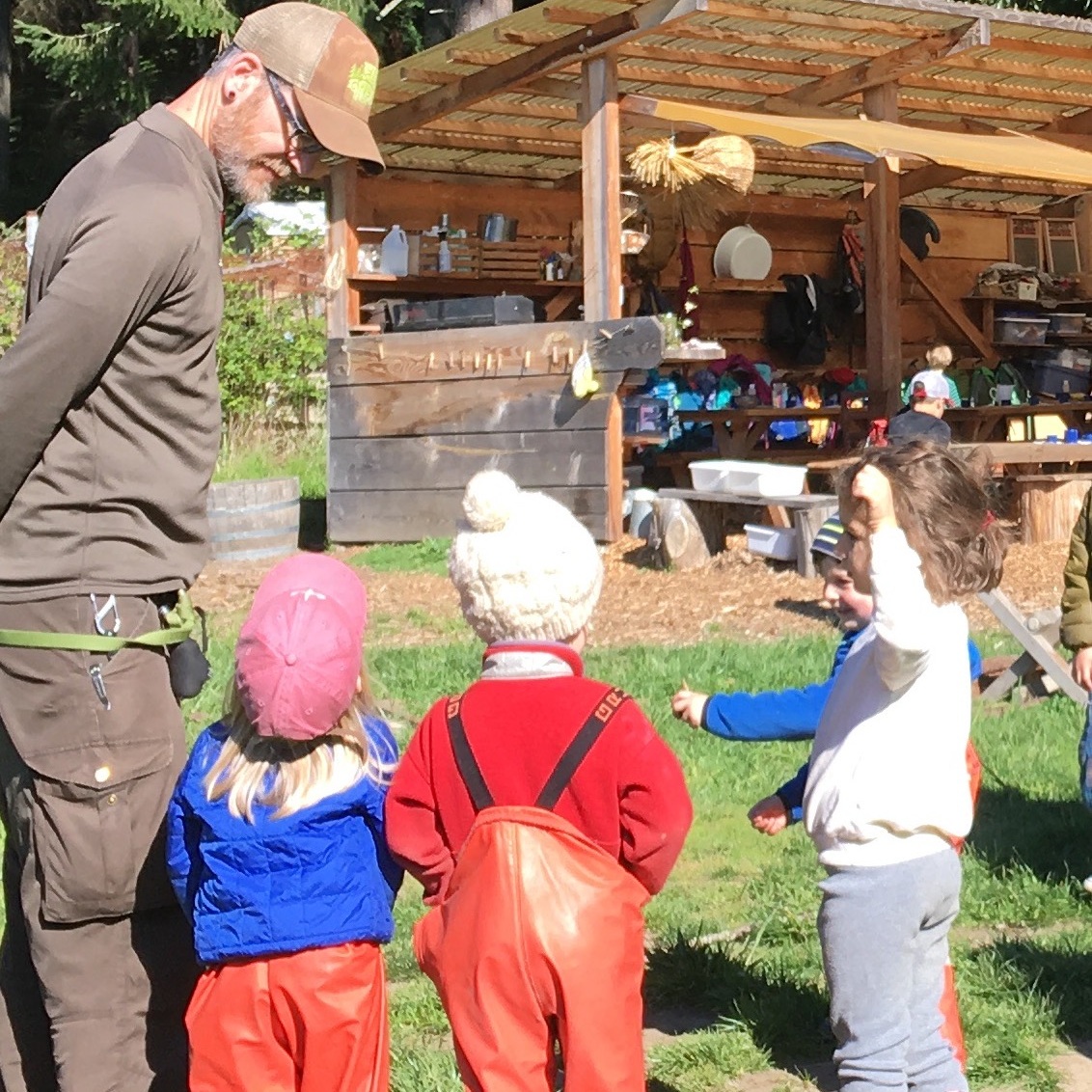
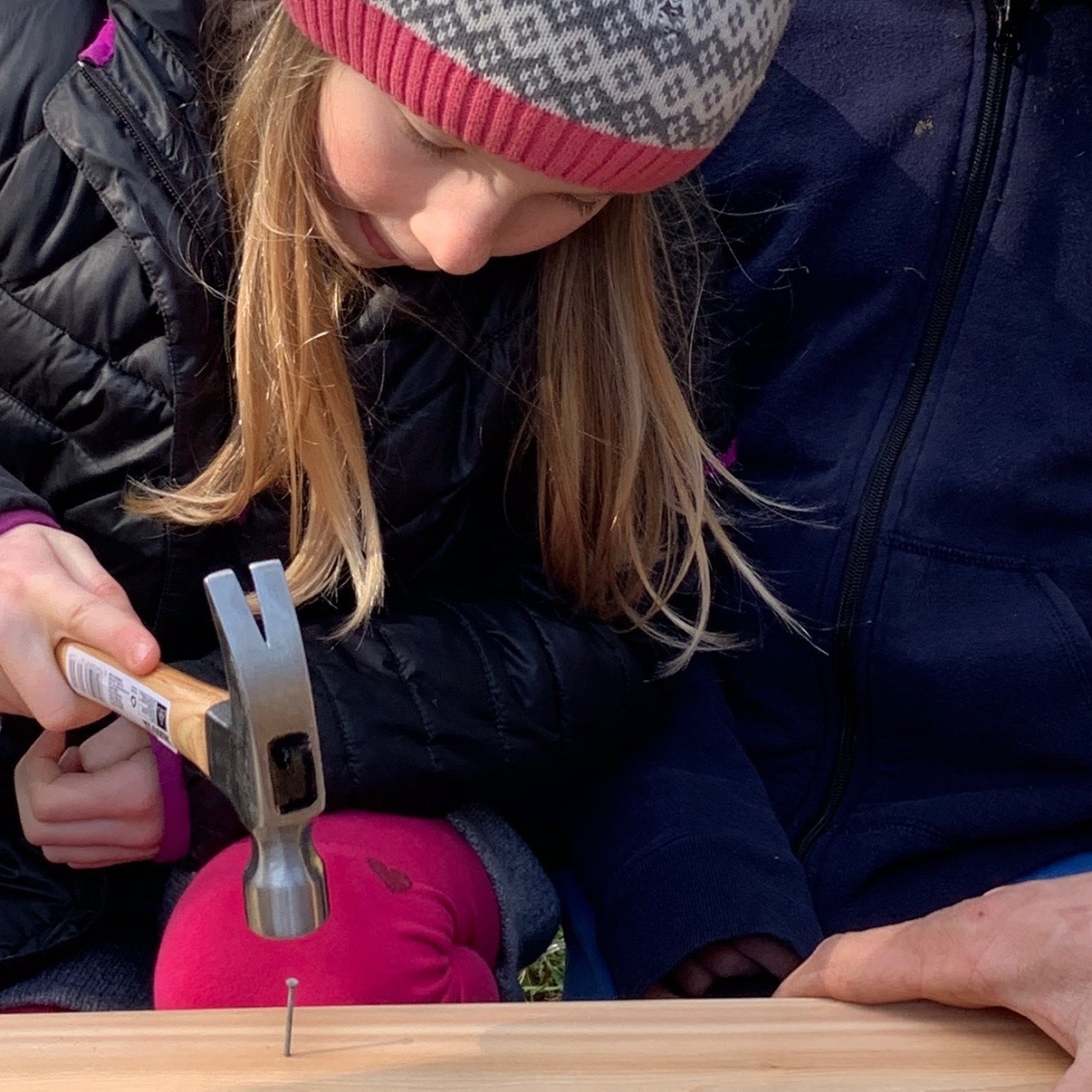
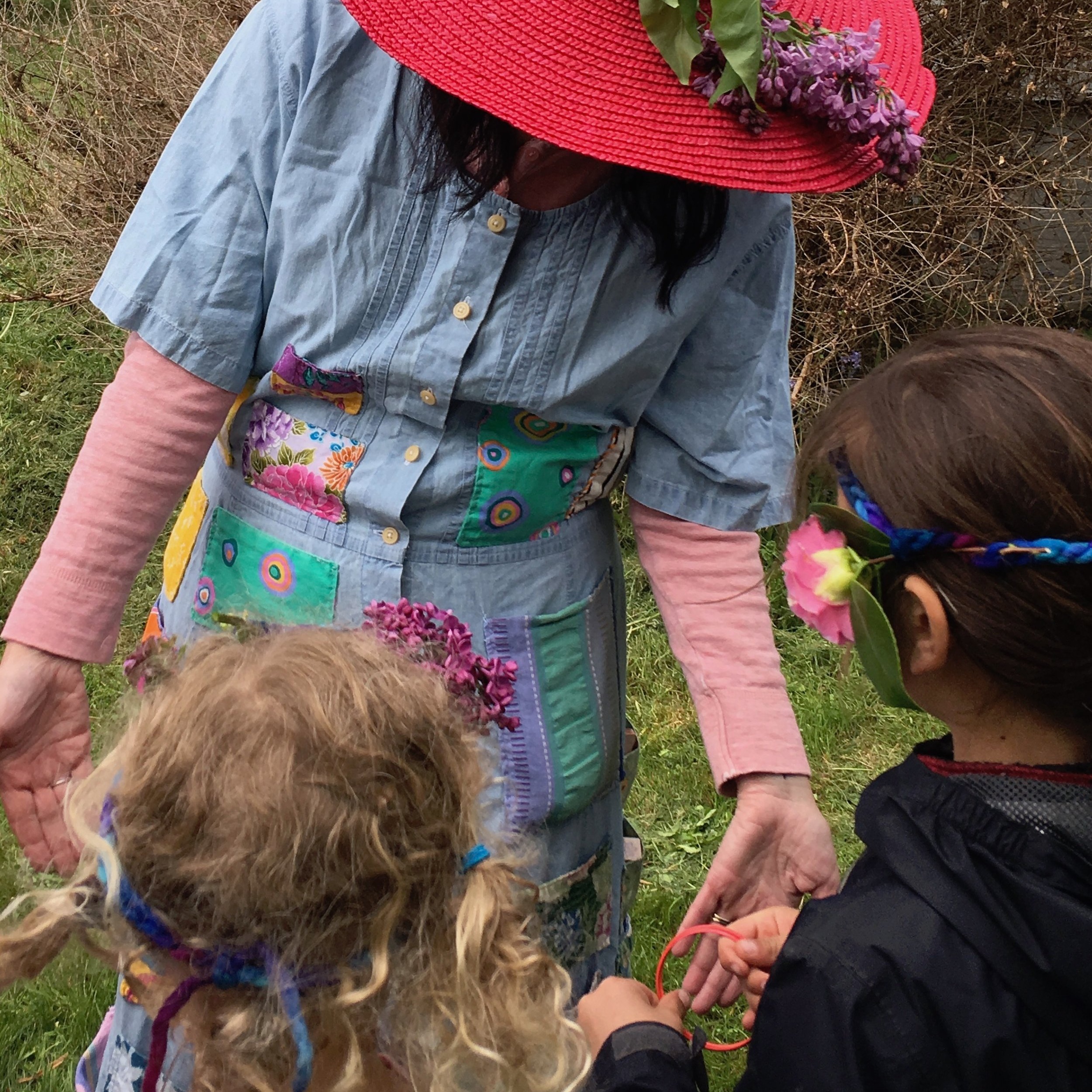
Finally, and not at all least, our parent community strives to nurture one another, through regular events like parent meetings and parent society, volunteering in the classrooms to share talent and time with teachers and students, and in helping when a family needs a little extra help. We invite you to enter into the school community in whatever way feels comfortable for you. Join us!
—adapted from our school newsletter
Madrona School Alphabet (M)
Our celebration of what makes a Madrona School Waldorf education unique continues with… M for music!


Music in its most basic rhythmic form surrounds us from our earliest days -- heartbeat and breath, and eventually those sweet, simple lullabies from our parents and caregivers. There are many books and articles to explain different ways our brains benefit from music, its relationship with math, with memory, and on and on. Music infuses our curriculum at Madrona School too. There are songs for all the work and transitions in our early childhood classes, and during circles throughout the grades. We sing as classes and at assemblies, we play flutes and recorders, and 4th graders choose a stringed instrument, playing and reading music together through 8th grade. Music helps our students practice pattern recognition (good for reading and math!), creativity of expression, and collaboration through ensemble work, not to mention improvement through the discipline of a daily practice. Music offers an expression of joyful organization and speaks to us on so many levels; its daily integration in the curriculum is truly something to treasure!
—adapted from our weekly email newsletter