Exploring Waldorf

Words from a Madrona School Friend

Last spring, we were fortunate enough to hear from Seattle Waldorf School’s Tracy Bennett at our spring fundraiser. We’re reprinting her words here, as they offer a voice in our greater community in support of Madrona School and Waldorf education:

Good evening. It is truly a pleasure and honor to be with you tonight, celebrating Madrona School — your children, your teachers, and your wonderful community. I was delighted when Missi asked if I would offer some thoughts tonight, as it gives me an opportunity to say thank you. In my eight years as Head of Seattle Waldorf School, many of our most talented, committed and inspiring high school students have begun their journey in Waldorf education here, in the parks and beaches of Bainbridge Island. We have the luxury — and yes challenge — of adding the finishing touches to these extraordinary works of human development, before they head out into the world. Whether your children’s Waldorf experience spans a single year or more than a decade, I would offer that it is invaluable, and opens their eyes and hearts to the world in ways you may not see now. Trust me — our alumni and Waldorf graduates around the world are a testament to the staying power of Waldorf education.

The internet and papers (I still read hard copy!) are filled with research and reports about the skills today’s employers are seeking — creativity, collaboration, critical thinking, problem solving. This is a familiar list to Waldorf schools, who have long believed in the importance of educating children into capable, competent, and compassionate human beings. I believe we offer something more than requisite skills for success in the workplace, and of far greater importance in the long run — the capacity to find purpose and meaning in one’s life.

As a parent of five children, I realize that what I want more than anything else is for them to find that purpose. I want them to be passionate about their pursuits and to love what they do each day. I am guessing you share similar hopes for your children.

In his book The Path to Purpose, Stanford professor William Damon writes, “To have purpose is to be engaged in something larger than the self; it’s often sparked by the observation that something’s missing in the world that you might provide. Having a sense of purpose is the long-term, number one motivator in life.” Yet, according to his research, “only about 20 percent of high school students report being purposeful and dedicated to something besides themselves. The majority are either adrift, frenetic with work but purposeless, or full of big dreams but lacking a deliberate plan.”

As a result of these findings, schools are now offering programs geared toward nurturing a sense of purpose in students — Future Project, The QUESTion Project, Project Wayfinder, and more. I applaud these efforts to move education away from content-driven curriculum and traditional measurements. At the same time, I cannot help but smile. In Waldorf education, helping students find purpose in their lives is not a separate curriculum or an add-on class. It is what we do. As Rudolf Steiner wrote, “Our highest endeavor must be to develop free human beings who are able of themselves to impart purpose and direction to their lives. The need for imagination, a sense of truth, and a feeling of responsibility — these three forces are the very nerve of education.”

A couple of years ago I sat with a group of SWS alumni sharing their experiences in college and beyond. Listening to these articulate, earnest and balanced young adults was an uplifting affirmation that we are doing it differently here, and need to stay the course despite societal (and occasionally parental) pressures.

What do they value most about their Waldorf education?

  • Self-directedness,

  • A curiosity about the world,

  • A healthy relationship with technology,

  • A keen interest in learning,

  • An appreciation for authentic friendships.

One of our graduates offered a moving analogy. Pursuing her passion for theater at Cornish College, Alyssa shared, “When you are preparing for a play, you do what’s called invisible work. It’s everything that’s done before the performance, and it’s really hard. It’s where you deal with your stuff and work through everything so that when you get on that stage it all just happens. I feel like my Waldorf education has been the invisible work of my life. It’s there to support me and allows me to shine on life’s stage.”

This invisible work extends beyond your children. I know this personally, and in closing will share my experience with the magic of Waldorf education.

I have worked in an array of schools in the area, and consulted to dozens of schools more across the country. I was not looking for a position at Seattle Waldorf School in June 2011; it literally appeared before me. I now realize that in fact I was called to come here and join this community to do this incredibly important work. My initial curiosity (with a healthy dose of skepticism) about Waldorf education has grown into a deep commitment to an educational approach that is holistic, nurturing, rigorous, and firmly grounded in what we know about brain research and human development. I believe our world needs strong Waldorf schools more than ever.

But that’s not why I write a check to SWS each year that is larger than any other gift I make by a magnitude of ten. It’s because this education and this community have changed my soul. In the eight years that I have been part of this work, I have learned so much about who I am and how I want to show up in the world. I have made mistakes and been forgiven. I have accomplished tasks and been thanked. I have shared sadness, joy, anger, and anxiety, and been met with compassion and understanding. I have been supported in being human, in a community of other human beings. Every day, as a 60-year old woman, I personally experience the powerful impact of Waldorf education deep within my soul. For this, I am grateful, and for this I give.

I hope you will join me in giving generously to Madrona School, where the seeds of passion, of purpose, and of magical invisible work are planted, and take root not only in our children but in each of us as well. Thank you!
Madrona School Alphabet (N)

N is for nurturing….nurturing that underlies education at Madrona School. From our youngest students, introduced to a school setting through the sweet unfolding of a parent-child class, to the relationships that develop between students and teachers in both our early childhood program and our grade school, our faculty work hard to see each individual child and meet them where they are.

Our parent-child program offers a small child, ages 18-36 months, a home-like introduction to school and a social setting. Our teachers set up the room with care, selecting toys and activities, as well as parent education materials. This is often the way a family learns about Waldorf education. We run this program in two sessions, fall and winter/spring. If you know a family with young children, invite them to inquire about this most nurturing of classes!

Our preschool and kindergarten classes are both mixed-age, allowing for teachers to get to know a young student over two or more years together. Our teachers value their role as a parenting ally, and our students have a real opportunity to connect with another loving adult.  

This continuity is also an important nurturing element in our grade school. Class teachers move up through the grades with their students, getting to know a family over time; and our specialty teachers also enjoy building relationships. The teachers really get to know a family and their student, able to see growth from year to year, able to foster interpersonal relationships in the classroom, able to be another regular relationship in a young person's life. 

Teachers are, by definition, nurturing folks. At Madrona School, they gather for a morning verse of their own, a daily reminder of our school's focus on each student, on partnering with families to teach each child and see them go on into the world to become a whole and contributing member of society!

Finally, and not at all least, our parent community strives to nurture one another, through regular events like parent meetings and parent society, volunteering in the classrooms to share talent and time with teachers and students, and in helping when a family needs a little extra help. We invite you to enter into the school community in whatever way feels comfortable for you. Join us!

—adapted from our school newsletter

Madrona School Alphabet (M)

Our celebration of what makes a Madrona School Waldorf education unique continues with… M for music!

Music in its most basic rhythmic form surrounds us from our earliest days -- heartbeat and breath, and eventually those sweet, simple lullabies from our parents and caregivers. There are many books and articles to explain different ways our brains benefit from music, its relationship with math, with memory, and on and on. Music infuses our curriculum at Madrona School too. There are songs for all the work and transitions in our early childhood classes, and during circles throughout the grades. We sing as classes and at assemblies, we play flutes and recorders, and 4th graders choose a stringed instrument, playing and reading music together through 8th grade. Music helps our students practice pattern recognition (good for reading and math!), creativity of expression, and collaboration through ensemble work, not to mention improvement through the discipline of a daily practice. Music offers an expression of joyful organization and speaks to us on so many levels; its daily integration in the curriculum is truly something to treasure!

—adapted from our weekly email newsletter

Our Annual School-wide Open House

IMG_3617.jpg

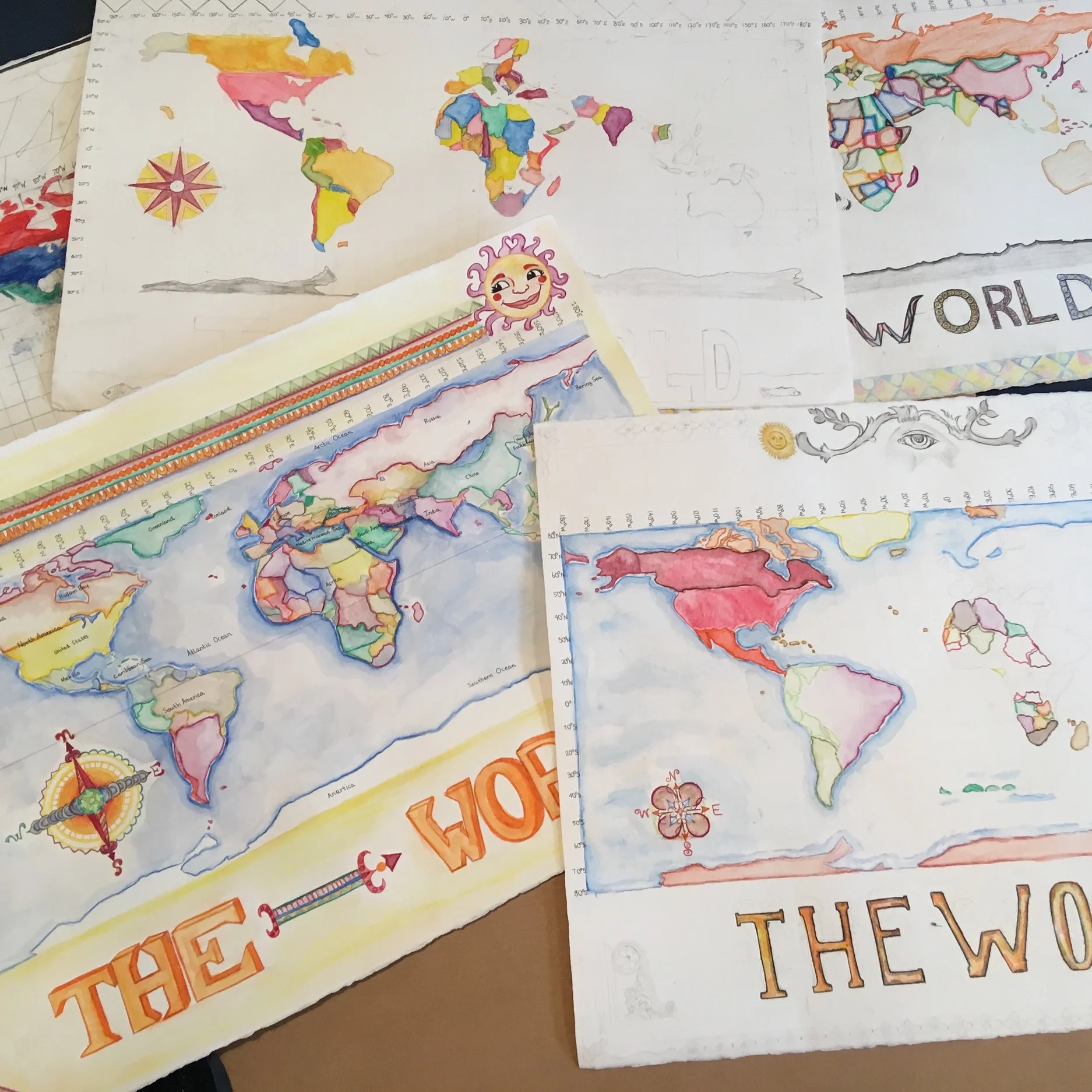
The whole family is very welcome at our annual school-wide Open House, this Saturday, January 26th! Please come walk through the school, meet teachers, see current student work and hear about our early childhood program expansion and new outdoor kindergartens! We are so excited to share a glimpse of our school with you. You are welcome anytime between 10 am and 12 pm, although if you are particularly interested in early childhood, join Miss Mary at 10:45am in the green house classroom to hear more specifically about those changes…..And, plan a trip up to Lowery Farm to visit with Teachers Isaac and Jamie about our plans for that space — the farm is open between 10:30am and 12:30pm.

See you there!

Meanwhile, please enjoy these examples from previous years of the sorts of work you’ll be able to view:


Some Parent Testimonials

We are grateful for those parents who chose to include testimonials for our website with their answers to our end-of-year survey this past summer. We highlight a selection of them here:

“Madrona School's approach to nurture our children's love of learning has been deeply moving. We appreciate how the school weaves the emerging scientific understanding of child's psychoneuro-developmental process along with the wisdom of Waldorf education. The school's ability to hold open and growing spaces for new information and the lived knowledge of the past to coexist has been important. Such a discerning and non-judging attitude the school embodies, we hope our children will continue to learn to practice to become who they are as unique individuals and as vital members of a meaningful community.” —Sierra, mother to two students

“The first week of school, my daughter said: ‘Mom , I wish school lasted until 5 pm’. The last month of school, she told me: ‘Mom, I wish school did not end so soon’.” —Mom of a 7th grade student

“This school brings so much joy to our child's life which in turn makes our lives so much richer. The wholesomeness and care each teacher puts into their students is in invaluable.” —parent to a kindergarten student

“Madrona is a gift to our children and the whole community! Keep up the great work! I tell everyone I come in contact about the school and what it has meant to our lives and our daughters! I have watched [them both] change dramatically since becoming part of the Madrona community. They entered unhappy and with a lack of confidence. Now I am in awe of how confident, happy and well rounded my daughters are! I for one will never be able to thank you enough for what your wonderful school has given them.” —Dad of two students

“My child’s teacher is ALWAYS prepared. Every week, everyday. She is amazing.” — from a parent of a rising 6th grader

“Rooted in the reliable insights of Waldorf and renewed by the inspired, loving presence of its teachers, Madrona School has been a wonderful blessing to our family. I'm very grateful.” -- parent of two students

The Purpose of the First Grade Circle

Back in October, at our Experience Waldorf event for parents, our 1st grade teacher, Ms. Hartz, shared the why and what of circle time in first grade. There is a lot behind what looks like fun to these eager students at the very beginning of their grade school journeys!

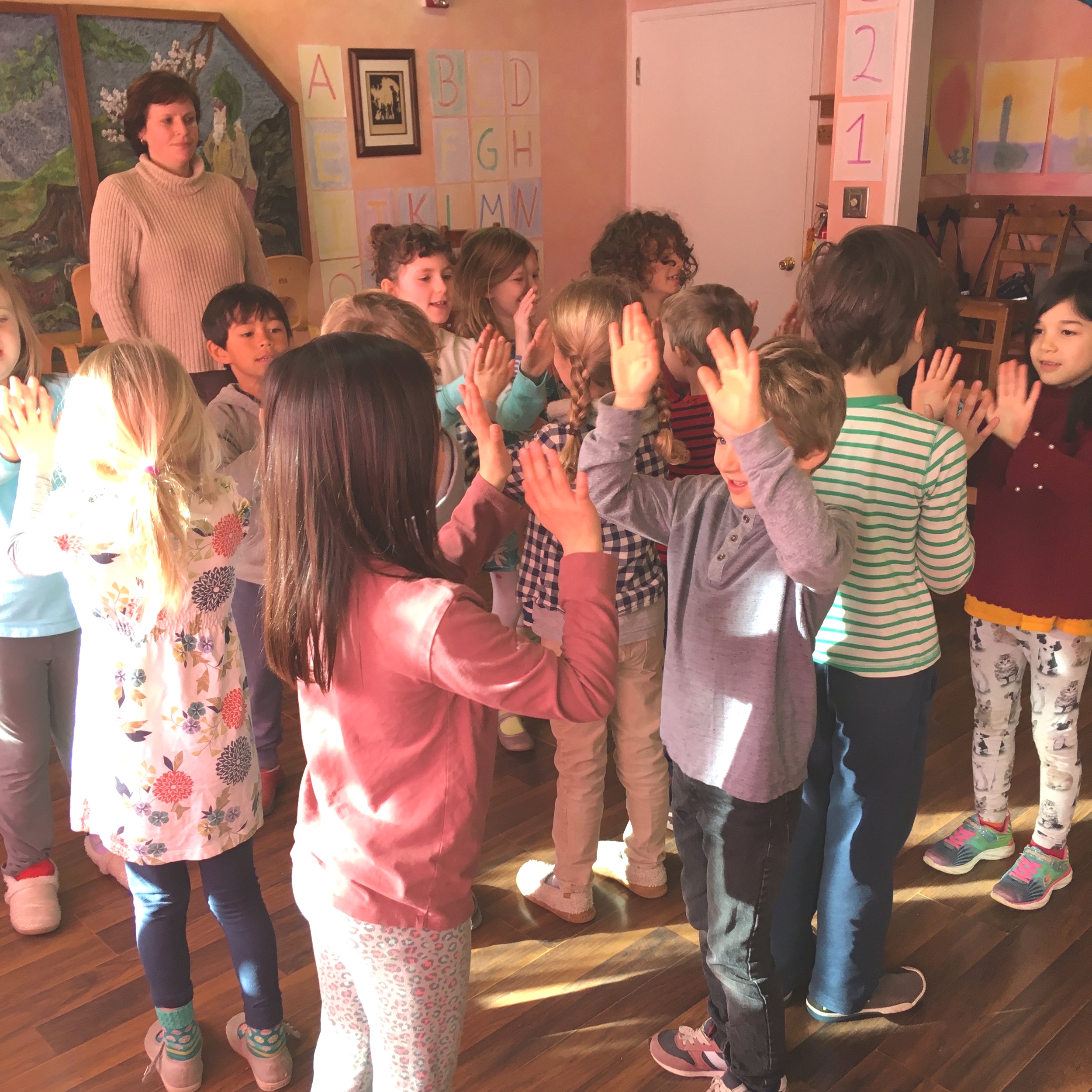
A first grader’s day begins with a handshake and a greeting to and from the teacher. The mood in the classroom is one of calm and expectation, sometimes with some excitement about something from home, or in anticipation of the day. The class speaks their morning verse together, and then, before moving into work at their desks, they will clear a space in the classroom for some circle time. A circle in 1st grade incorporates movement, music and singing, spoken word, rhythm, breathing, and concentration. It’s purpose includes:

  • Joy and delight

  • Awakening a healthy imagination

  • Wake up! Get out of breath, prepare to sit

  • Immersion in the season or “mood” of a block

  • Incarnation into hands/feet and fingers/toes

  • Creation of artistic and beautiful movement

  • Strengthen uprightness, endurance, coordination

  • Connect hemispheres of the brain

  • Working on body geography and spatial relationships

  • Enhancing a sense of touch, balance, controlled movement

  • Supporting speech development an sound/letter connection

  • Working on rhythm: foundational for math as well as music

  • Flexibility: work between polarities.

Ms. Hartz writes: “A first grader continues to be a being in movement. A first grader imitates out of an attitude of devotion and trust in the goodness of the world. Out of this feeling of goodness (reverence) will come an internal sympathy for goodness, a moral compass that does not need its own direct instruction.”

She shared her autumn circle with parents, including some of the “whys” behind its design:

  • Morning Verse to imbue and experience reverence and silence.

  • Seasonal Songs: Yellow the Bracken; The Autumn Winds; Golden is the Garden (to learn the months, movement crossing midline); Ghost of John (for fun).

  • Form a Ring: Expansion Contraction (to learn to make a beautiful circle); One for the Golden Sun; A Sailor Went to Sea; Tony Chestnut (for slow, fast, quick, slow); Bean bags passed to Hickory Dickory Dock (coordination with your neighbor and the group).

  • Balance boards and beam.

  • Drink of water and move desks back in preparation for the day.

Morning verse, movement circles, music including singing and recorders, and recitation continue up through the grades and develop depending on the needs of the class and the teacher. Often, teachers include some math games and mental math too. Some teachers employ movement as a mid-morning break, while others prefer to begin the morning with circle time. Please ask your child’s teacher if you have questions about how she or he incorporates movement and music into a morning’s lesson!

Art and Painting at Madrona School

At Madrona School art is infused into every lesson, and children learn artistic techniques that they utilize each and every day. Morning main lessons with a class teacher employ drawing, alongside writing, recitation and movement, and every student creates their own book for each subject and world language. We also teach standalone art classes during specialty class periods, including modeling beeswax and clay, form drawing, and painting with watercolors. We also offer handwork classes, teaching knitting, crochet and embroidery.

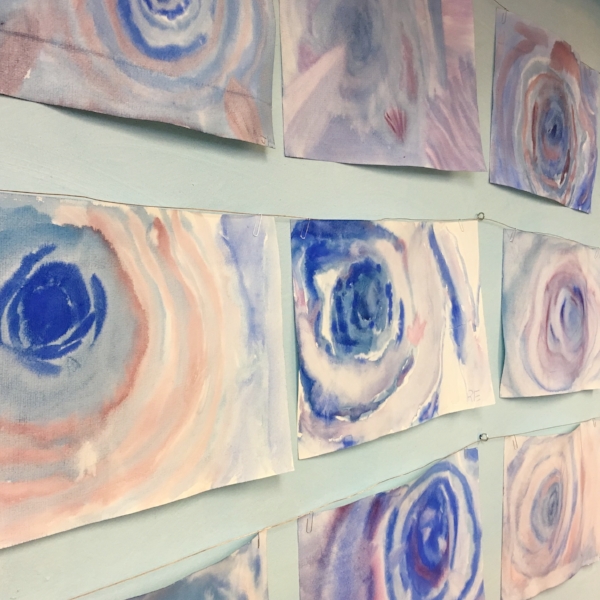
Beginning in our early childhood classes, and throughout grade school, students explore color and composition through a “wet on wet” technique, where wet paint is laid onto wet paper. This type of painting creates a wonderful flow of color, and takes time to learn. The results can be unexpected!

By the time our students are in middle school, they have years of drawing, painting, handwork, and a variety of craft experiences to inform their artistic efforts; they further their education with more sculpting, woodwork and perspective drawing. We value art as a human endeavor, and every one of our students is an artist.


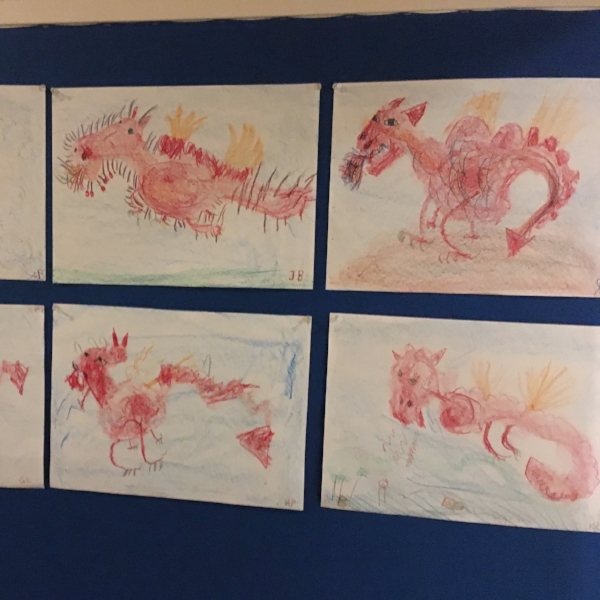
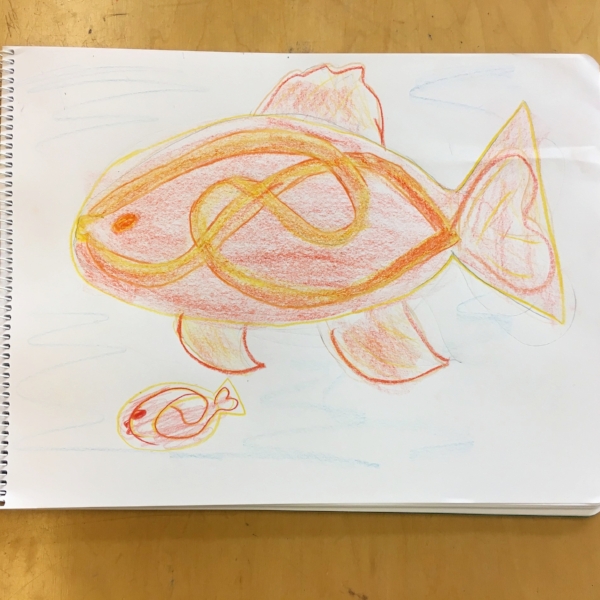
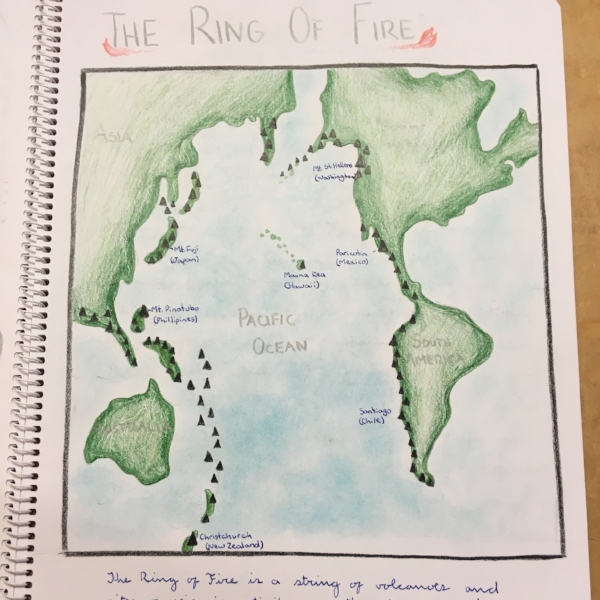
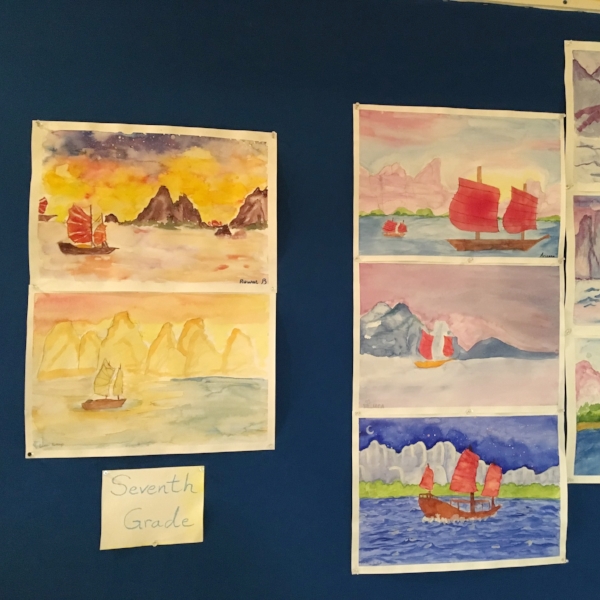
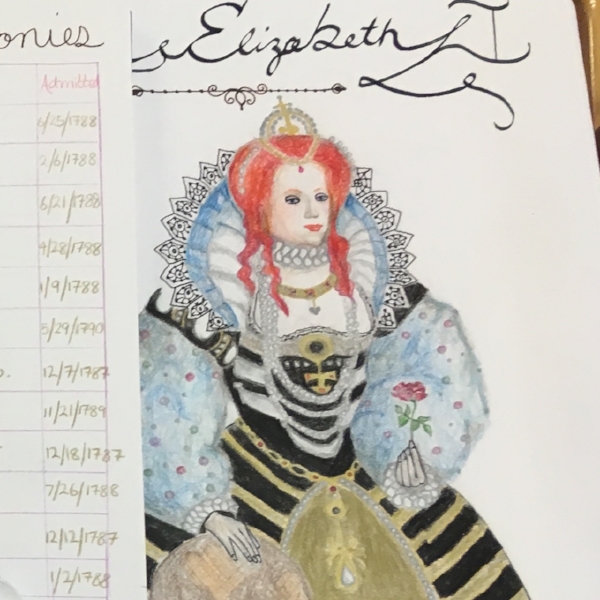
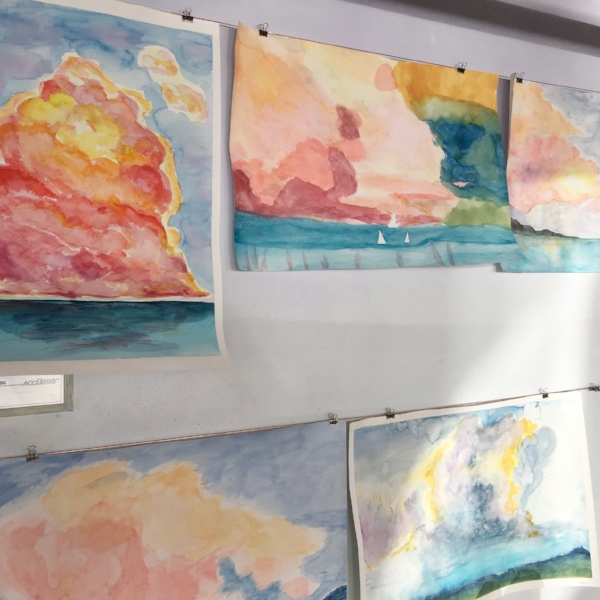
Examples from around the school so far this fall: preschool paintings, 1st grade dragon drawings, 1st grade beeswax trees, 2nd grade house drawings, 4th grade form drawing, a 4th grade seasonal Spanish lesson, 5th grade paintings, both from botany and a seasonal still life, a 6th grade main lesson book in geology, 7th grade paintings, an 8th grade history drawing and 8th grade paintings of clouds.


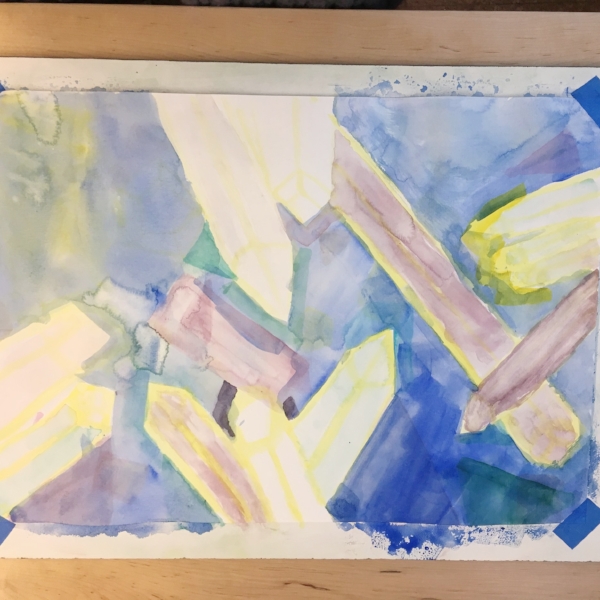
In preparation for parent/teacher conferences, specialty teacher, Dana Ashton wrote a summary of the 6th grade art class to share with parents, and we thought it offered a lovely glimpse into a couple month’s work in one class. See images of their work below.

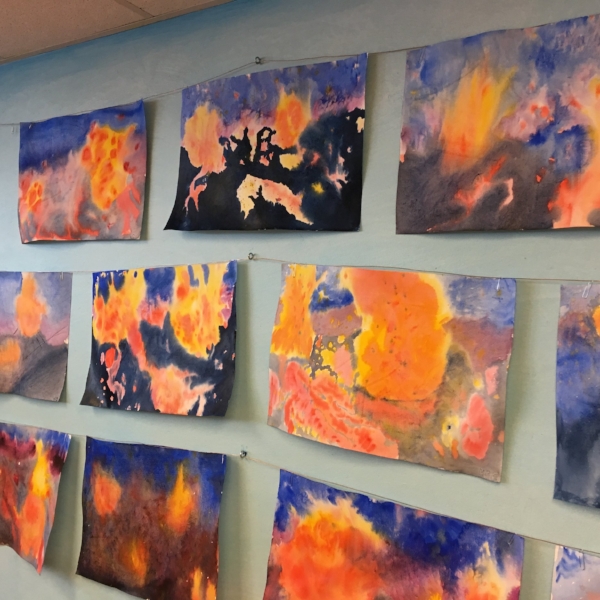
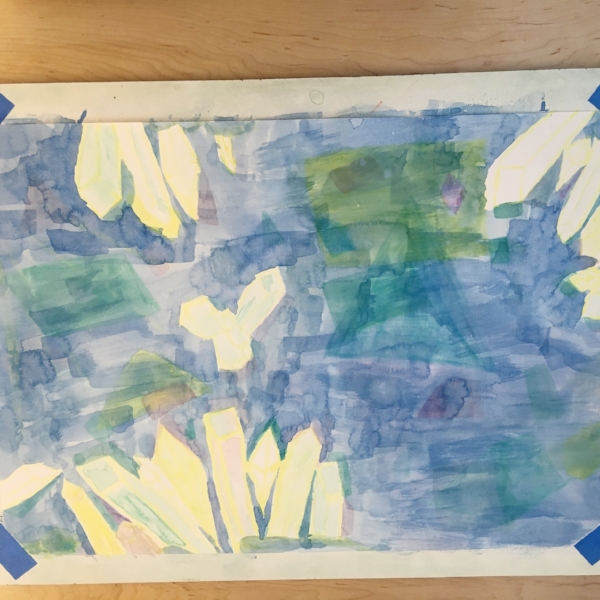
We began our school year in 6th grade art with wet-on-wet watercolor work and mineralogy.  The first painting was loose in format to help the students warm up their hand/eye coordination and to stress the importance of light and dark contrasts used in middle school art.  We painted a receding cave or tunnel with Prussian Blue, Ultramarine and Red Violet, blending colors and striving to achieve dimension.  Our second painting featured crystals and we added a new color to our palette, blue-green.  Geometric shapes, straight lines, shading, light reflections and some blending of colors were emphasized.  Our third painting used warm colors and indigo along with lots of movement to depict a volcano erupting and lava flowing.  The careful use of indigo or charcoal-colored watercolor pigment was a new experience.  Keeping the illuminated areas of fire and light free from the opaque darkness of solidified, black rock is always a challenge.  

Our fourth painting tied in with the Geometry block and required several weeks to complete, being a veil painting on dry paper and building up layers of shapes and color by using weak pigments.  Most of the students had never tried veil painting and were surprised at how different it is.  We painted crystals again but had to be much more careful about the precision of geometric shapes.  Towards the end of October we started woking with charcoal for the first time and discovered its wonderful properties of mood setting through smudging and blending.  The first charcoal work depicted a Halloween scene and the second piece focused on Roman architecture - The Garni Temple in Armenia.  Next we will return to working with watercolors and paint a Roman aqueduct.  

Early Childhood at Madrona School -- Salmonberry Kindergarten

“To young children, of course, nature is full of doors — is nothing by doors, really — and they swing open at every step. A hollow in a tree is the gateway to a castle. An ant hole in dry soil leads to the other side of the world. A stick-den is a palace. A puddle is the portal to an undersea realm. To a three- or four-year old, ‘landscape’ is not backdrop or wallpaper, it is a medium, teeming with opportunity and volatile in its textures.” — Robert Macfarlane, Landmarks

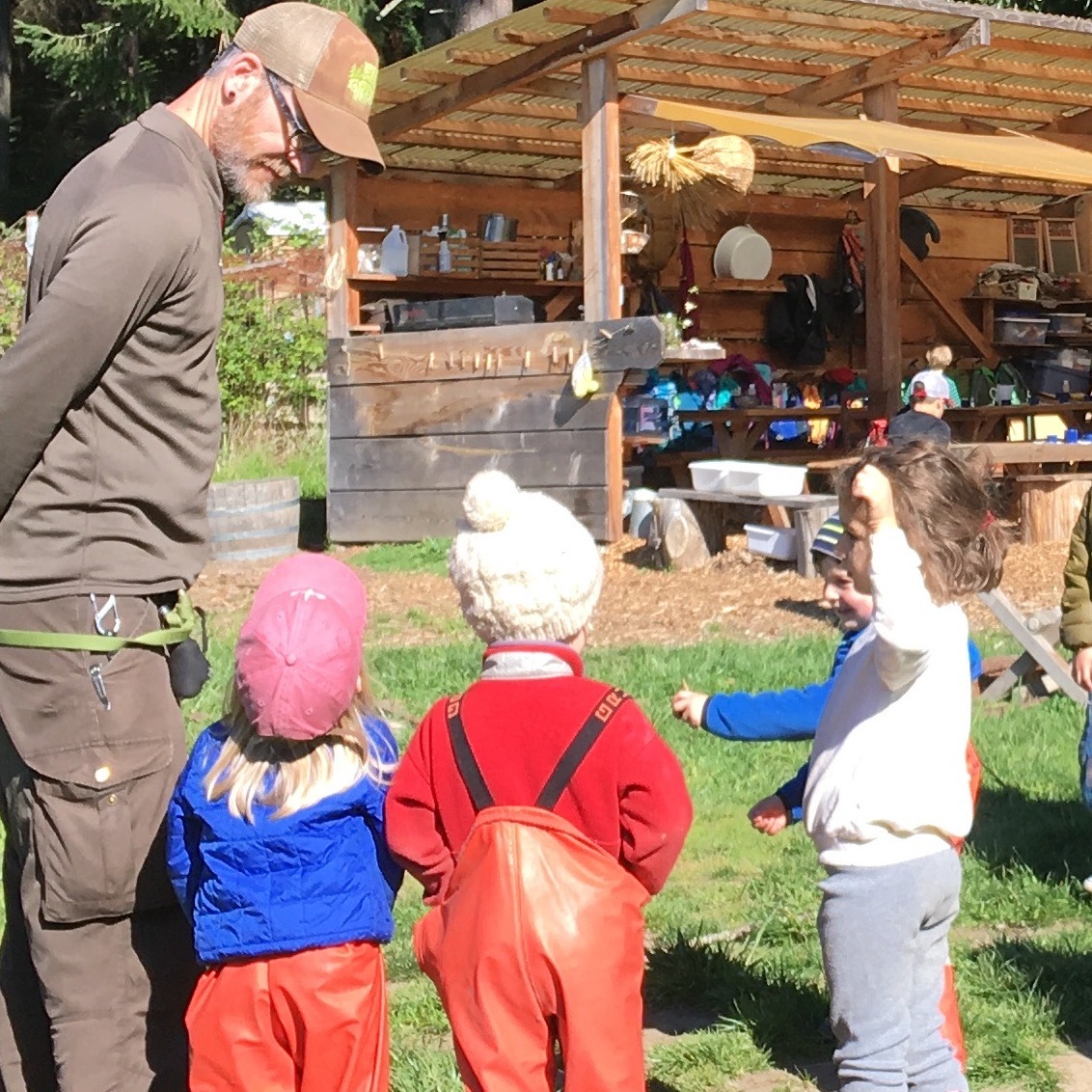
The early childhood programs at Madrona School are full of the magic of outdoor exploration and imaginative play. Our students demonstrate their kinship with doorways to other worlds on a daily basis!

This past summer, our Salmonberry Kindergarten teacher, Isaac Kemsley, offered an overview of his classroom to other early childhood educators, and we thought you might find parts of it interesting too, as it illuminates some of why we do what we do in our early childhood classes:

In the Salmonberry mixed-age kindergarten, we believe that each individual child comes to us with their own unique destiny and purpose. Though we can’t know what that might be we task ourselves, as educators and facilitators, with availing them the opportunities to build their skills and strengthen their foundational senses. We also know from experience that by our modeling expected interactions and successful techniques, we show them a path to impulse control and higher executive functioning. Through repeated rhythms and routines, we foster the sense of connection and relationship to people and place…and we are blessed to witness building confidence within the children to engage in their learning with a lifetime of interest and wonder.

We educate through the will, offering opportunities to engage each child’s fine and gross motor dexterity, proprioceptive system, sense of touch, vestibular system and ability to work in a group, among many other things. In class we:

  • Bake Bread (measuring, scooping, pouring, stirring, kneading, sculpting)

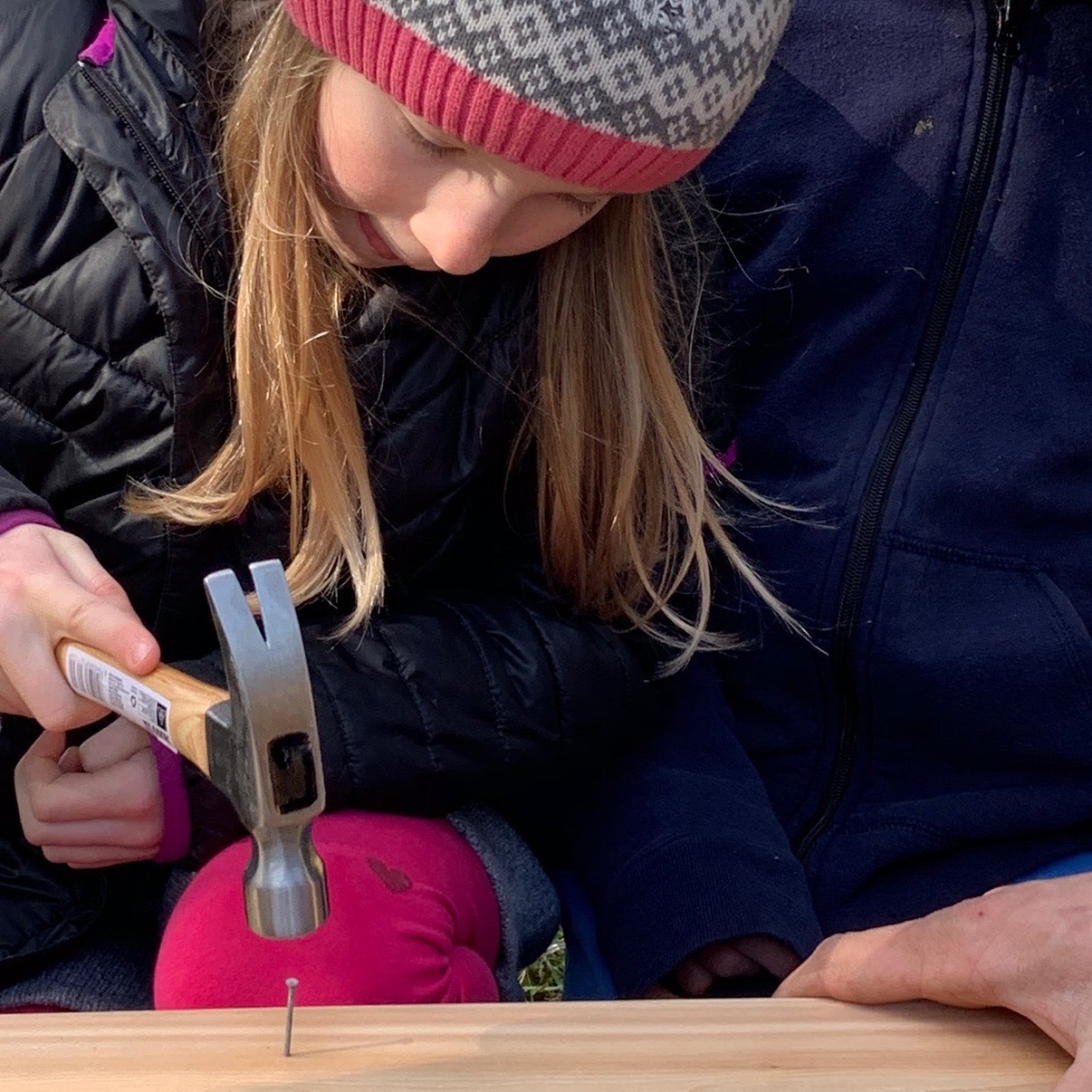
  • Build Fires (choosing/carrying logs, hammering, stoking fire)

  • Hammock and Swing (swinging, rocking, hanging upside down, cuddling, resting)

  • Explore Trees and Trails (running and walking on uneven ground, exploring out of sight, imaginative play)

  • Play in the Sandbox (digging, scooping, sifting, imaginative play)

In each of these activities, the children wait their turn and practice patience. This is so very important. Patience is exercised in the children anytime you have an activity working together. It is a gift to learn to wait. Each child is unique in their starting place with this skill and all will grow if given the opportunity! These activities also offer opportunity for learning safety rules and for practicing those rules each and every time.

Children at this age learn new skills through their engagement, interest, and wonder in the world they see. Through imitation of those around them, they find meaning. Thus it is important that we, as educators, be worthy of imitation in our actions and words. If we are sparing with our word and action, imbuing each with thought and feeling, then we will see the fruits of our work in the children’s repeating familiar phrases, verses and songs as they go about their work and play. If they see us doing the good, important work of caring for our space and each other, we see it reflected in the children’s treatment of one another and the environment.