Madrona School Alphabet (H)

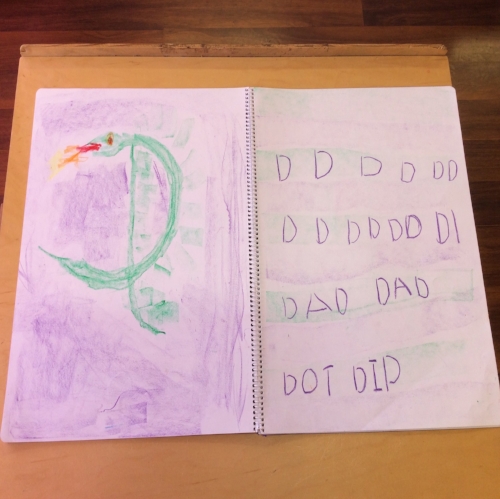
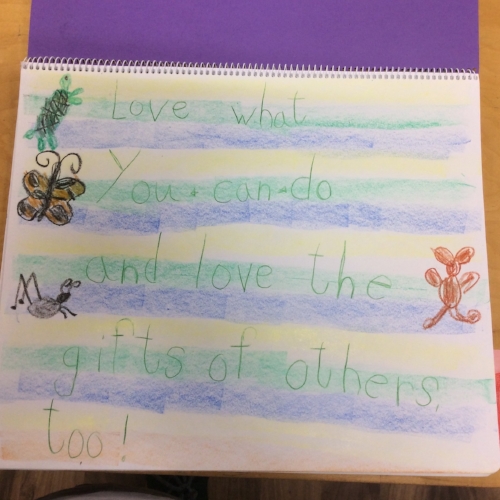
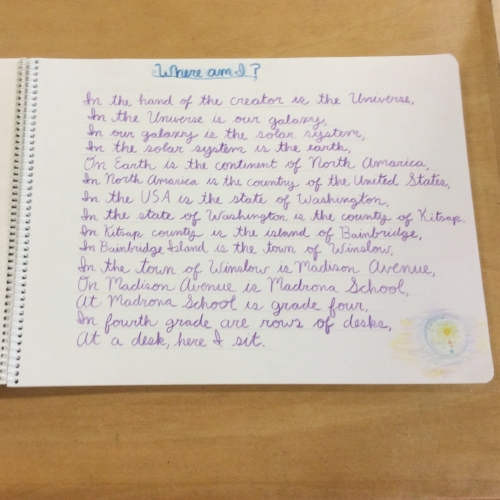
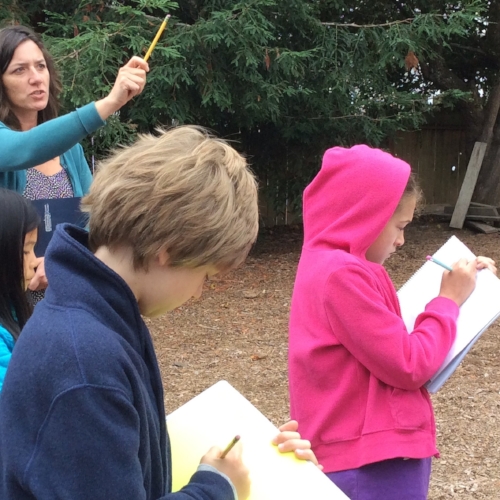
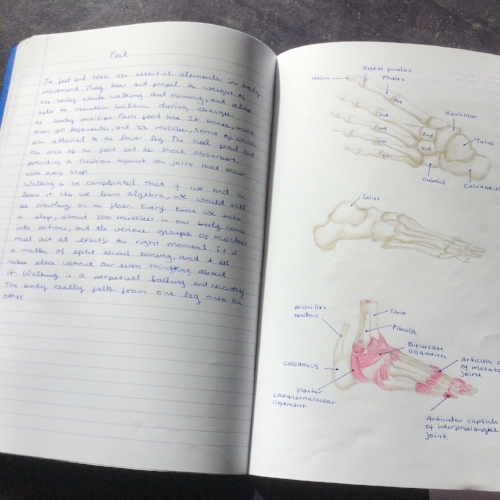
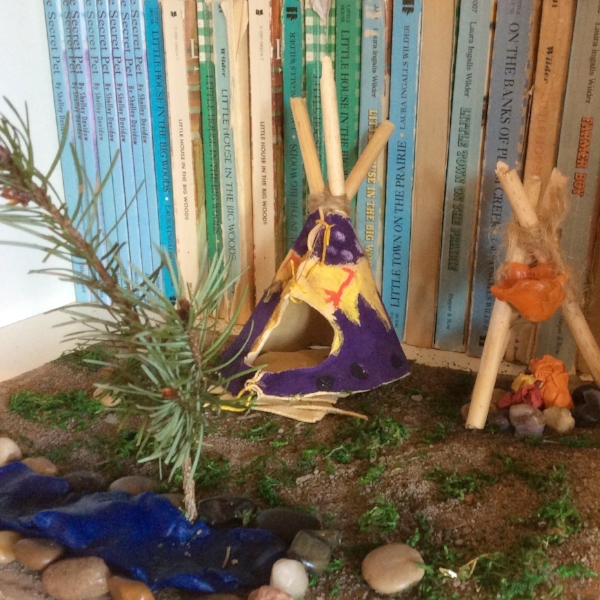
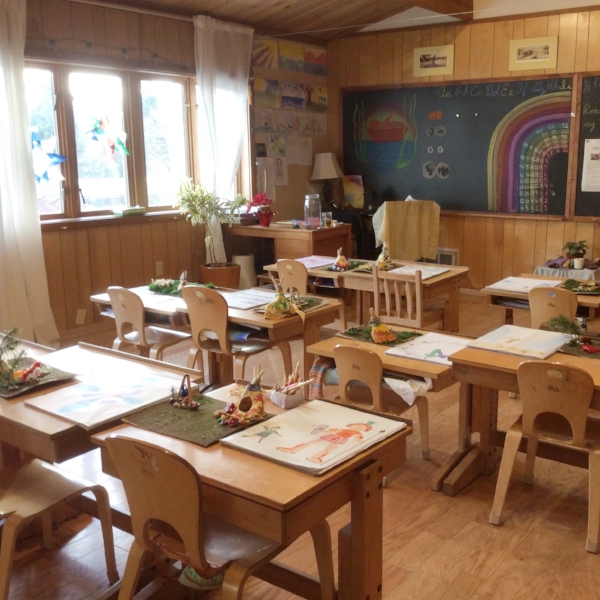
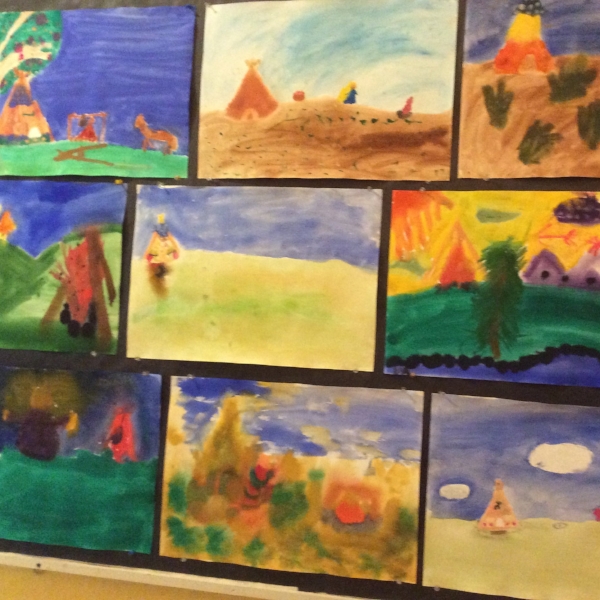
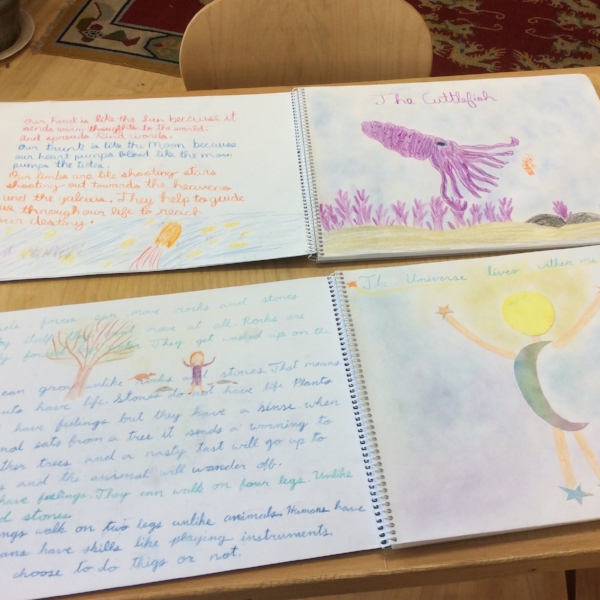
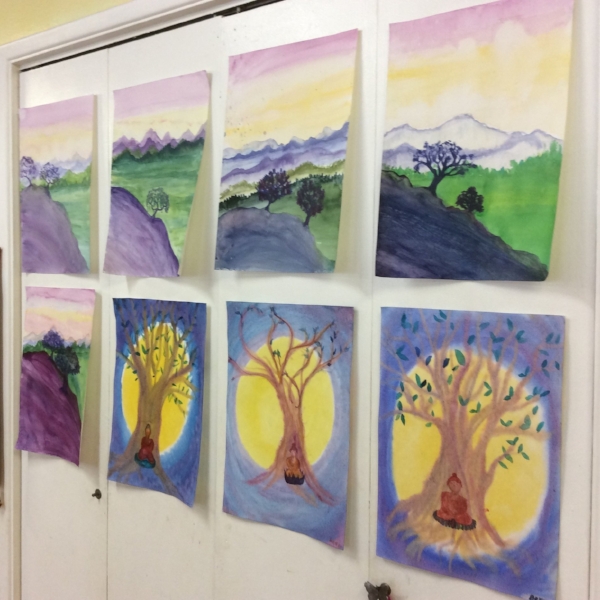
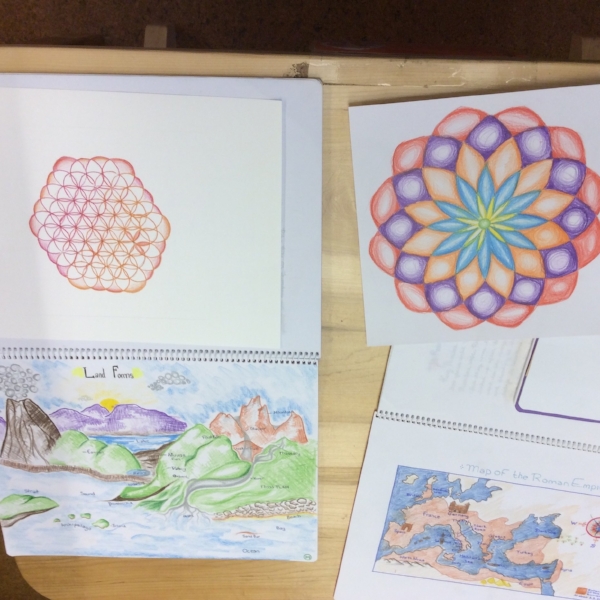
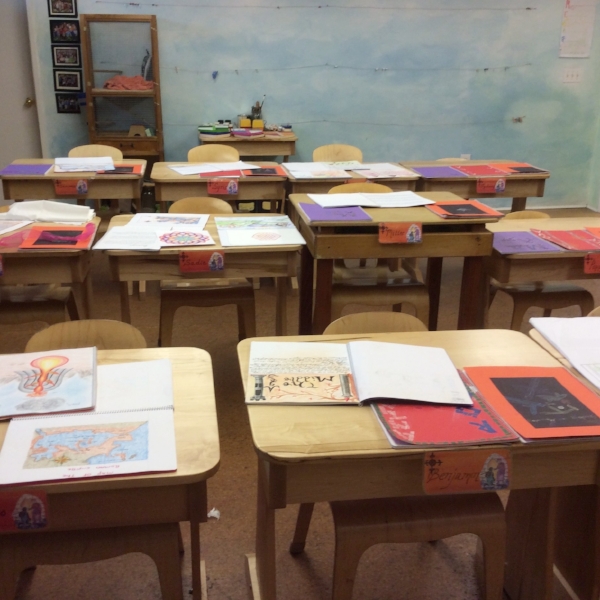
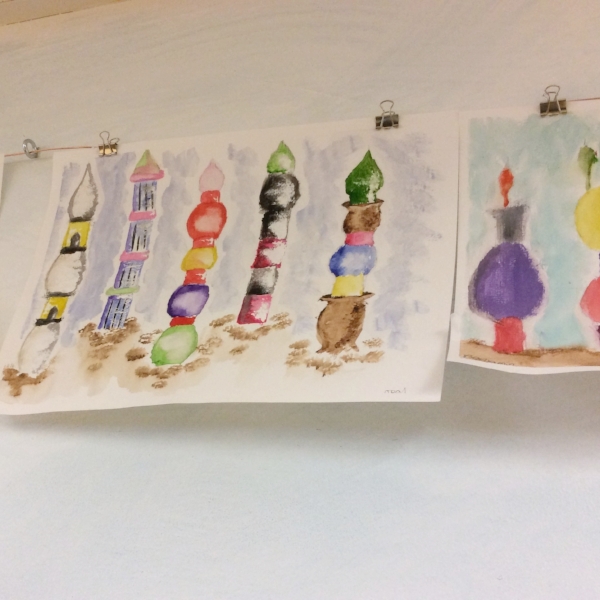
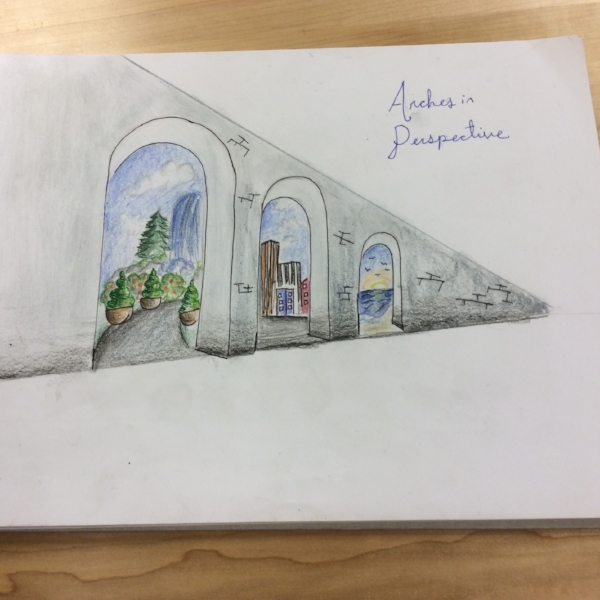
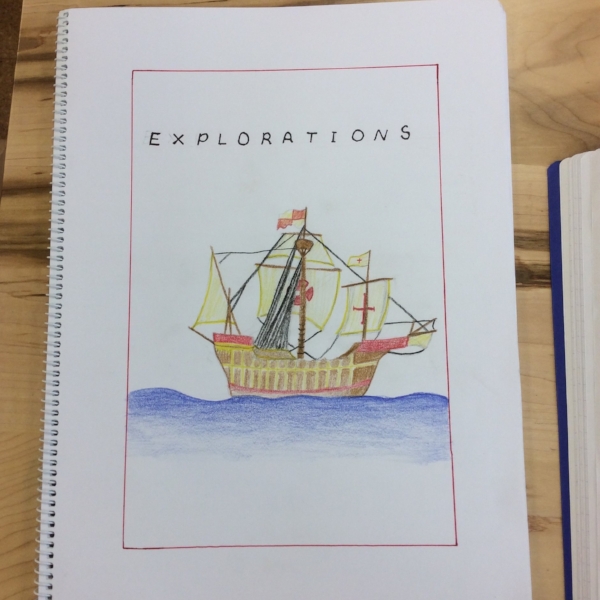
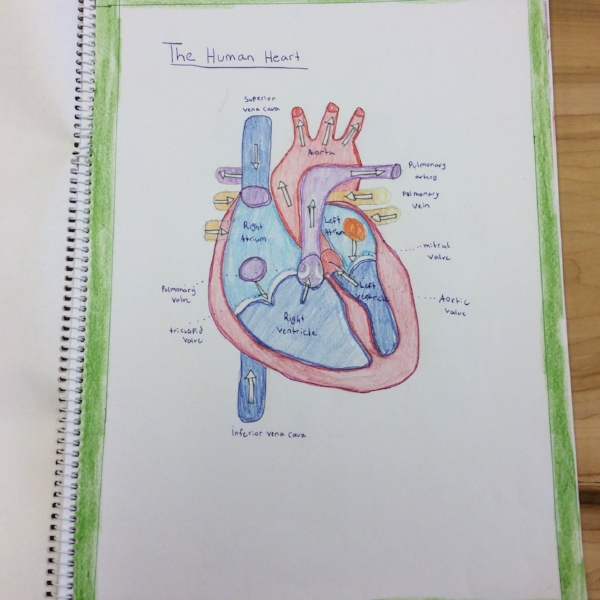
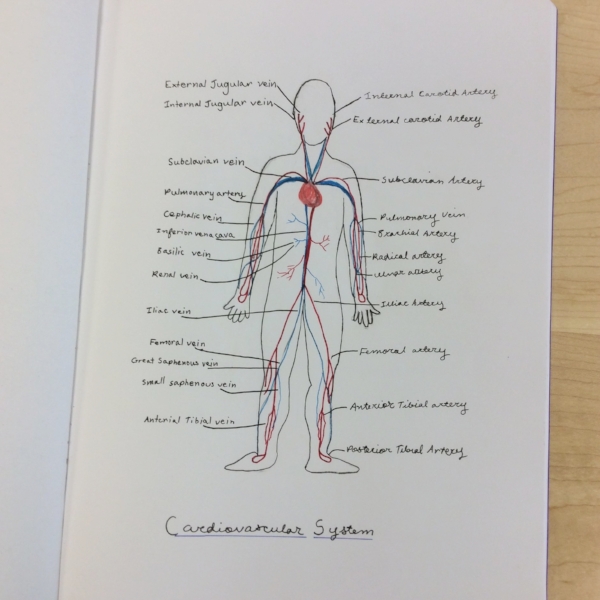
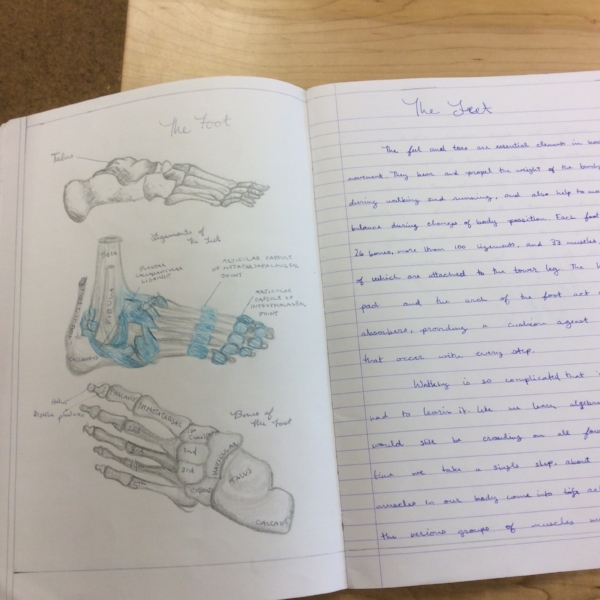
In our alphabet-based exploration on what makes a Madrona School education unique, 'H' is for handwriting -- and for the concrete beauty it adds to our work.  The Waldorf curriculum emphasizes handwriting as an integral part of the grade school curriculum. In the 1st grade, students practice writing letters as a precursor to reading. In the 3rd grade, form drawing exercises give way to formal cursive writing practice. In every year, each student collects their work into their unique and beautiful main lesson books, the previously blank pages filling with examples of their paragraphs, poetry, essays, observations and drawing. Recent research reveals how handwriting helps children learn, by improving cognitive development and hand-eye coordination, and strengthening reading through better letter recognition. It lays a foundation for effective note-taking and communication for life. At Madrona School, we write before we type.       


Looking Towards Our Future: Lowery Farm CUP

In a letter sent out to our school community on May 24, 2017, we were excited to announce that we've cleared one step in the process towards a new campus. This represents a lot of work on the part of many, and we are grateful! As we've lived in to the Lowery Farm property a bit over the last few years, we've grown to love the land and what it might represent for the future of our school. 

Dear friends and fans,

I am delighted to report that this morning we received the Hearing Examiner's favorable judgement on our CUP application.  As you can read below, Phases I and II of the project have been approved (with a host of conditions, most of them exactly as we had expected) and with phase III being "remanded to the City for further investigation of the traffic impacts of the operation of the proposed auditorium." 

We were particularly pleased to be acknowledged in a couple places for our thoughtful design:
"The Hearing Examiner takes notice that schools are more often than not located in residential areas.  The plans presented go to considerable length to assure that during normal hours the new school will fit in.

The proposed school development is part of an overall pattern of growth.  In the larger development picture, the school actually represents the retention of open space, as compared with standard residential development.  92.5% of the property will remain open.  This applicant, a Waldorf school, is particularly sensitive to concerns for preservation of natural conditions because nature plays an important role in its instructional program."

Thank you to all of you who have supported this (lengthy) application process! You wrote letters that became part of the testimony considered by the examiner; you attended meetings; you spoke up in favor of this project.  I hope that you feel as pleased about this as we do!

I will be communicating more about next steps soon.

Sincerely,
Missi, on behalf of the board and campus committee
 

Read the Hearing Examiner's ruling in its entirety here!

Unpacking the Stump Project

stump.jpg

Teacher Isaac recently wrote to his families:
Some of you might have noticed the digging project that the kindergarteners began, several weeks ago, around the roots of the old Douglas Fir stump on the play yard. The project grew from a simple question, "I wonder if we could tunnel under that root?" "Hmm... I wonder..." was the reply. The curiosity was contagious and the picks and shovels have been busy ever since.

Now, I'll be the first to acknowledge my own enthusiasm for the project. I too wonder what might lie buried below. (In fact, I forget who posed the original question, and suspect that it could have come from me.) Fortunately for big projects such as this, enthusiasm is contagious and the children will come and go throughout the course of any morning. Some will jump into the holes and move the earth right alongside me. Others will help push and pull a wagonload of dirt from here to there. Still others come to step and leap from root to root, observing the progress and creating their own imaginations.

However, once the work is underway, I like to take a step back and spend a moment observing (with wonder) the many layers of work going on around me.

The children moving the earth with shovels and hands are meeting a variety of resistances as they tunnel through dirt, sand, rock and clay. Their developing proprioceptive system is being stimulated and strengthened with every scoop. Others crawl beneath roots and squeeze through narrow openings. The nerve endings concentrated in the joints receive input from these gross motor activities (like shoveling, pushing, pulling, carrying heavy objects, etc...) that gradually builds an internal map of one's body in space. They are discovering themselves by coming up against the earth.

I see that some of the children try to avoid touching the mud or dirt or sand with their bare hands. I make note that they may be more touch sensitive than their peers, and I try to find opportunities to introduce new sensory input to these children and encourage them to play in a way to help them integrate this developing sense.

The children who are balancing on the latticework of exposed roots are strengthening their core muscles as they work to stay upright, as well as working the vestibular system of the inner ear. Others are hanging upside down or reclining in a hollow. As the fluid of the inner ear sloshes back and forth with the movement of the head (especially upside down!), there is again the gradual inner mapping of the spatial planes and the body's relationship with them (front, back, side to side, up and down). Having these activities available for the young child is important for their developing sense of balance and sense of movement.

Of course, the children care nothing for such adult talk. They instead are pirates, ninjas, otters, cats, birds, princesses and knights. They are making homes and forming relationships and discovering more mystery in the ordinary than we could ever imagine.

Together, the children and I, vigilantly watch each shovelful of dirt and rock for unearthed treasure. We wonder how deep we can dig, how much earth we can move, and if anyone will fit between the roots we have exposed. The fun is in the wondering of the question and in the application of the will to try to answer that question.

With enthusiasm,
Isaac

What began as a Salmonberry kindergarten project, has captured the imaginations and will of children of all ages!

Community Eurythmy

We are happy to welcome Audun Smit back to Madrona School for the month of March!  In addition to teaching kindergarten - 8th grade classes, he will be offering community Eurythmy on Fridays at 9:00 - 10:00am in the Eagle Harbor Congregational Church Fellowship Hall at 105 Winslow Way W on Bainbridge Island.  

We hope that you will be able to join us for this rare opportunity to do Eurythmy with an inspiring young teacher.   RSVPs to the school office, 206-855-8041, would be nice, but are not required.  We have Eurythmy shoes or bring your own.

No previous experience is necessary.   Bring a friend! 

Move your body - touch your soul.

Teaching Handwork at Madrona School

To create something with one’s own hands, if only once in one’s life, is surely a healthy antidote to becoming a passive consumer. –Michael Howard

Handwork is one of the unique specialty classes offered in a Waldorf grade school. At their most basic, the classes teach respect for simple tools: needle & thread, sticks and string, the spindle, wool, a knife, and of course, our hands. Handwork classes bring joy, teach practical skills around real work, and offer every student the opportunity to create beauty, along with the intrinsic satisfaction of completing an often long-term project.  

Developed to work in tandem with the curriculum as a whole, handwork strengthens fine motor skills and helps with hand-eye coordination, which in turn help students with writing, reading and math. Knitting, crochet, clay, woodcarving, embroidery etc., all contribute to the formative artistic foundations found within a Waldorf education, fostering creativity, flexibility and independence. 

Michael Howard, a Waldorf educator, and author of Educating the Will, writes extensively about what handwork classes offer our students, and he takes it further with spoon carving as his example, saying, “We must seek every opportunity to develop the feeling will [or an artistic sense or feeling] because the capacity to feel the clumsiness of our spoon and to intuitively feel, step by step, how to make it harmonious is not limited to spoon making. As our feeling will awakens through activities such as the arts and crafts, it will become active in other domains such as social life. …Our feeling will awakens our creative will to be social sculptors who transform dead and chaotic social forms into more living and harmonious ones.” Handwork classes speak directly to a main educational goal at Madrona School, the nurturing and teaching of whole human beings, capable of shaping their own lives beyond the classroom.


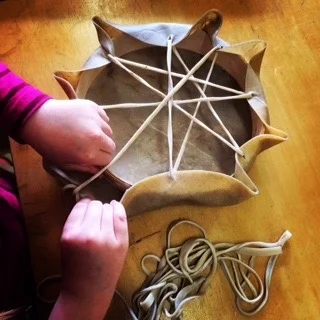
What are the handwork curriculum basics here at Madrona School? Our kindergarteners often do a bit of whittling and hand-sewing to create little pocket gnomes (see above), or dolls, but the program begins in earnest in 1st grade with knitting. In second grade, they add to their knitting skills and begin crochet. In third grade, they expand their crochet abilities, and experiment with taking a fleece through washing, spinning and weaving. In fourth grade, they learn basic embroidery, as well as designing and stitching a cross-stitch piece. In fifth grade, it’s back to knitting, this time in the round, making socks. In sixth grade they play with taking two-dimensions into three-dimensions, designing a stuffed animal, first on paper, and then hand-sewing their creation. In seventh and eighth grade, we often expand into working with different materials, including woodworking, carving soapstone, metal work and expanded embroidery techniques. The eighth grade also spends some time with machine sewing, making quilts and clothing. In addition to all of these skills, our students experience other crafts within their main lesson blocks – making drums or cedar baskets in4th grade Native American and local history studies, or stained glass in a 6th grade Middle Ages block.  The breadth of these opportunities adds further dimension to our arts-integrated academic curriculum.

Finally, handwork classes offer students a way to see form made visible. If you’ve had a first grader in our program, you’ve seen the loosely-knit first projects transform through further practice into a second project – often a flute case they can use for years – where the stitches even out and mistakes are seen and fixed. These lessons in learning to see their work echo observational skills grown throughout school, in experiment-driven science classes, in social relationships, and in an awakening self-awareness. Handwork classes ultimately contribute to a healthy confidence our graduates take with them into the world. 

--edited from our weekly school newsletter, February 14, 2017

Open House Images

It was fun to have so many families at our Open House this past Saturday! And, even though we do this every year, walking through the grades with all that beautiful work on display never gets old. Here are some images from the morning....

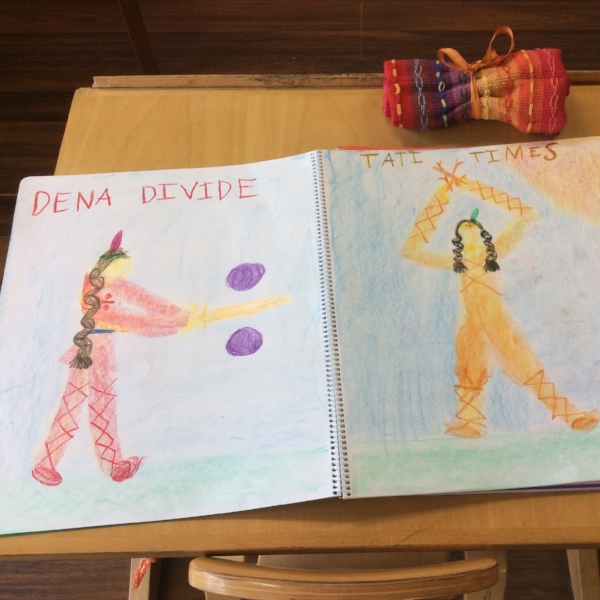
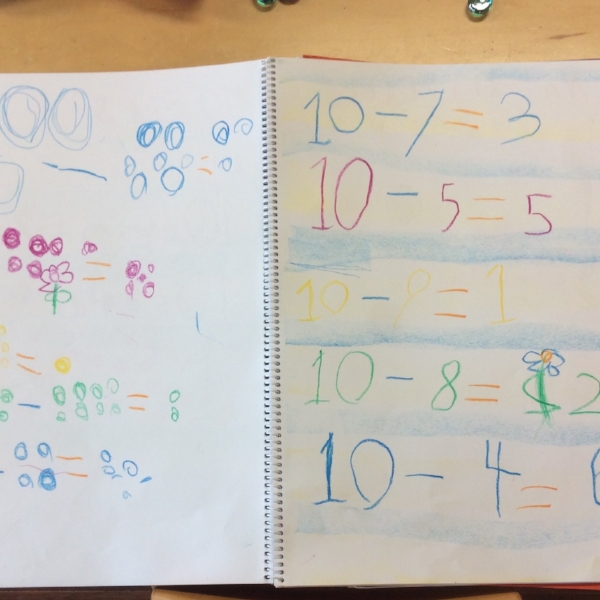
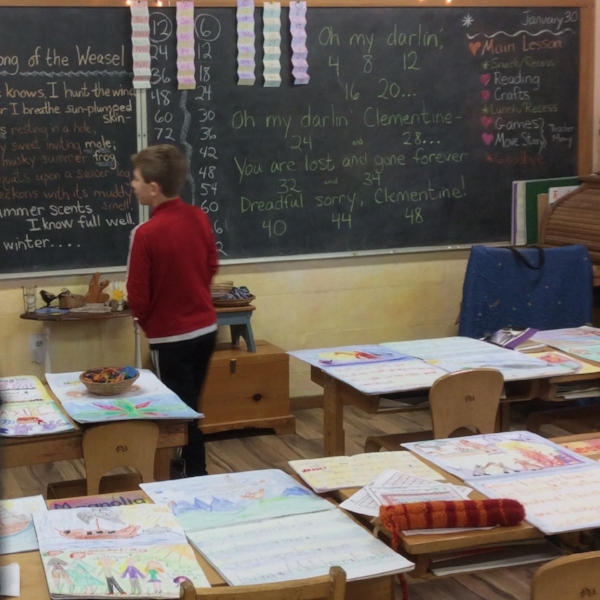
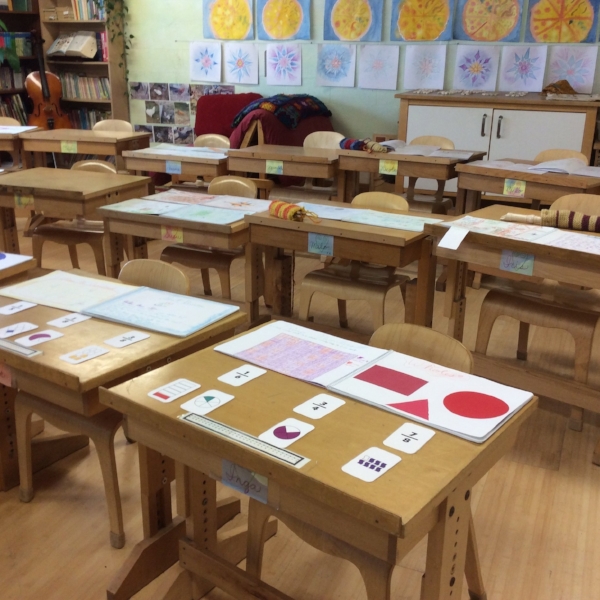
1st grade math processes illustrated, and presented in story form, with problems written out too (notice the mistake turned into a flower) ; the 2nd grade room with both math and language arts books, flute cases and poetry on the board.

3rd grade showed multiplication table review, liquid measurement studies and the start of their 'Shelters Around the World' block.

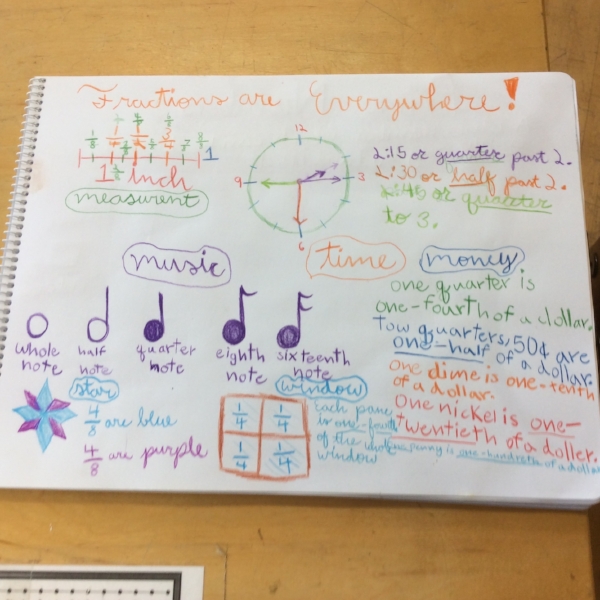
4th grade was full of neighborhood maps and animals and fractions.

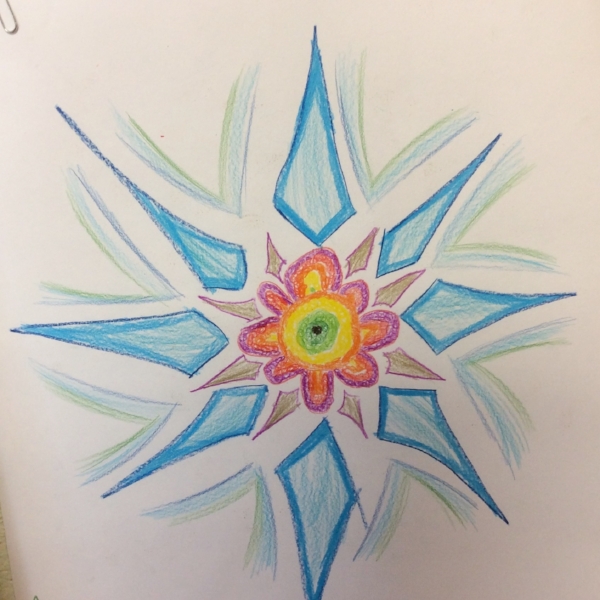
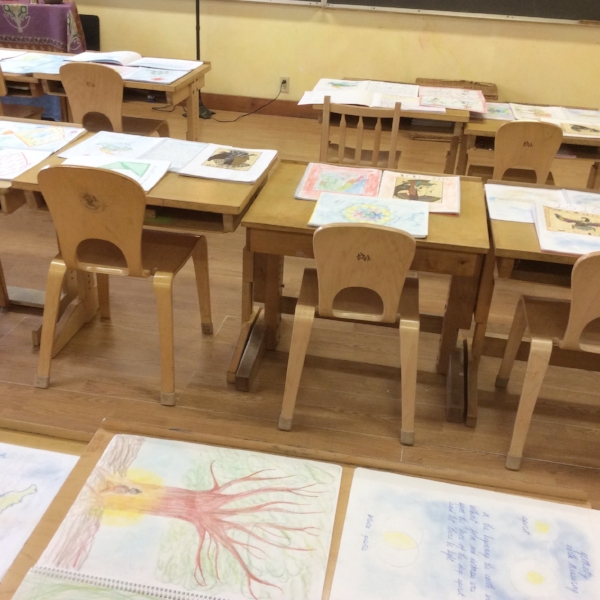
One more 4th grade image -- a form drawing precursor the geometry to come in 5th grade. And, the 5th grade room with their Ancient Civilization and Botany books out, as well as a wall of recent watercolor paintings.

6th grade was full of geometry, geology and the Middle Ages.

7th and 8th grades showed off their books together, including drawing, Renaissance and revolutions studies, and human physiology.

Sharing AWSNA's Core Principles and Musings On Waldorf Education's Relevance for Today's World

Edited from a letter originally written by our Head of School for our weekly school newsletter, January 10, 2017:

Dear parents and friends,

Over the holiday I took a big break from all things electronic: no email, phone or movies for 10 days.  Instead, I savored the opportunity to sleep and dream deeply, to exercise hard every day with my family, to eat well (if a tad bit too much!) and to read a lot.  I've been wandering through all kinds of books and seeing threads and connections everywhere I go, which I'll attempt to share over the next weeks and months. 

I have been thinking broadly about the role of education in our lives and in American society and the unique niche that Waldorf education in particular occupies.
Recently, the Association of Waldorf Schools of North America (AWSNA), of which Madrona School is a developing member school, ratified a new set of guiding principles for all Waldorf Schools.  This document was the product of many hours of work by a broad constituency of representatives from all of our member schools.  I am excited to share it with you here, as it articulates in a newly concise language the core principles underlying our educational philosophy.   I am looking forward to using it increasingly to inform, guide and explain our education.

The second principle particularly caught my eye in writing today.  It says: Waldorf schools foster social renewal by cultivating human capacities in service to the individual and to society.  Waldorf schools foster development so that, throughout life, individuals are motivated to serve humanity with strength of will, depth of feeling and clarity of thought, and the ability to work with others.  The educational program is designed to strengthen these fundamental human capacities in our students.

I am increasingly compelled by this statement because of reading Thomas Friedman's newest book, Thank You for Being Late, in which he sketches the almost unimaginably accelerating changes worldwide in digital connectivity, climate change, and globalization.  Its makes for a fascinating (if sobering) read and I highly recommend it if you are interested in trying to understand the many tectonic shifts that are happening on various fronts simultaneously.  

As I read along, the perpetual question in the back of my mind is: OK, so if all of this is true, how do we educate our children for an unknown and increasingly unknowable future? How can we cultivate in them the qualities of character that they will need to succeed in such a new world order?  Can we actually cultivate the flexibility, resourcefulness, confidence, courage and engagement in lifelong learning that Friedman posits will be increasingly necessary for survival?
While there is much still to wrestle with in this book and how it relates to education, I do see a germ of hope in considering these two things side by side: Waldorf education's mission to cultivate a commitment to the service of humanity paired with the vast and turbulent needs that will be unfolding in new, never-before-imagined ways.  

I don't feel I have all the answers, but this is to me an interesting question: How is our education uniquely preparing the children for the rapidly morphing future?  I'd love to open the question for a wider dialogue.  You have chosen this educational stream for your child.  Would you be willing to share with our community what you perceive to be the merit of this style of education?  I look forward to hearing from you, and sharing your thoughts in newsletters to come.
Sincerely,
Missi

 

Teaching Reading at Madrona School

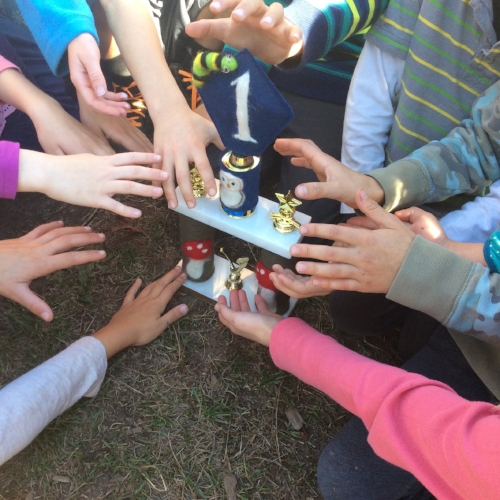
Excitement over winning the Reading Champions trophy through the public library this summer!

Excitement over winning the Reading Champions trophy through the public library this summer!

Learning to read can be a real joy and is an important academic milestone in a young student's life. In Waldorf education, we help a child's capacity for reading develop naturally, and offer lots of opportunity to fall in love with words and story.

In an ideal world, young children enjoy exposure to the world of language and literature through their parents. Hopefully, books represent beauty, humor and love to a small child -- they soak in illustrations, they giggle at funny words or at the voices an adult uses to read, they cuddle with a loved one to hear a story -- or five. Reading becomes aspirational, as they see a parent enjoy reading, or that stack of books by an older sibling's bedside. Further, in a Waldorf kindergarten classroom, a reverence for language and for story is reinforced through a daily story told by the teacher, by a ready basket of beautiful books for quiet times, and through ample opportunity for imaginative play, play that lays the groundwork for eventual understanding of abstract concepts.

In grade school, reading instruction is a part of language arts as a whole. In 1st grade, Waldorf education introduces reading through stories. Children discover letter forms out of a story their teacher tells, listening and then drawing, molding and moving through letters and their sounds. In other words, we take a multi-sensory approach, engaging a child auditorially, visually, kinetically, and at heartfelt level.They revel in the unique sounds of a letter as they practice writing simple sentences from the stories they are hearing and the pictures they are drawing. They write letters, then sentences and eventually, longer stories, until one day, it may dawn on them that they are reading what they are writing. Do you remember this eureka moment in your own life?

This unfolding and discovery allows for the love of language and of story to grow. The children work at decoding through phonics and sight word recognition too, but the emphasis remains on comprehension. Stories are told throughout a Waldorf education, and the overall literacy of a student grows with each passing year -- including vocabulary, grammar skills, and cultural and historical knowledge. With such a robust and supple beginning to language arts, Waldorf education actively cultivates space for developing capacity, both in interest and skill. Reading comes from the inside out, and while the time to master the mechanics varies, the intrinsic motivation and engagement with language is indicative of the lifelong joy of choosing to read!

For more, ask your child's teacher, or:
Read this blog post by the Waldorf School of Philadelphia, full of links to recent research in reading instruction, originally posted September 21, 2016: Reading in Waldorf Schools

For a parent's perspective, read Myth Busting: How Reading is Taught in a Waldorf School by Sarah Baldwin, Moon Child blog, originally posted June 6, 2011.

And an excellent article describing more of the art and mystery inherent in the act of learning to read: There's More to Reading Than Meets the Eye by Barbara Sokolov, Renewal, A Journal for Waldorf Education, Vol. 9#1, Spring 2000

Sometimes, reading comes along unusually slowly for children because there are underlying issues such as dyslexia.  When it becomes clear that extra help in mastering the fundamentals of reading are needed, we work with the parents to arrange for supplemental help.  Sometimes this means that a child works with a tutor at school once, twice or more times per week.  This extra help in 2nd, 3rd or 4th grade can make a big difference in a child's confidence and image of themselves as a successful reader.