Exploring Waldorf

Community Eurythmy

We are happy to welcome Audun Smit back to Madrona School for the month of March!  In addition to teaching kindergarten - 8th grade classes, he will be offering community Eurythmy on Fridays at 9:00 - 10:00am in the Eagle Harbor Congregational Church Fellowship Hall at 105 Winslow Way W on Bainbridge Island.  

We hope that you will be able to join us for this rare opportunity to do Eurythmy with an inspiring young teacher.   RSVPs to the school office, 206-855-8041, would be nice, but are not required.  We have Eurythmy shoes or bring your own.

No previous experience is necessary.   Bring a friend! 

Move your body - touch your soul.

Teaching Handwork at Madrona School

To create something with one’s own hands, if only once in one’s life, is surely a healthy antidote to becoming a passive consumer. –Michael Howard

Handwork is one of the unique specialty classes offered in a Waldorf grade school. At their most basic, the classes teach respect for simple tools: needle & thread, sticks and string, the spindle, wool, a knife, and of course, our hands. Handwork classes bring joy, teach practical skills around real work, and offer every student the opportunity to create beauty, along with the intrinsic satisfaction of completing an often long-term project.  

Developed to work in tandem with the curriculum as a whole, handwork strengthens fine motor skills and helps with hand-eye coordination, which in turn help students with writing, reading and math. Knitting, crochet, clay, woodcarving, embroidery etc., all contribute to the formative artistic foundations found within a Waldorf education, fostering creativity, flexibility and independence. 

Michael Howard, a Waldorf educator, and author of Educating the Will, writes extensively about what handwork classes offer our students, and he takes it further with spoon carving as his example, saying, “We must seek every opportunity to develop the feeling will [or an artistic sense or feeling] because the capacity to feel the clumsiness of our spoon and to intuitively feel, step by step, how to make it harmonious is not limited to spoon making. As our feeling will awakens through activities such as the arts and crafts, it will become active in other domains such as social life. …Our feeling will awakens our creative will to be social sculptors who transform dead and chaotic social forms into more living and harmonious ones.” Handwork classes speak directly to a main educational goal at Madrona School, the nurturing and teaching of whole human beings, capable of shaping their own lives beyond the classroom.


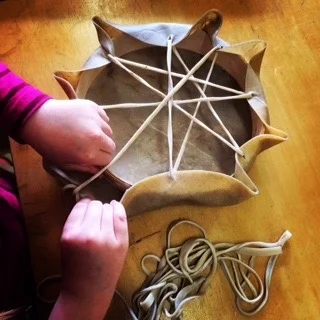
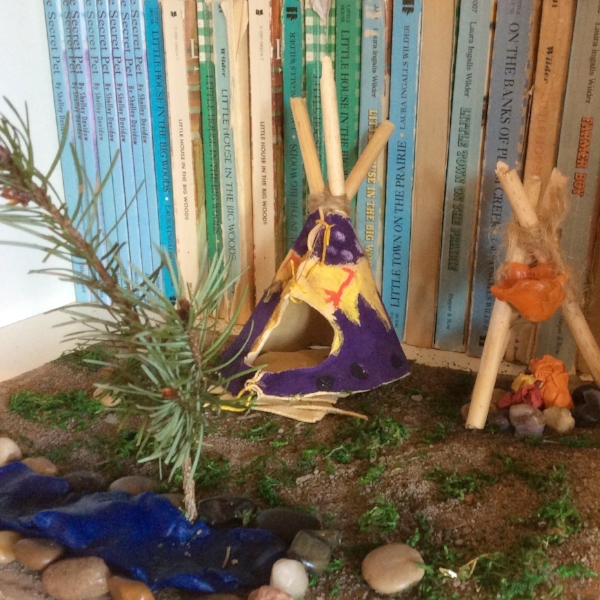
What are the handwork curriculum basics here at Madrona School? Our kindergarteners often do a bit of whittling and hand-sewing to create little pocket gnomes (see above), or dolls, but the program begins in earnest in 1st grade with knitting. In second grade, they add to their knitting skills and begin crochet. In third grade, they expand their crochet abilities, and experiment with taking a fleece through washing, spinning and weaving. In fourth grade, they learn basic embroidery, as well as designing and stitching a cross-stitch piece. In fifth grade, it’s back to knitting, this time in the round, making socks. In sixth grade they play with taking two-dimensions into three-dimensions, designing a stuffed animal, first on paper, and then hand-sewing their creation. In seventh and eighth grade, we often expand into working with different materials, including woodworking, carving soapstone, metal work and expanded embroidery techniques. The eighth grade also spends some time with machine sewing, making quilts and clothing. In addition to all of these skills, our students experience other crafts within their main lesson blocks – making drums or cedar baskets in4th grade Native American and local history studies, or stained glass in a 6th grade Middle Ages block.  The breadth of these opportunities adds further dimension to our arts-integrated academic curriculum.

Finally, handwork classes offer students a way to see form made visible. If you’ve had a first grader in our program, you’ve seen the loosely-knit first projects transform through further practice into a second project – often a flute case they can use for years – where the stitches even out and mistakes are seen and fixed. These lessons in learning to see their work echo observational skills grown throughout school, in experiment-driven science classes, in social relationships, and in an awakening self-awareness. Handwork classes ultimately contribute to a healthy confidence our graduates take with them into the world. 

--edited from our weekly school newsletter, February 14, 2017

Open House Images

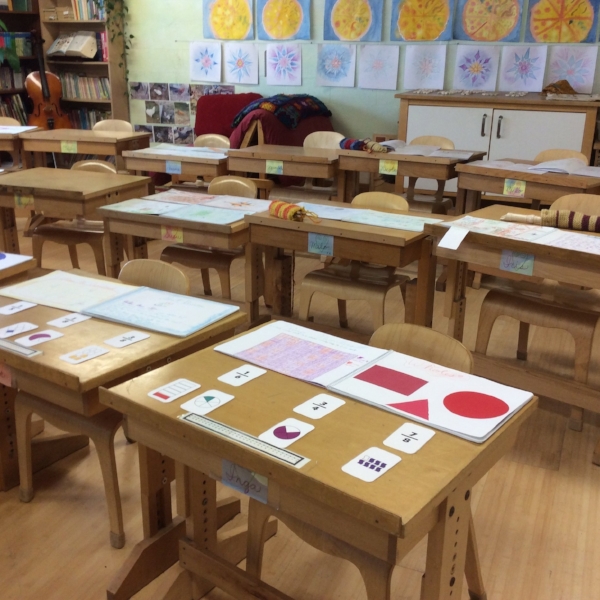
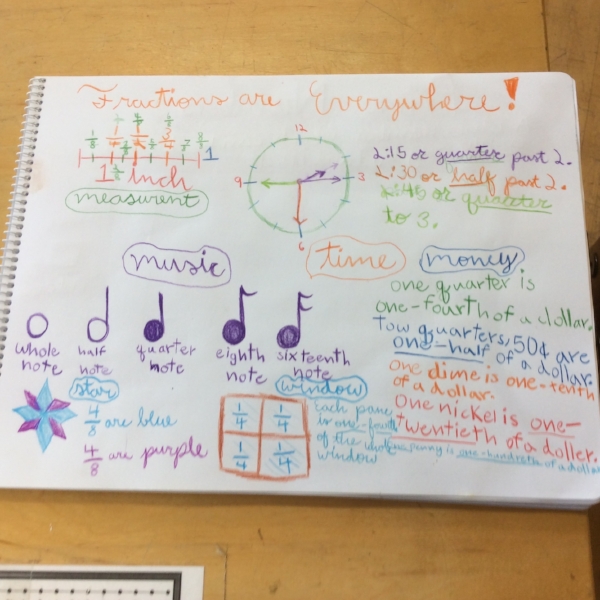
It was fun to have so many families at our Open House this past Saturday! And, even though we do this every year, walking through the grades with all that beautiful work on display never gets old. Here are some images from the morning....

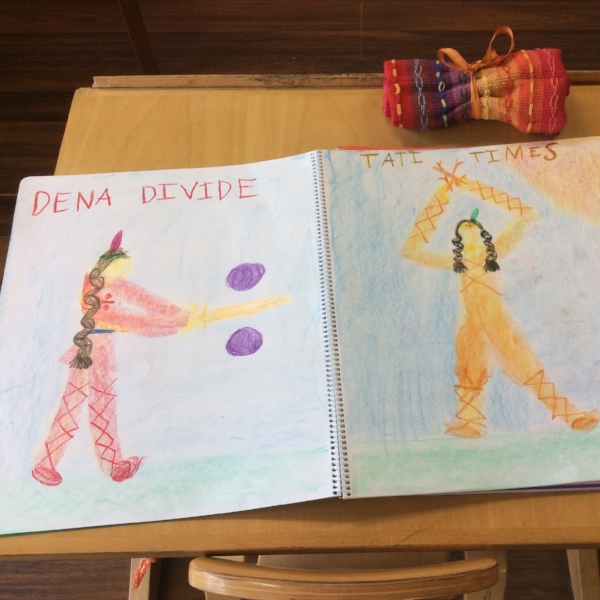
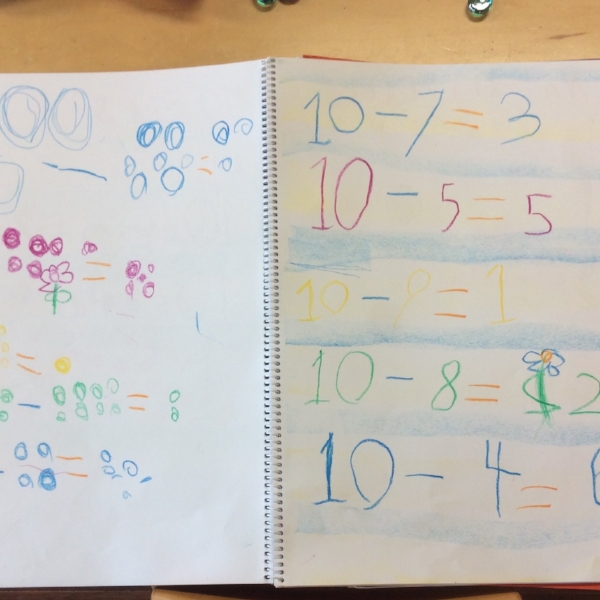
1st grade math processes illustrated, and presented in story form, with problems written out too (notice the mistake turned into a flower) ; the 2nd grade room with both math and language arts books, flute cases and poetry on the board.

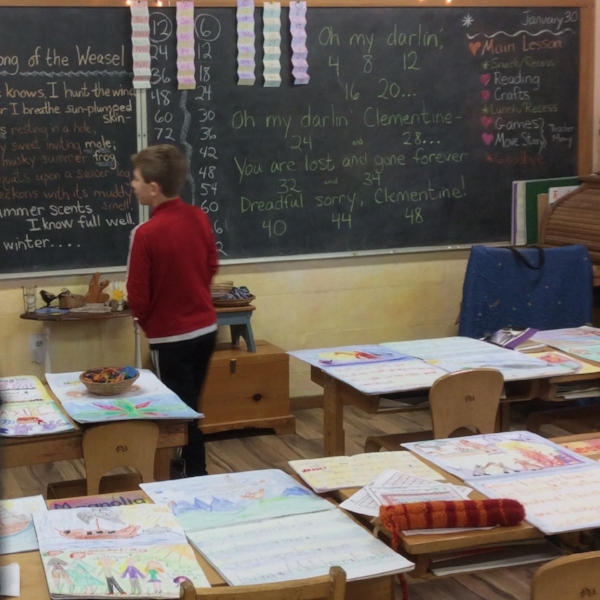
3rd grade showed multiplication table review, liquid measurement studies and the start of their 'Shelters Around the World' block.

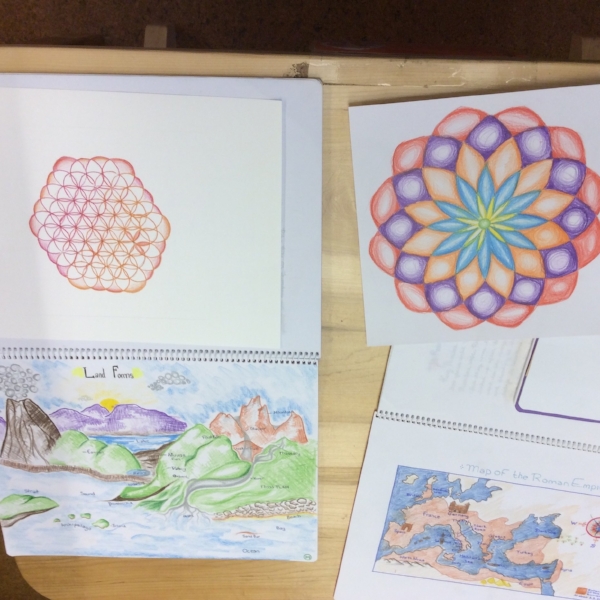
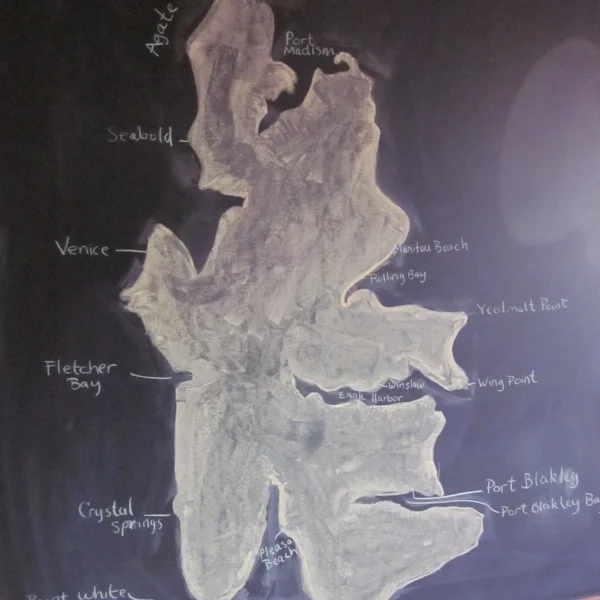
4th grade was full of neighborhood maps and animals and fractions.

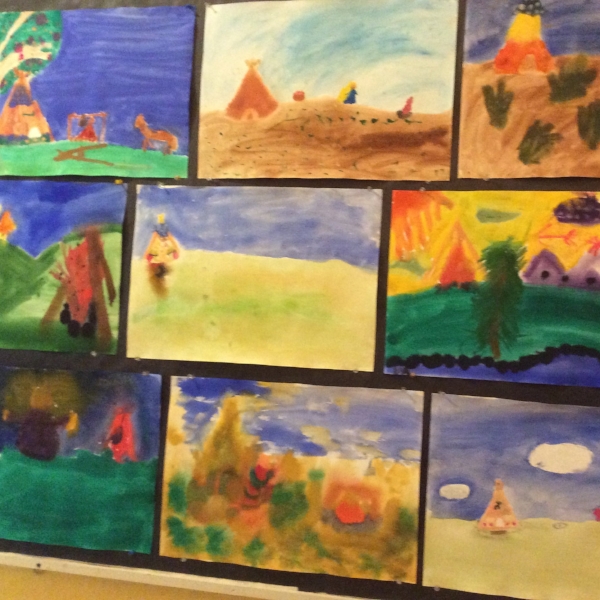
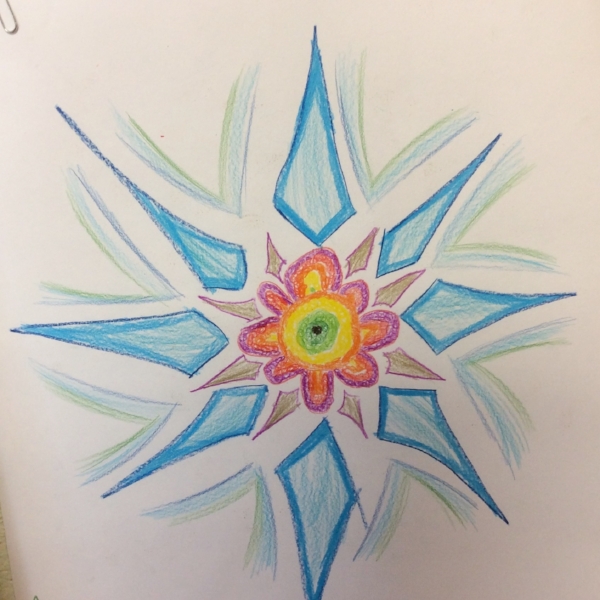
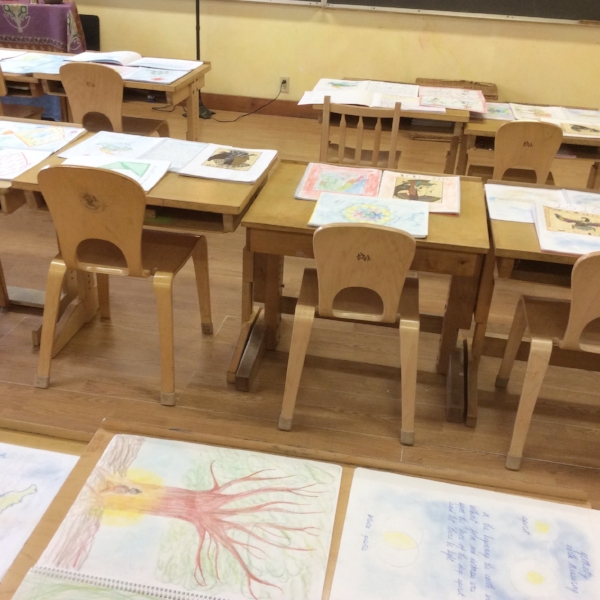
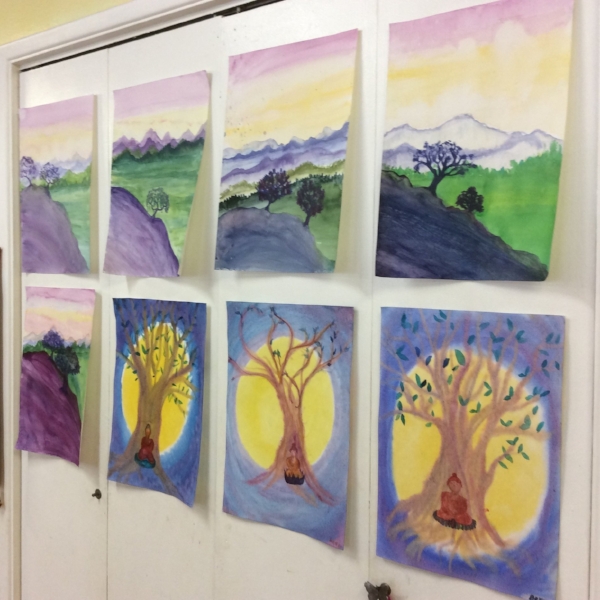
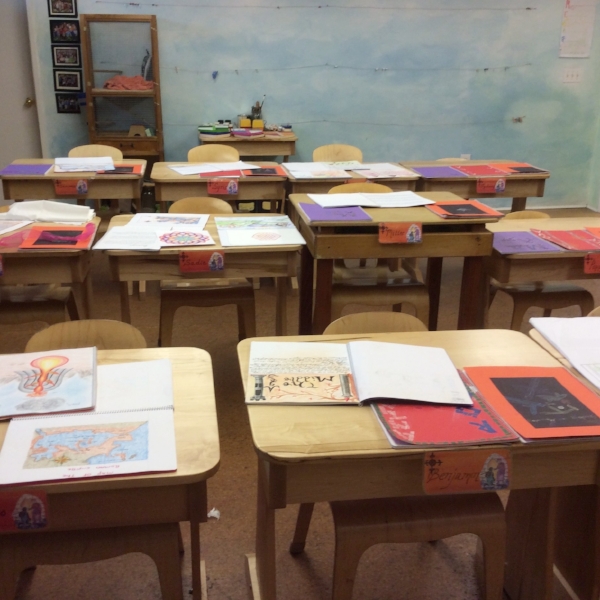
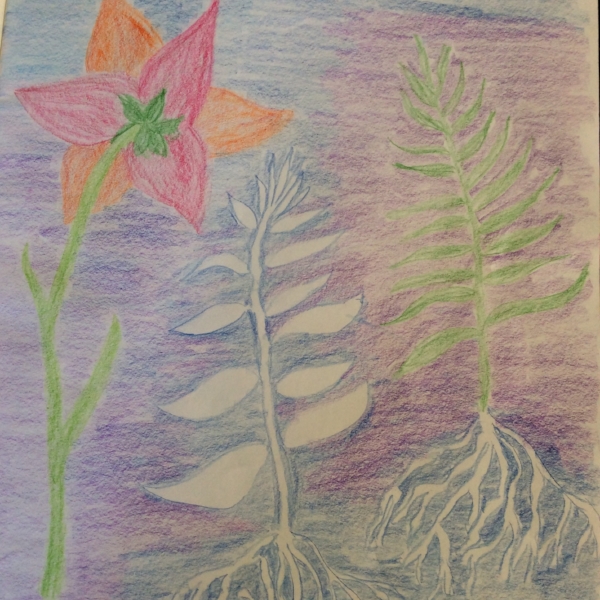
One more 4th grade image -- a form drawing precursor the geometry to come in 5th grade. And, the 5th grade room with their Ancient Civilization and Botany books out, as well as a wall of recent watercolor paintings.

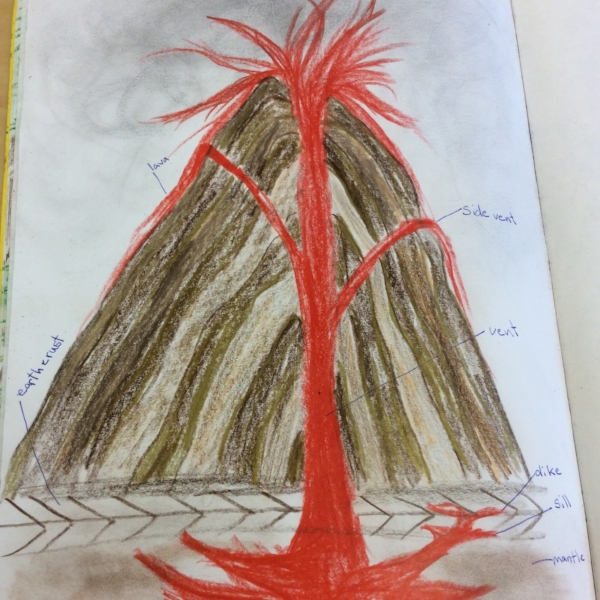
6th grade was full of geometry, geology and the Middle Ages.

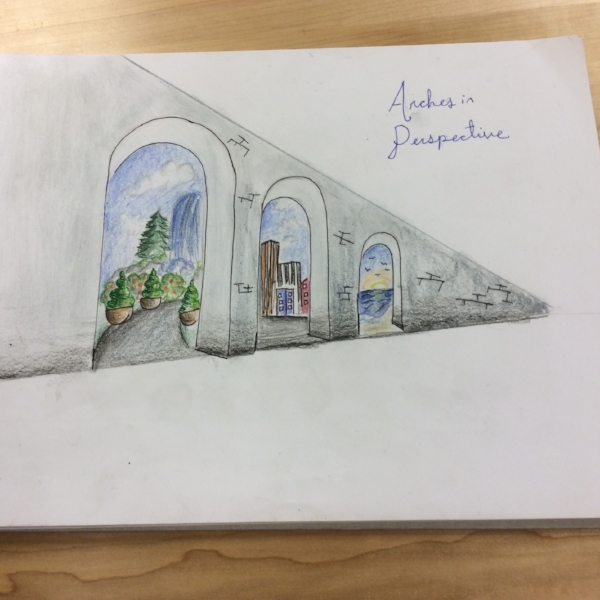
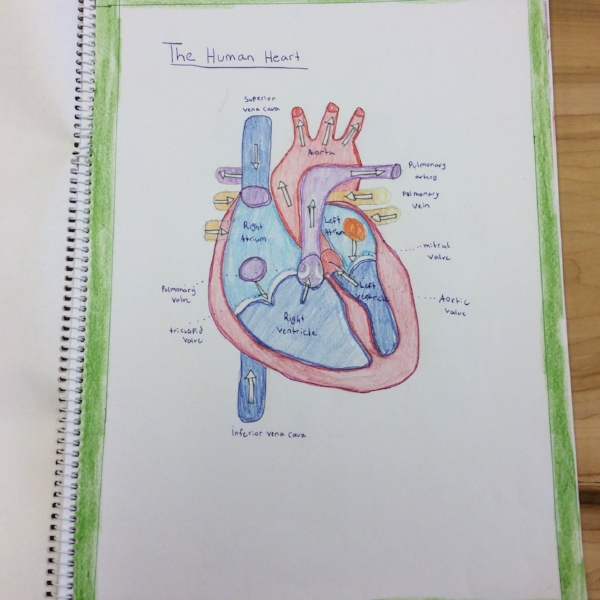
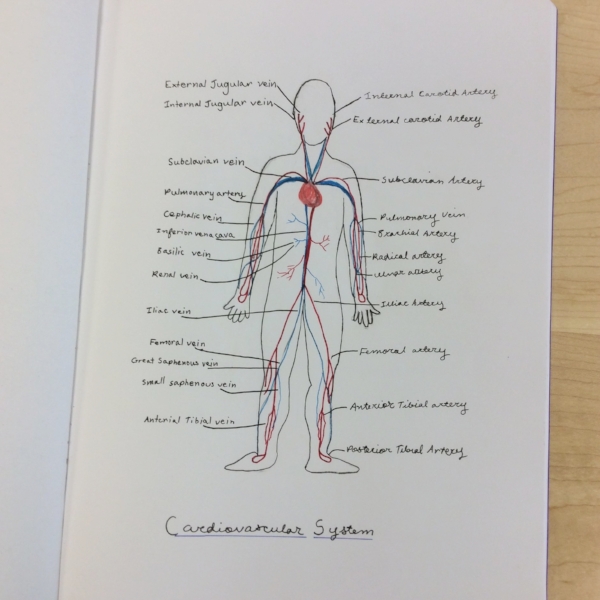
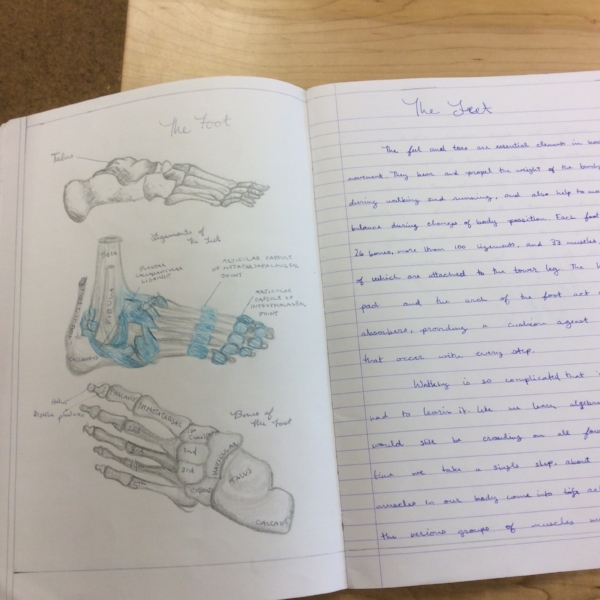
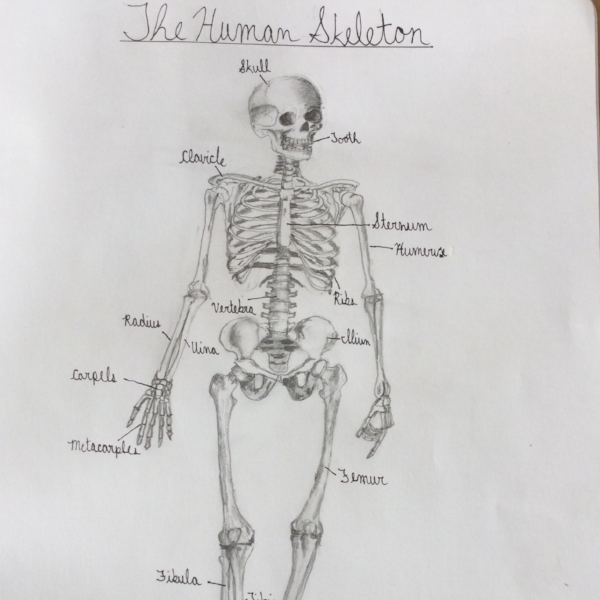
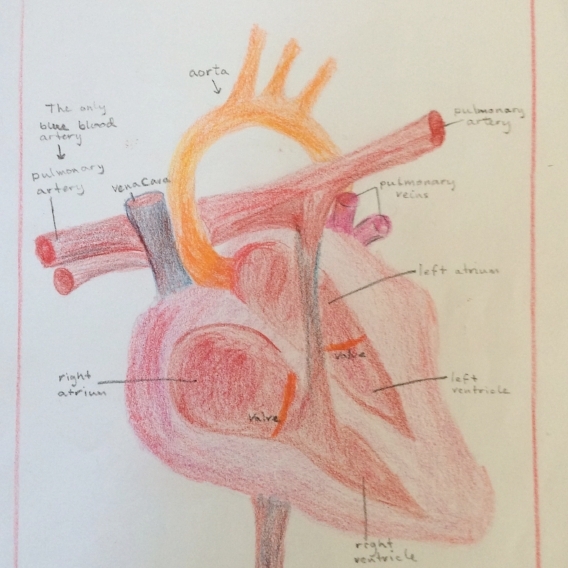
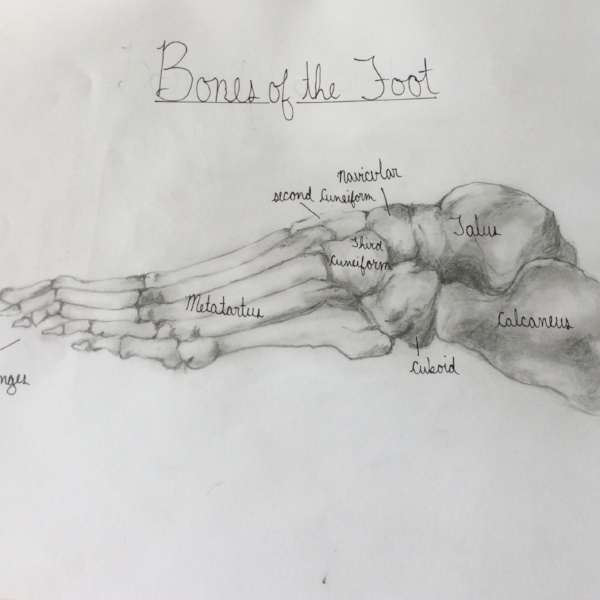
7th and 8th grades showed off their books together, including drawing, Renaissance and revolutions studies, and human physiology.

Teaching Reading at Madrona School

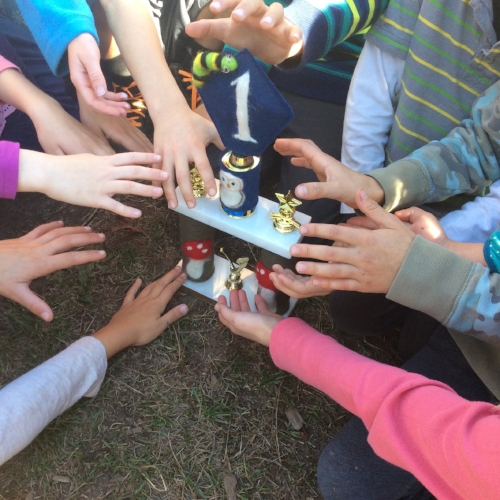
Excitement over winning the Reading Champions trophy through the public library this summer!

Excitement over winning the Reading Champions trophy through the public library this summer!

Learning to read can be a real joy and is an important academic milestone in a young student's life. In Waldorf education, we help a child's capacity for reading develop naturally, and offer lots of opportunity to fall in love with words and story.

In an ideal world, young children enjoy exposure to the world of language and literature through their parents. Hopefully, books represent beauty, humor and love to a small child -- they soak in illustrations, they giggle at funny words or at the voices an adult uses to read, they cuddle with a loved one to hear a story -- or five. Reading becomes aspirational, as they see a parent enjoy reading, or that stack of books by an older sibling's bedside. Further, in a Waldorf kindergarten classroom, a reverence for language and for story is reinforced through a daily story told by the teacher, by a ready basket of beautiful books for quiet times, and through ample opportunity for imaginative play, play that lays the groundwork for eventual understanding of abstract concepts.

In grade school, reading instruction is a part of language arts as a whole. In 1st grade, Waldorf education introduces reading through stories. Children discover letter forms out of a story their teacher tells, listening and then drawing, molding and moving through letters and their sounds. In other words, we take a multi-sensory approach, engaging a child auditorially, visually, kinetically, and at heartfelt level.They revel in the unique sounds of a letter as they practice writing simple sentences from the stories they are hearing and the pictures they are drawing. They write letters, then sentences and eventually, longer stories, until one day, it may dawn on them that they are reading what they are writing. Do you remember this eureka moment in your own life?

This unfolding and discovery allows for the love of language and of story to grow. The children work at decoding through phonics and sight word recognition too, but the emphasis remains on comprehension. Stories are told throughout a Waldorf education, and the overall literacy of a student grows with each passing year -- including vocabulary, grammar skills, and cultural and historical knowledge. With such a robust and supple beginning to language arts, Waldorf education actively cultivates space for developing capacity, both in interest and skill. Reading comes from the inside out, and while the time to master the mechanics varies, the intrinsic motivation and engagement with language is indicative of the lifelong joy of choosing to read!

For more, ask your child's teacher, or:
Read this blog post by the Waldorf School of Philadelphia, full of links to recent research in reading instruction, originally posted September 21, 2016: Reading in Waldorf Schools

For a parent's perspective, read Myth Busting: How Reading is Taught in a Waldorf School by Sarah Baldwin, Moon Child blog, originally posted June 6, 2011.

And an excellent article describing more of the art and mystery inherent in the act of learning to read: There's More to Reading Than Meets the Eye by Barbara Sokolov, Renewal, A Journal for Waldorf Education, Vol. 9#1, Spring 2000

Sometimes, reading comes along unusually slowly for children because there are underlying issues such as dyslexia.  When it becomes clear that extra help in mastering the fundamentals of reading are needed, we work with the parents to arrange for supplemental help.  Sometimes this means that a child works with a tutor at school once, twice or more times per week.  This extra help in 2nd, 3rd or 4th grade can make a big difference in a child's confidence and image of themselves as a successful reader.

Madrona School Alphabet (G)

We've reached the letter 'G' in our alphabetic journey to celebrate what makes a Madrona School education unique  ... and Graduates!

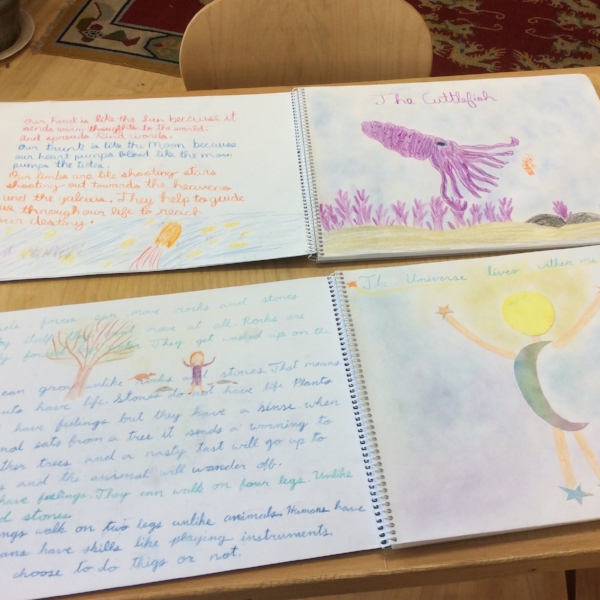
From a 1st grader's main lesson book, the beginning of a school journey...

From a 1st grader's main lesson book, the beginning of a school journey...

From time to time, we have the pleasure of checking in with some of our alumni. They truly are the best representatives of all that makes Waldorf education unique. Our graduates exhibit self-confidence and a sense of purpose in pursuing interests, in both high school and beyond. They prove well prepared for life after Madrona School!

Since 2005, Madrona School has graduated 44 students from 8th grade. The first graduating class has finished college, while other graduates are in college or high school. Initially, our alumni go on to succeed in the variety of local high school programs: Bainbridge High, Eagle Harbor, Seattle Waldorf, West Sound Academy, and Seattle Community College's Running Start program. Most of them attend college, including: Bates, Beloit College, Lewis and Clark, Canadian College of the Performing Arts, Mount Holyoke, Sarah Lawrence, Smith, Western, UW and Whitman. They are budding scientists with biology and geology majors, musicians, Spanish scholars and theater majors.

Our school home is a beginning...

Our school home is a beginning...

According to the Research Institute for Waldorf Education, and their interview-based study of 526 former Waldorf students, 94% of Waldorf school graduates attend college. Among other outcomes, their research offers three key findings about graduates, including 1) the ability to think creatively and embrace lifelong learning; 2) placing a high value on human relationships; and 3) bringing a strong sense of ethics into adulthood. We have a pamphlet in the office, entitled "The Results of Waldorf Education" with more on this research. You are welcome to come and pick one up!

Keep your eyes open to opportunities to support our current 8th grade class as they prepare for school beyond Madrona School -- we'll have a 8th grade project presentation in the spring, and graduation in early June is a wonderful evening where we are welcome to celebrate with our new graduates!

--edited from our school newsletter, February 4, 2014

Class Teachers and Building Relationships with Students

Long-term teacher-student and teacher-family relationships are a vital way a Waldorf school builds community and delivers education. Just as we see the curriculum on an arc of several years, we also value a growing and ever-evolving relationship between a teacher and a student.  

In our early childhood we achieve this with a mixed-age kindergarten where a young child gets to know their teacher (and assistants) over two to three years of time together. We are fortunate here to have an experienced and stable early childhood teaching team, and teachers who are raising their own families in Waldorf education. Our teachers offer a partnership with parents, a wonderful resource through early childhood development; where parents see their own child, our teachers see many children.

In the grade school, class teachers loop up with their students through the grades. While not necessarily unique to Waldorf education, "looping" teachers are relatively rare in American education. A class teacher has been a fixture of the Waldorf grade school since Rudolf Steiner founded the first school; Steiner believed that the strong relationship forged between a teacher and a student was essential to a robust education, and an aid to healthy child development. Our students begin each day and have main lesson with their class teacher, even while they have a chance to learn from other teachers in the specialty classes that follow. When a teacher spends this much time with his or her class, education is truly a child-centered journey, allowing a teacher to know a particular constellation of students and bring and build on developmentally appropriate and emotionally engaging education each year. Both teachers and children are engaged together in a variety of ways, and each one of them is an artist, a scientist, a mathematician, a poet and a musician, experiencing the breadth of human endeavor together; children have a chance to try on a variety of skills and disciplines on their way toward adulthood.

Relationships are fostered over many years, and class communities are built and tended through inevitable ups and downs. It is the necessary work of the teacher to know and see each student and to strive to meet them where they are developmentally. Learning to relate to one another in a constructive and loving way is essential human work, and a long-term, trusting relationship between teacher and student in a Waldorf school is one valued way we can model the importance of this.

Parent-teacher conferences are coming up -- dare we suggest that you hug your child's teacher? Talk with them, take advantage of their skill and deep knowledge of your beloved family members, speak openly about challenges and questions, and ask for what you need! We invite you to strengthen our community by celebrating the blessing of these relationships.

To read more:

Madrona School Alphabet (F)

As we continue to celebrate what makes a Madrona School education unique through the alphabet, we have reached the letter 'F' ... for Field Trips and Festivals!

Field trips take Waldorf education on the road, and many of our field trips are regular and highly anticipated additions to the curriculum.

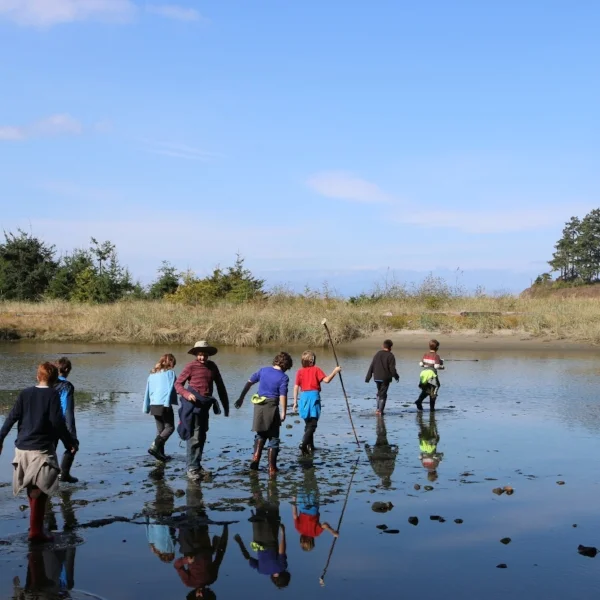
As many of you know, and your children experience, our early childhood classes are outside each week -- to Lowery Farm, as well as each Friday to other island parks and beaches. Our young students, in full weather-appropriate gear, make a colorful and energetic addition to our community, and they are able to fully engage in the outdoors in a way that is just not possible in our smaller play yards.

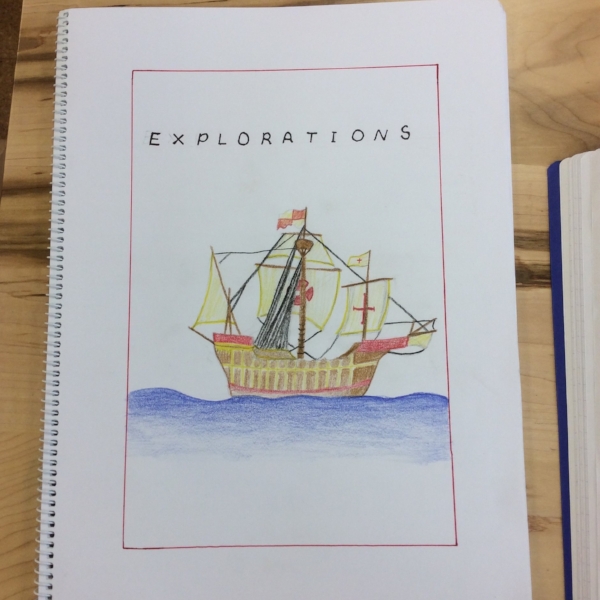
Many field trips are designed to enhance the grade school curriculum. They become rites of passage too -- trips to look forward to as you move through the grades. In May, our third grade will embark on their first overnight, to Pioneer Farm near Mt. Rainier, to help wrap up their year long study of the practical arts. Earlier this year, our fifth grade made a trip to the Hoh rainforest during their botany block, getting creative when their trip fell smack in the middle of the government shutdown. And our sixth grade trekked overnight to Mount St. Helens for a geology block. What natural riches we have to explore in our backyard!

And we offer trips to build community between the regional Waldorf schools, too. Beginning in fourth grade with a potlatch on Whidbey Island, our students meet with other area Waldorf schools to explore common themes from their year. In fifth grade they gather and compete in a Pentathalon; in sixth grade they participate in Medieval games; in 7th grade they enjoy a Renaissance Faire. All wonderful opportunities to spread their wings a bit, and meet other Waldorf students beyond their class communities.

Festivals are a vital part of the rhythm in our community's year. Celebrating the passing of the seasons, festivals also offer the opportunity to come together and socialize school-wide. In September, we mark Michaelmas, with a re-telling of the legend of St. Michael and the dragon, playing through challenges that remind us of our inner strength and resolve as we move into the darker and wetter time of the year. Highlights of this festival include crawling through the dragon's lair built by our 8th grade, and feasting together on potatoes from our school garden. In November, the story of St. Martin illuminates kindness and generosity to strangers, and our students revisit his story and mark the dark night with lantern walks and songs. In May we celebrate the burgeoning of spring with May Day festivities, making flower crowns and dancing around a maypole. It is a joyful, colorful end to our festival year.

Teaching Science at Madrona School

We often talk about teaching academics as the "3Rs" -- reading, writing and arithmetic. But what about all of the other important academic subjects taught at Madrona School? The Waldorf methodology offers a classical education, a liberal arts approach that introduces students to a wide variety of subjects throughout their grade school years, in keeping with their developing capacities. How do we teach science, for example? 

atwater'sedge1.jpg
atwater'sedge2.jpg

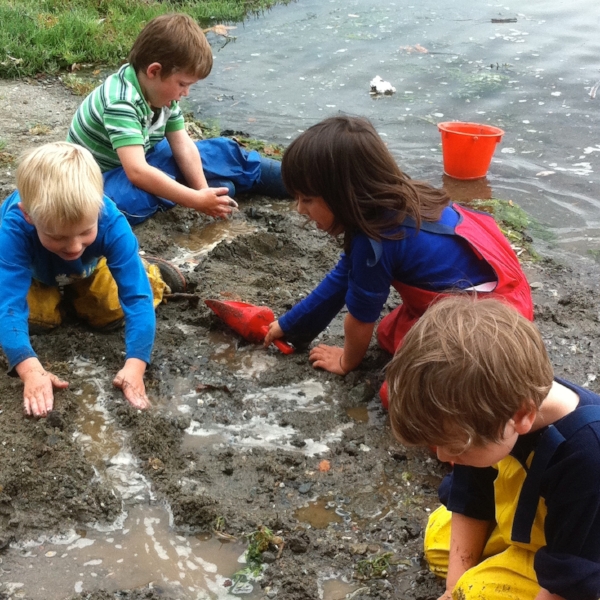
We really begin in early childhood, laying a solid foundation for academic work. For scientific studies specifically, we simply provide opportunities for our young students to explore in the natural world, doing. They dig, they bake bread and make jam, they climb over logs, they collect pocketfuls of rocks, they soak up the sunshine etc., using all of their senses and fully living into the world. As anyone with a small child knows, they are natural scientists -- curious about their world and eager to explore.

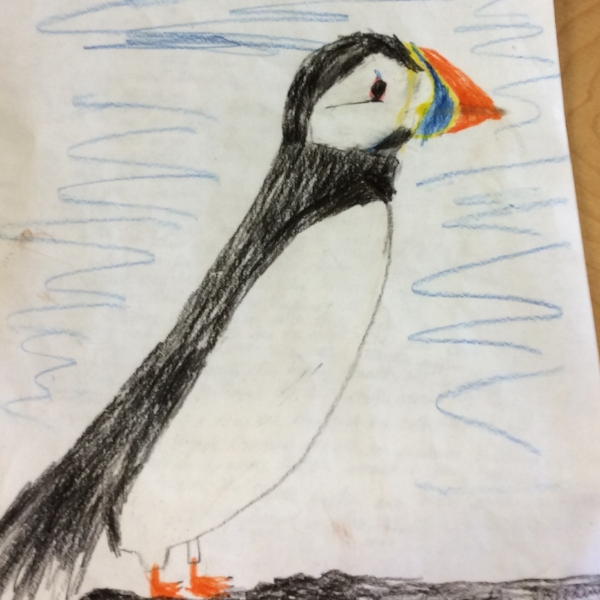
In the early grade school years, we work consciously to instill a sense of wonder in the natural world, nurturing ever increasing capacities for observation. 1st and 2nd graders go on walks, collecting horse chestnuts or pine cones or leaves, depending on the season, incorporating natural materials into classroom projects or math lessons. Or, they may do simple experiments, such as planting seeds and recording what happens. Beginning in 3rd grade, with its practical life curriculum, students have the opportunity for gardening. Our current 3rd and 4th graders are working with the garden at Lowery Farm, and they spend many hours there, tackling jobs, observing changes and recording it all in their gardening journals. In 4th grade, the students have their first specific science block, studying the animal kingdom, and writing an independent report. In 5th grade, a botany block allows for further careful observation and demonstration of the artistic techniques that have been practiced throughout grade school.

7thgrade.jpg

In middle school, we continue to teach through a connection to our observable world, and to the universe at large, using students' observation and communication skills in combination with their awakening capacities for abstract thinking. In 6th grade, the students study more science than they have to date, and we offer geology, astronomy and physics -- a close look at our planet and what it is made up of, the study of what surrounds us, and a first taste of a lab science. The Waldorf methodology takes a phenomenological approach to teaching science, which means we offer opportunities for observation of the laws of nature without teaching the theory first. In chemistry and physics blocks, for example, students will watch an experiment performed, take careful notes on what they see (learning the scientific format of procedure, equipment, observation and conclusion), then discuss possible explanations and reach conclusions as a class. Sometimes, after this process, a teacher will elaborate on the relevant theories and scientific laws further, but the hope is that the students can approach the theory themselves. Even when we teach a physiology block, the approach is an experiential one, where they begin with what they can observe or feel about their bodies, before talking about what makes up a particular part of the body.

When a child graduates from 8th grade, they've had a broad introduction to various scientific disciplines, from the natural sciences, to chemistry, to physics and beyond. They can express themselves with clarity and with beauty. And they have honed their observation skills, and practiced finding ways to express observable phenomena, providing a basis for learning and thinking about new subjects as they go on into high school.