Exploring Waldorf

Class Teachers and Building Relationships with Students

Long-term teacher-student and teacher-family relationships are a vital way a Waldorf school builds community and delivers education. Just as we see the curriculum on an arc of several years, we also value a growing and ever-evolving relationship between a teacher and a student.  

In our early childhood we achieve this with a mixed-age kindergarten where a young child gets to know their teacher (and assistants) over two to three years of time together. We are fortunate here to have an experienced and stable early childhood teaching team, and teachers who are raising their own families in Waldorf education. Our teachers offer a partnership with parents, a wonderful resource through early childhood development; where parents see their own child, our teachers see many children.

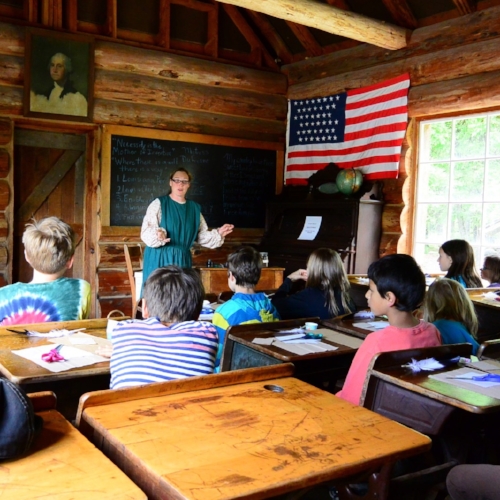
In the grade school, class teachers loop up with their students through the grades. While not necessarily unique to Waldorf education, "looping" teachers are relatively rare in American education. A class teacher has been a fixture of the Waldorf grade school since Rudolf Steiner founded the first school; Steiner believed that the strong relationship forged between a teacher and a student was essential to a robust education, and an aid to healthy child development. Our students begin each day and have main lesson with their class teacher, even while they have a chance to learn from other teachers in the specialty classes that follow. When a teacher spends this much time with his or her class, education is truly a child-centered journey, allowing a teacher to know a particular constellation of students and bring and build on developmentally appropriate and emotionally engaging education each year. Both teachers and children are engaged together in a variety of ways, and each one of them is an artist, a scientist, a mathematician, a poet and a musician, experiencing the breadth of human endeavor together; children have a chance to try on a variety of skills and disciplines on their way toward adulthood.

Relationships are fostered over many years, and class communities are built and tended through inevitable ups and downs. It is the necessary work of the teacher to know and see each student and to strive to meet them where they are developmentally. Learning to relate to one another in a constructive and loving way is essential human work, and a long-term, trusting relationship between teacher and student in a Waldorf school is one valued way we can model the importance of this.

Parent-teacher conferences are coming up -- dare we suggest that you hug your child's teacher? Talk with them, take advantage of their skill and deep knowledge of your beloved family members, speak openly about challenges and questions, and ask for what you need! We invite you to strengthen our community by celebrating the blessing of these relationships.

To read more:

Madrona School Alphabet (F)

As we continue to celebrate what makes a Madrona School education unique through the alphabet, we have reached the letter 'F' ... for Field Trips and Festivals!

Field trips take Waldorf education on the road, and many of our field trips are regular and highly anticipated additions to the curriculum.

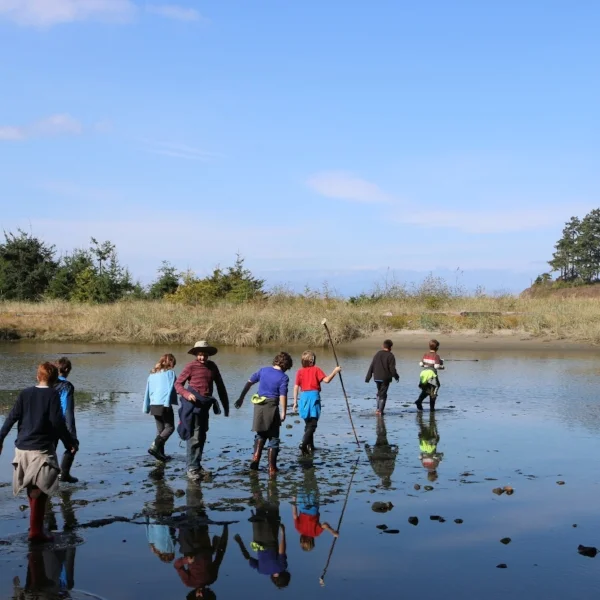
As many of you know, and your children experience, our early childhood classes are outside each week -- to Lowery Farm, as well as each Friday to other island parks and beaches. Our young students, in full weather-appropriate gear, make a colorful and energetic addition to our community, and they are able to fully engage in the outdoors in a way that is just not possible in our smaller play yards.

Many field trips are designed to enhance the grade school curriculum. They become rites of passage too -- trips to look forward to as you move through the grades. In May, our third grade will embark on their first overnight, to Pioneer Farm near Mt. Rainier, to help wrap up their year long study of the practical arts. Earlier this year, our fifth grade made a trip to the Hoh rainforest during their botany block, getting creative when their trip fell smack in the middle of the government shutdown. And our sixth grade trekked overnight to Mount St. Helens for a geology block. What natural riches we have to explore in our backyard!

And we offer trips to build community between the regional Waldorf schools, too. Beginning in fourth grade with a potlatch on Whidbey Island, our students meet with other area Waldorf schools to explore common themes from their year. In fifth grade they gather and compete in a Pentathalon; in sixth grade they participate in Medieval games; in 7th grade they enjoy a Renaissance Faire. All wonderful opportunities to spread their wings a bit, and meet other Waldorf students beyond their class communities.

Festivals are a vital part of the rhythm in our community's year. Celebrating the passing of the seasons, festivals also offer the opportunity to come together and socialize school-wide. In September, we mark Michaelmas, with a re-telling of the legend of St. Michael and the dragon, playing through challenges that remind us of our inner strength and resolve as we move into the darker and wetter time of the year. Highlights of this festival include crawling through the dragon's lair built by our 8th grade, and feasting together on potatoes from our school garden. In November, the story of St. Martin illuminates kindness and generosity to strangers, and our students revisit his story and mark the dark night with lantern walks and songs. In May we celebrate the burgeoning of spring with May Day festivities, making flower crowns and dancing around a maypole. It is a joyful, colorful end to our festival year.

Teaching Science at Madrona School

We often talk about teaching academics as the "3Rs" -- reading, writing and arithmetic. But what about all of the other important academic subjects taught at Madrona School? The Waldorf methodology offers a classical education, a liberal arts approach that introduces students to a wide variety of subjects throughout their grade school years, in keeping with their developing capacities. How do we teach science, for example? 

atwater'sedge1.jpg
atwater'sedge2.jpg

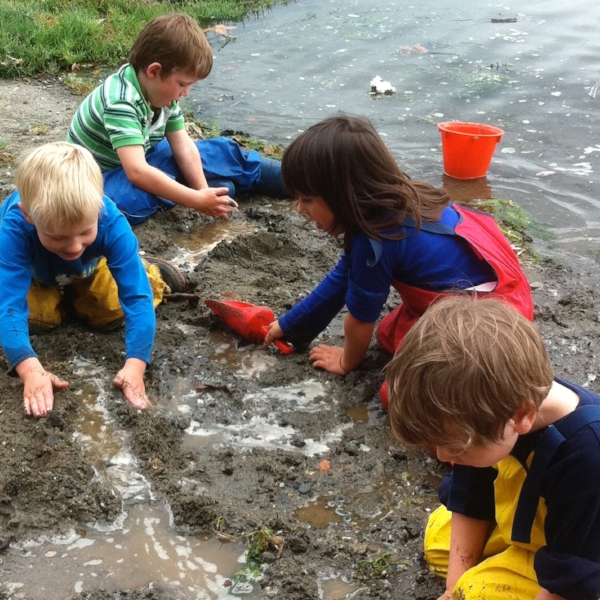
We really begin in early childhood, laying a solid foundation for academic work. For scientific studies specifically, we simply provide opportunities for our young students to explore in the natural world, doing. They dig, they bake bread and make jam, they climb over logs, they collect pocketfuls of rocks, they soak up the sunshine etc., using all of their senses and fully living into the world. As anyone with a small child knows, they are natural scientists -- curious about their world and eager to explore.

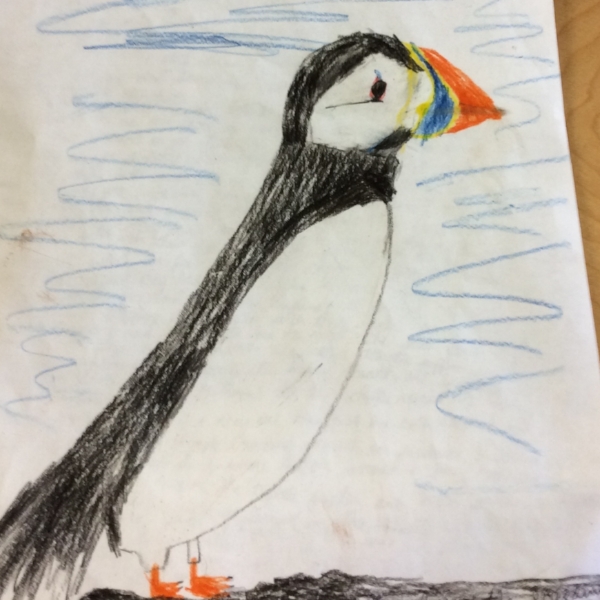
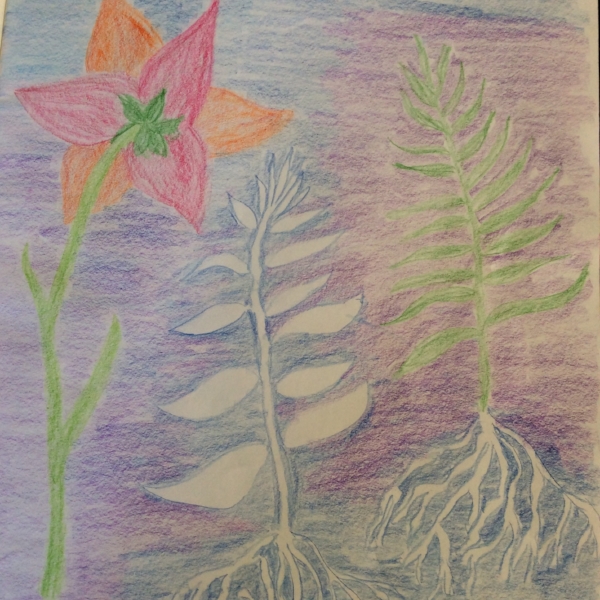
In the early grade school years, we work consciously to instill a sense of wonder in the natural world, nurturing ever increasing capacities for observation. 1st and 2nd graders go on walks, collecting horse chestnuts or pine cones or leaves, depending on the season, incorporating natural materials into classroom projects or math lessons. Or, they may do simple experiments, such as planting seeds and recording what happens. Beginning in 3rd grade, with its practical life curriculum, students have the opportunity for gardening. Our current 3rd and 4th graders are working with the garden at Lowery Farm, and they spend many hours there, tackling jobs, observing changes and recording it all in their gardening journals. In 4th grade, the students have their first specific science block, studying the animal kingdom, and writing an independent report. In 5th grade, a botany block allows for further careful observation and demonstration of the artistic techniques that have been practiced throughout grade school.

7thgrade.jpg

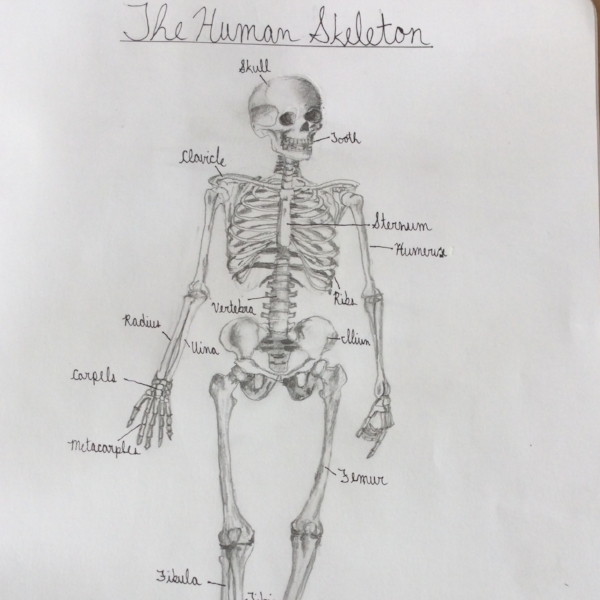
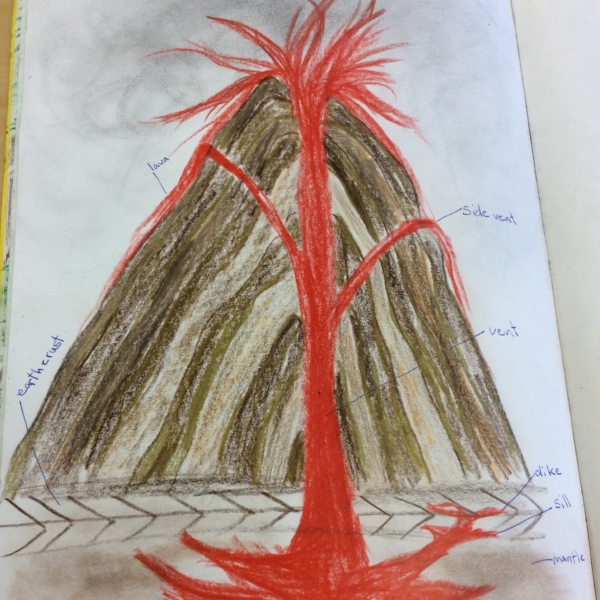
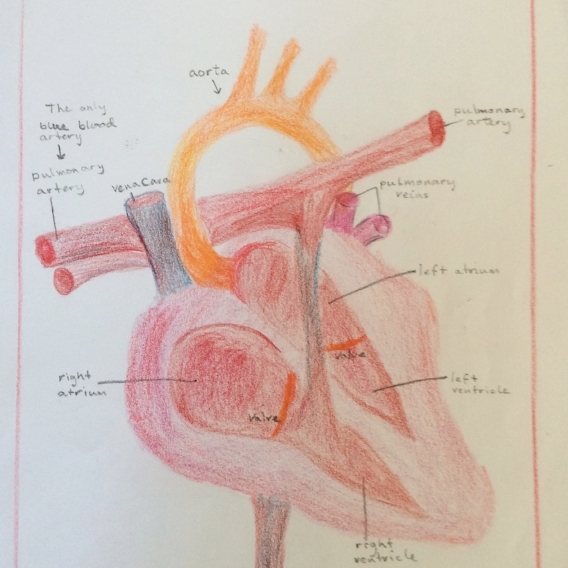
In middle school, we continue to teach through a connection to our observable world, and to the universe at large, using students' observation and communication skills in combination with their awakening capacities for abstract thinking. In 6th grade, the students study more science than they have to date, and we offer geology, astronomy and physics -- a close look at our planet and what it is made up of, the study of what surrounds us, and a first taste of a lab science. The Waldorf methodology takes a phenomenological approach to teaching science, which means we offer opportunities for observation of the laws of nature without teaching the theory first. In chemistry and physics blocks, for example, students will watch an experiment performed, take careful notes on what they see (learning the scientific format of procedure, equipment, observation and conclusion), then discuss possible explanations and reach conclusions as a class. Sometimes, after this process, a teacher will elaborate on the relevant theories and scientific laws further, but the hope is that the students can approach the theory themselves. Even when we teach a physiology block, the approach is an experiential one, where they begin with what they can observe or feel about their bodies, before talking about what makes up a particular part of the body.

When a child graduates from 8th grade, they've had a broad introduction to various scientific disciplines, from the natural sciences, to chemistry, to physics and beyond. They can express themselves with clarity and with beauty. And they have honed their observation skills, and practiced finding ways to express observable phenomena, providing a basis for learning and thinking about new subjects as they go on into high school. 

Blacksmithing in 3rd Grade

There is so much "doing" in the practical life curriculum in a Waldorf school 3rd grade, and this year's class has baked, constructed, crocheted, dyed, harvested, hatched, planted, preserved, spun, threshed, etc. Today they spent main lesson out on the play yard forging with local blacksmith, Jeremy Loerch of Alchemy Industrial Arts. Each student made a coat hook: heating, hammering, bending and twisting the metal into shape. You could hear the ring of the hammer around the school building, and at recess time the taped off area around the portable forge was a draw for everyone.

Photos show: hammering and flattening the tip of the hook; shaping the hook; a demonstration of twisting for decoration; while groups of 4 worked at the forge, the rest of the class recorded their observations with both words and drawings.

The Benefits of Eurythmy...

We have one more adult eurythmy class this year with our visiting eurythmist, Audun Smit. The class is open to all this Friday at 9am in the EHCC Fellowship Hall. The following thoughts on eurythmy are offered by one of our founding parents and teachers, and were originally published in our weekly school newsletter on March 1, 2016.

Eurythmy- Nurture Your Own Heart and Soul

eurythmy.jpg

One of the most helpful things we can do for our children is to nurture our own hearts and souls. When, I’m calmer, my children are calmer. When I’m content, my children are content. Children reflect much of what they experience with the adults around them. And for the next 3 weeks we now have an incredible opportunity to nurture ourselves right here at Madrona- in a free adult eurythmy class.

The word eurythmy stems from the Greek roots for beautiful or harmonious rhythm. A dictionary may define eurythmy as a system of harmonious body movement to the rhythm of spoken words. But it is much more. Eurythmy is an art form created by Rudolf Steiner. And in a slightly modified form it can be appliedtherapeutically. Rudolf Steiner’s essential point is that eurythmy is visible speech, visible music. He described it as “art of the soul”. One can even go further and maintain that the movements of eurythmy do actually proceed out of the inner movements of the organization of man. That said, as you can see, it’s very hard to describe eurythmy in words; it really needs to be experienced.

I’m not a eurythmist, but I’ll share with you how I feel after finishing an adult eurythmy class. I feel calm, centered, and uplifted yet grounded. I feel a greater sense of connection- connection to a grander Source, to the others in the eurythmy circle, to the earth, and to myself. I feel pure joy! Wow- all in one hour!  Another added bonus- it’s just plain fun!

A bit of history that you may not be aware of is that Madrona School was seeded in eurythmy (and festivals). Prior to the start of the school, we were blessed with David Michael Monasch, a eurythmist from Seattle, coming to Bainbridge every week to teach eurythmy. We experienced the gift of community literally moving together as One during eurythmy class and I believe that those years of relating in this nonverbal way helped set the foundation for a healthy school to be co-founded.

Now we’re blessed with another amazingeurythmy teacher, Audun Smit .  I experience Audun’s presence as pure and clear. He exemplifies both groundedness and radiance. Before I learned his name, I found myself calling him “the Angelic Eurythmy teacher”. So even if you’re not so interested in eurythmy, it may be worth coming just to be in his presence.

I hope to see you in adult eurythmy class Friday mornings March 4, 11, 18 from 9:00-10:00. Actually I wish all parents could experience this simple, yet profound practice. After all, parenting isn’t always easy and we could all use a bit of nurturing for our own hearts and souls.

With deep gratitude,
Debby Haase
Former Madrona teacher of Grades 1-8
Parent of two Madrona graduates
Co-founder of Madrona

Madrona School Alphabet (E)

As we continue to celebrate what makes a Madrona School education unique through the alphabet, we have reached the letter 'E' ... and Eurythmy!

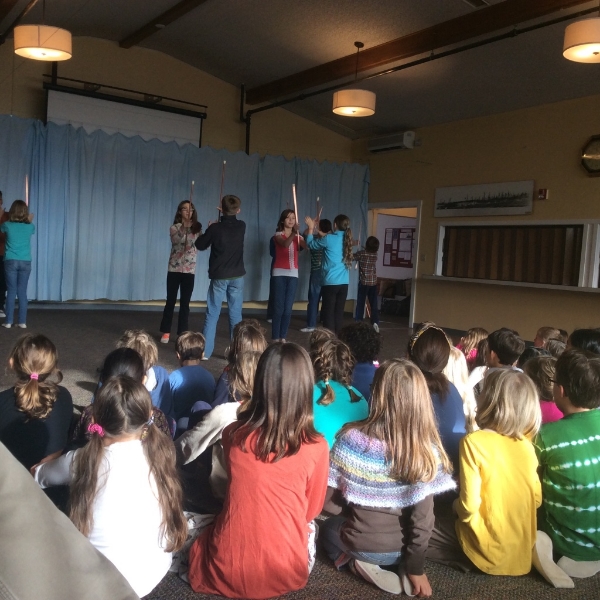
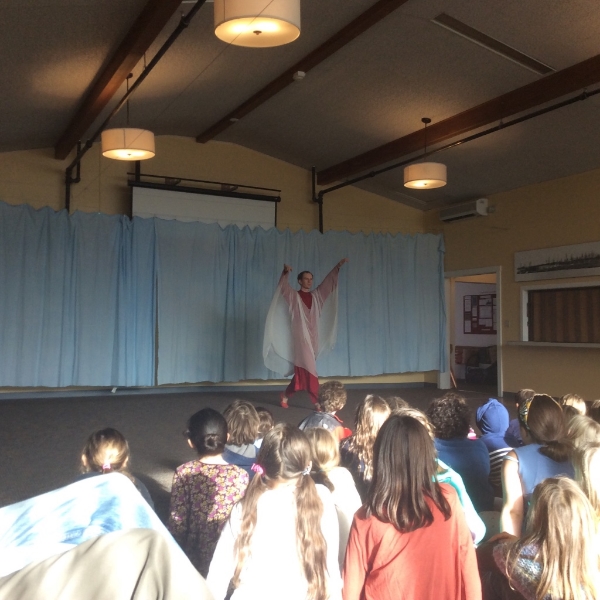
We just wrapped up a six-week block with visiting eurythmist, Audun Smit. Mr. Smit offered classes to our kindergartens and our grade school, as well as weekly opportunities for adults and at the opening of our faculty meetings. It was a true gift to our community!

Eurthymy is an art form from Rudolf Steiner based on movement, and making music and tone visible through that movement. Beautiful to watch and to do, it has elements of dance, sculpture and creative expression. Here at Madrona School, we offer eurythmy in blocks as we are able, providing some exposure for our students to this essential aspect of the Waldorf curriculum.

Movement in all its forms is so essential to learning, and Waldorf education emphasizes it throughout the curriculum. When we move, we learn -- coordination, problem solving, working effectively with others, etc. In our early childhood programs, children practice integration of movement, both gross and fine motor, in order to prepare themselves for their academic journeys ahead. And in grade school, movement continues to be critical for a greater integration of academic material, as well as practice for those all important social skills.  

And eurythmy is movement like nothing else we offer, with live piano accompaniment and uplifting verse. Truly a gift for each child, even as they work on spatial awareness and social integration, expressing themselves from the inside out. 

-- edited in part from the school newsletter, November 19, 2013

Madrona School Alphabet (D)

What makes a Madrona School education unique and special?
During the 2013-2014 school year, we celebrated what a Waldorf education offers both our children and our community as we strive to graduate creative and eager lifelong learners. Using the alphabet gave us 26 aspects to celebrate! 

D is for Drama! We enjoy good drama (of a certain kind!) at Madrona School. In our early childhood programs, we nurture imaginative play acting each and every day. And, each grade school class puts on a play every year.  From the simplest beginnings in 1st grade, to full blown productions in 7th and 8th, our students learn to be comfortable performing on a stage. They memorize lines, work together on sets and staging, speak clearly and with passion, sing and make music. Drama enhances literacy, creativity, self-confidence, flexibility -- and it's fun!

-- edited from our school newsletter on October 1, 2013